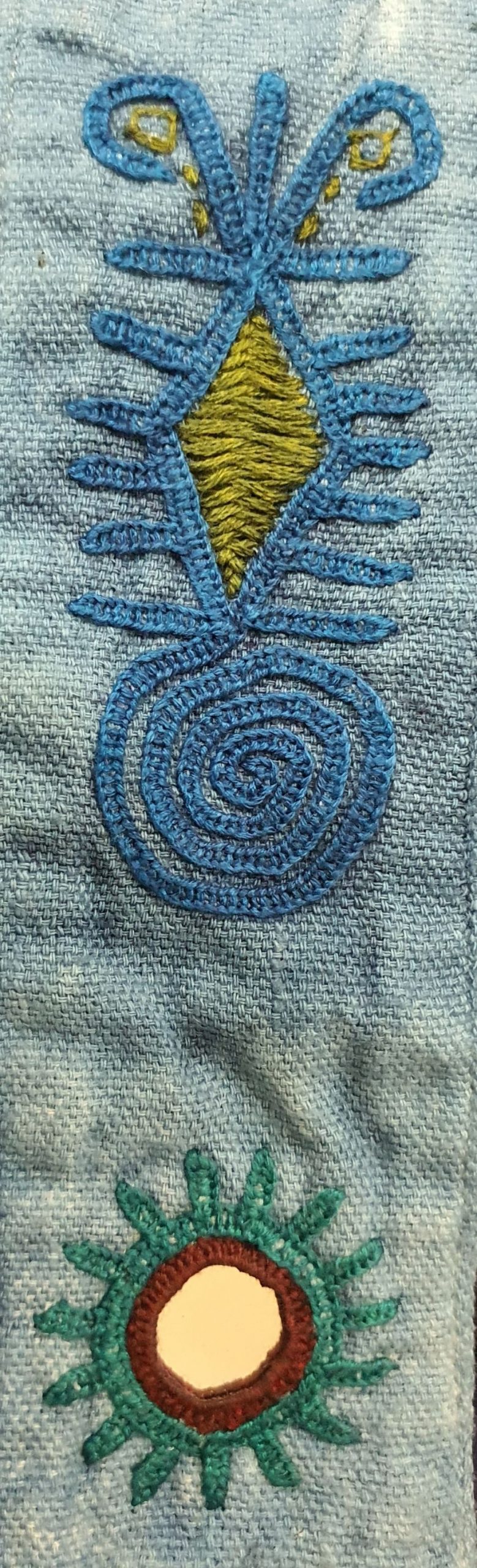
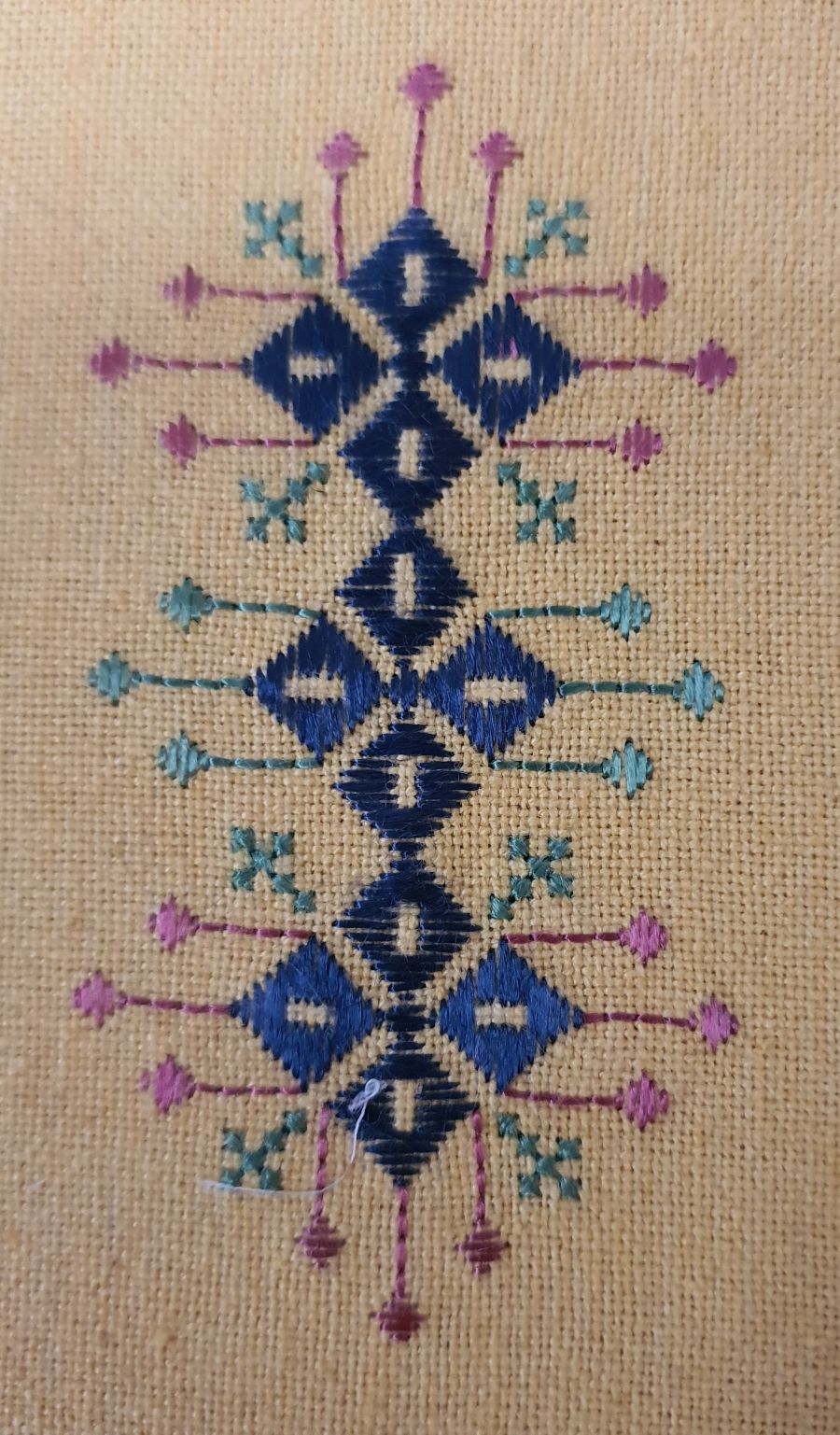
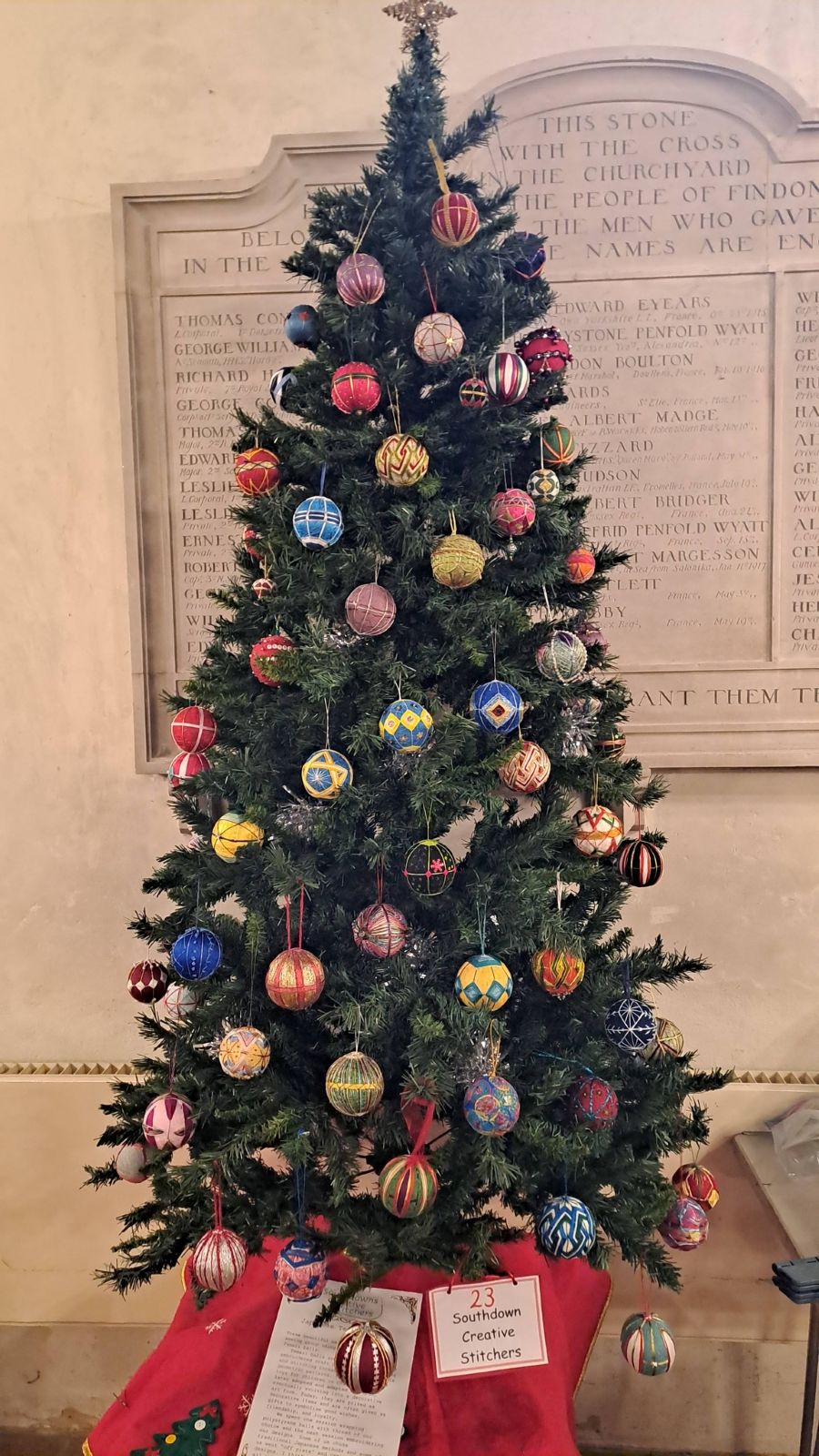
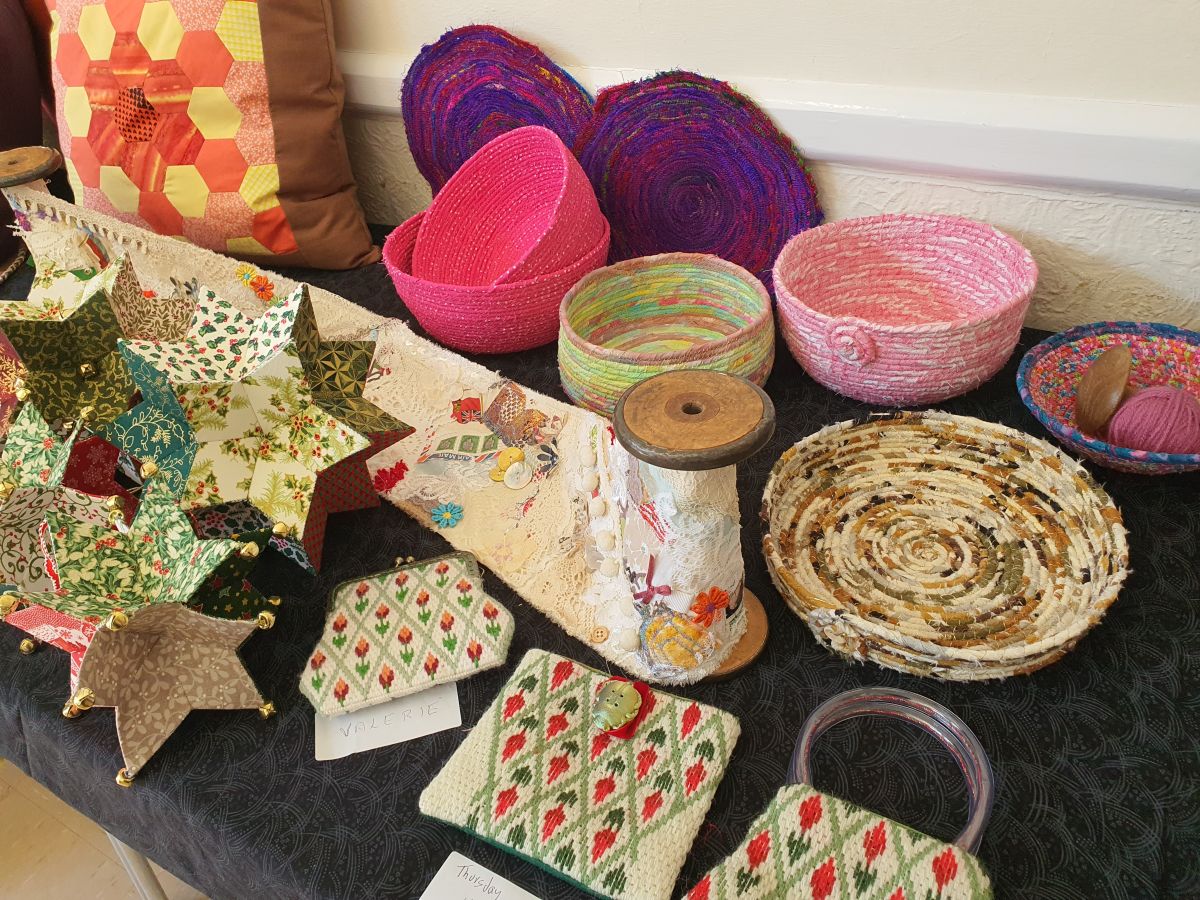
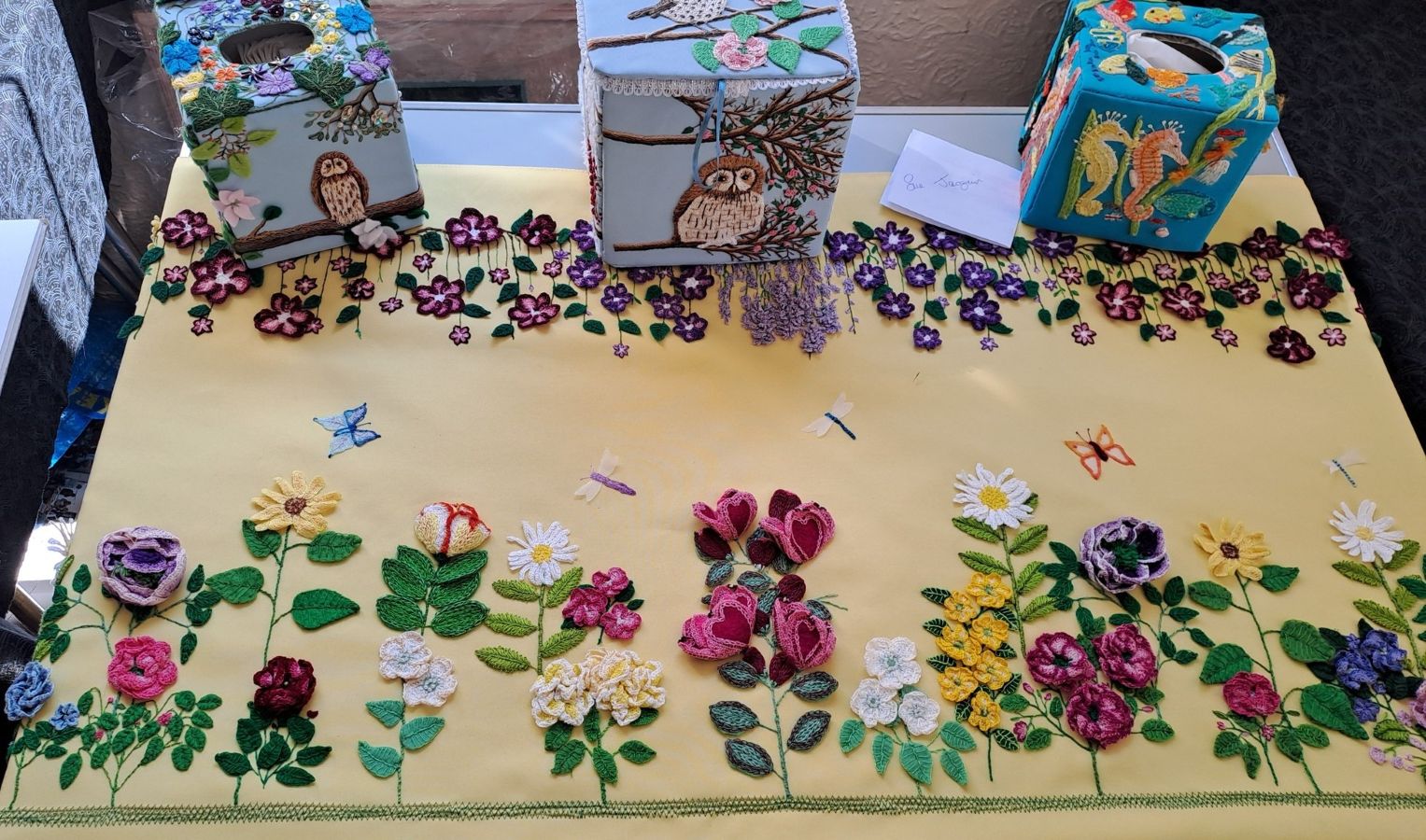
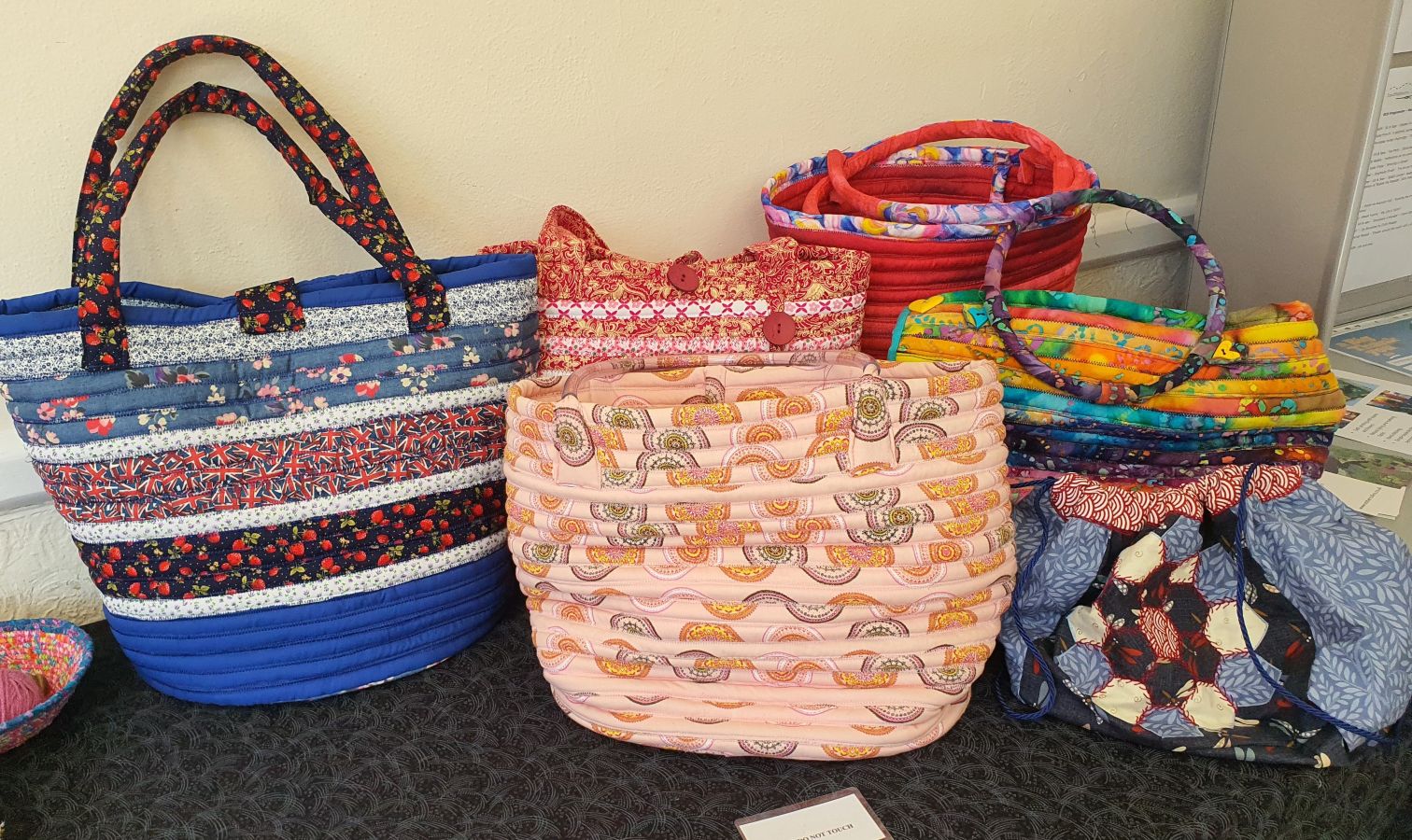
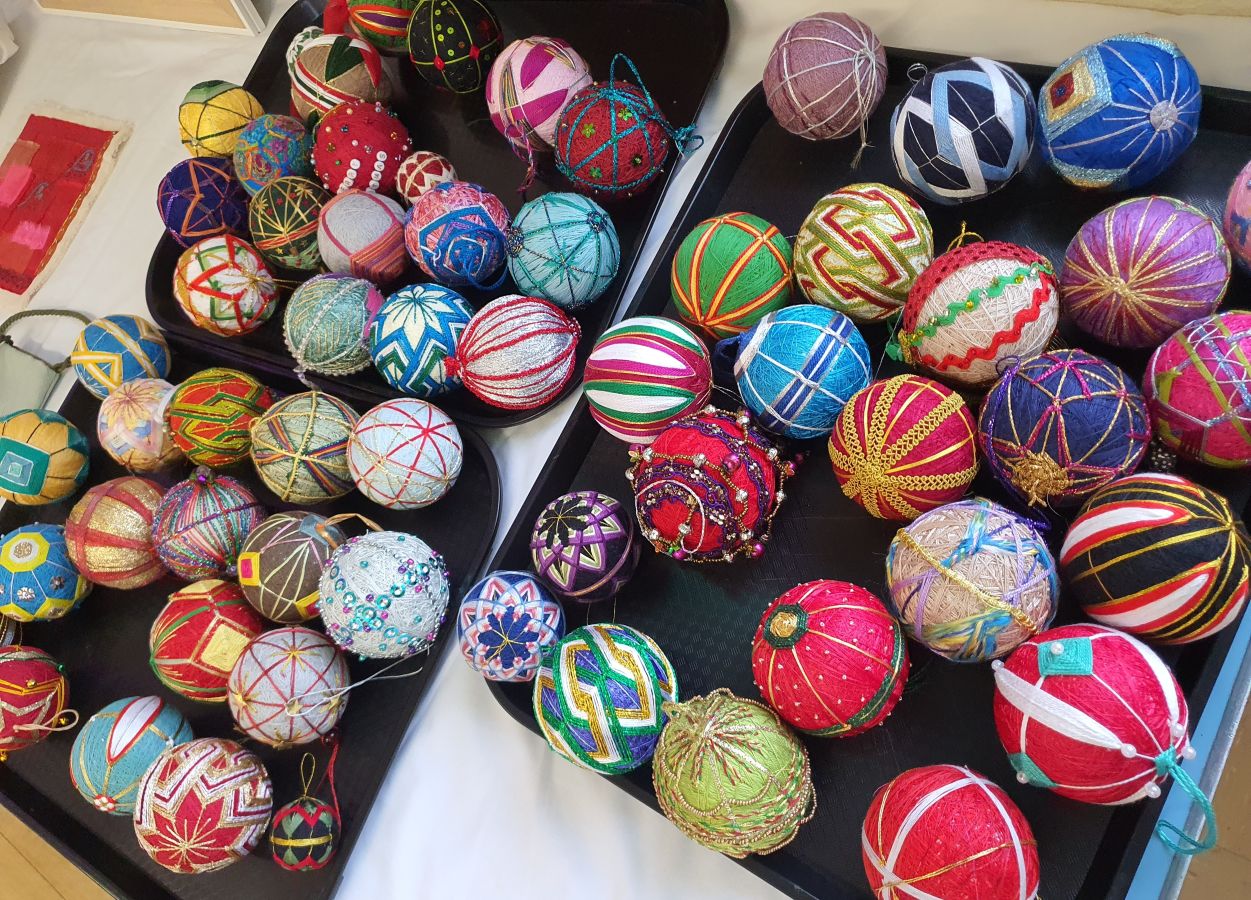
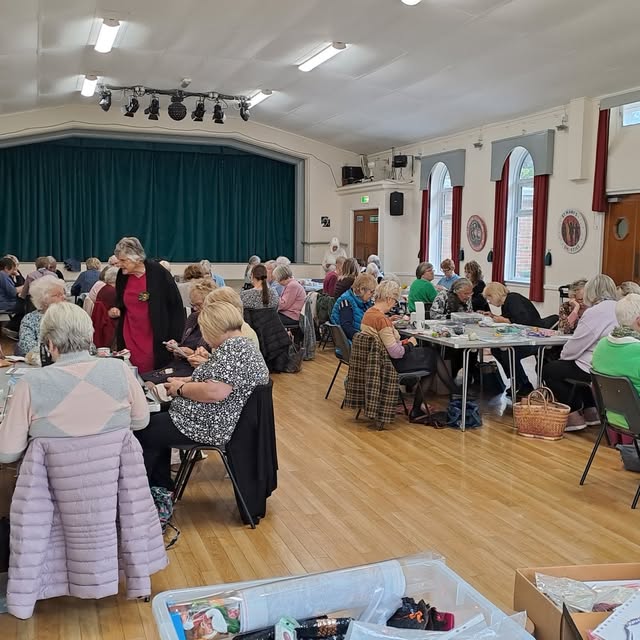
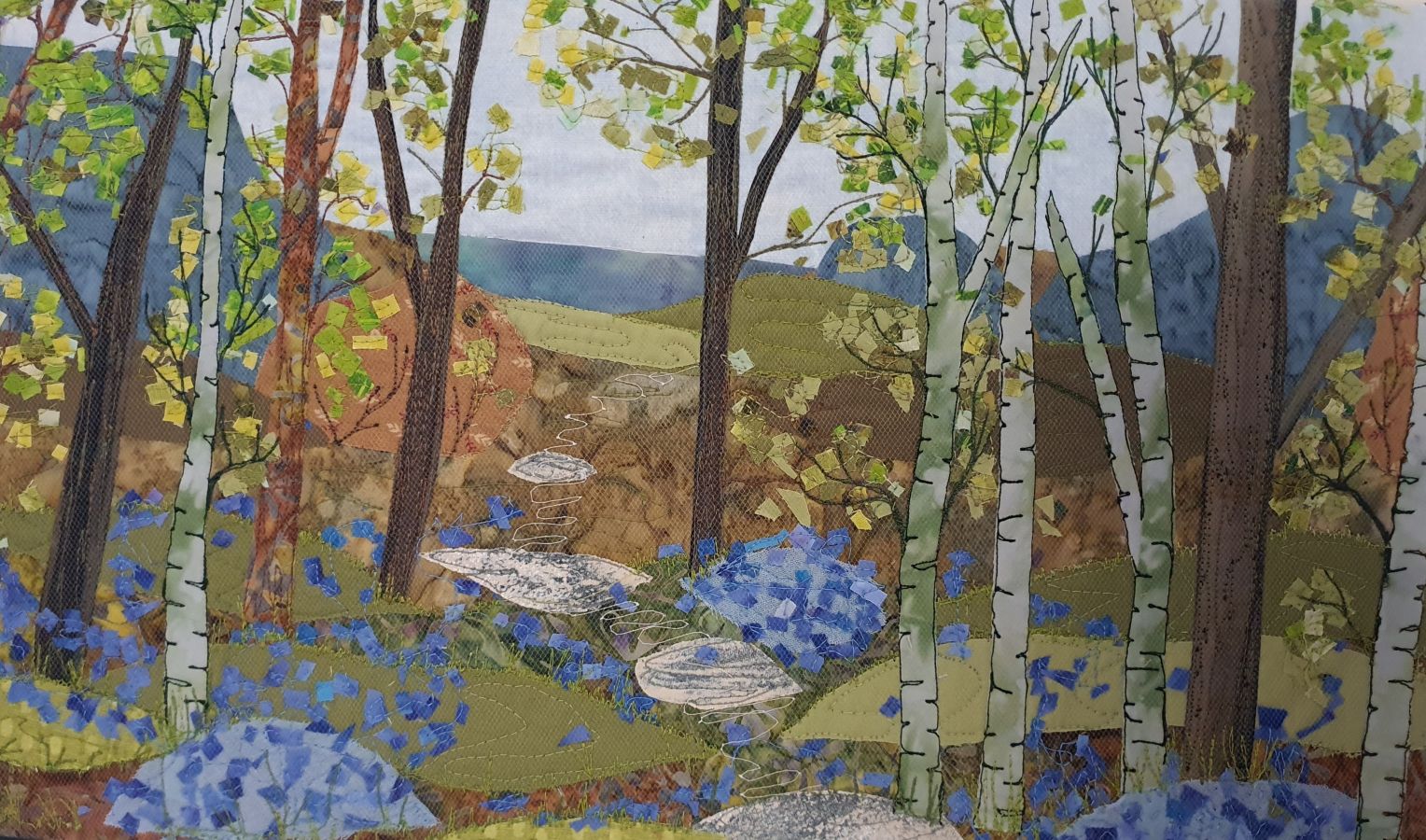
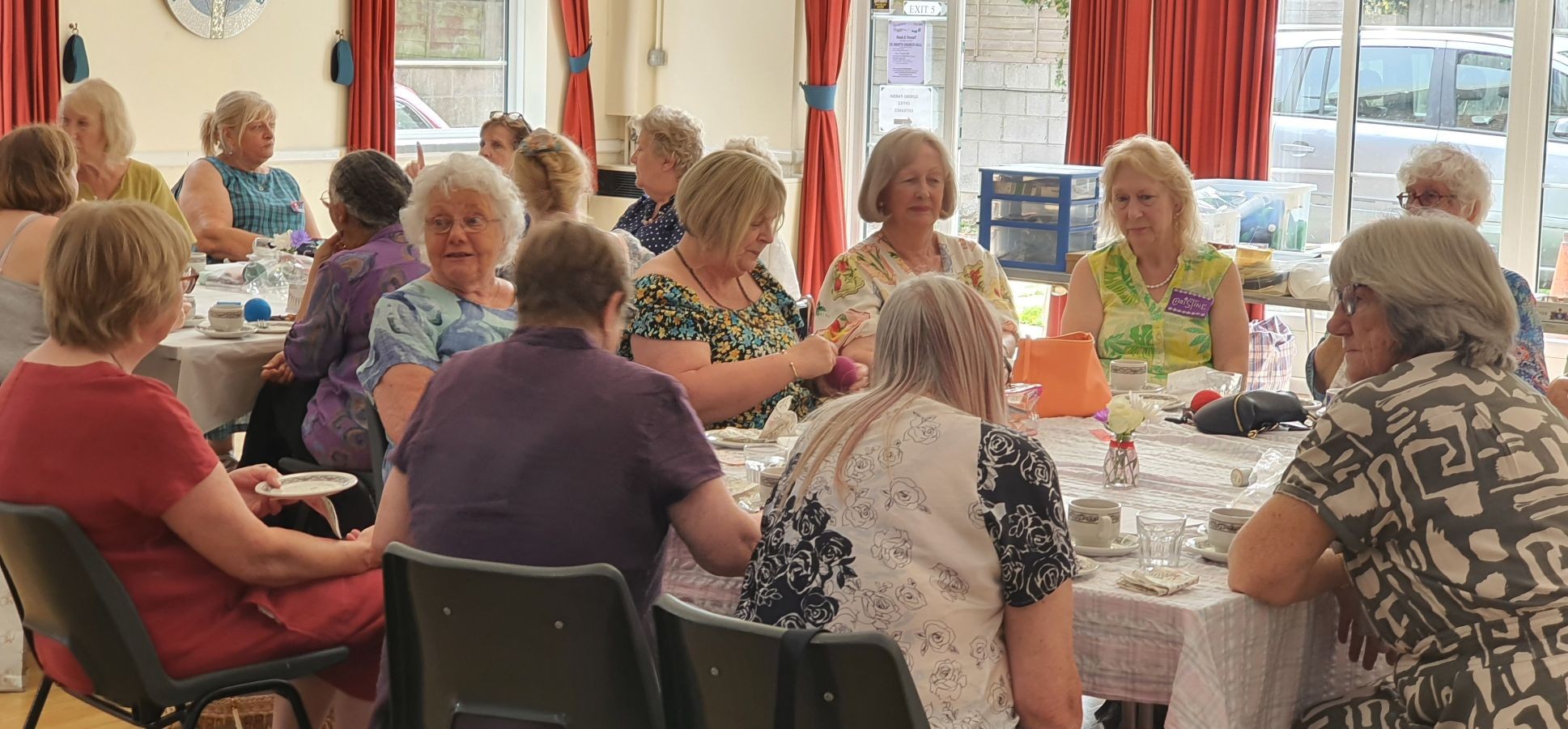
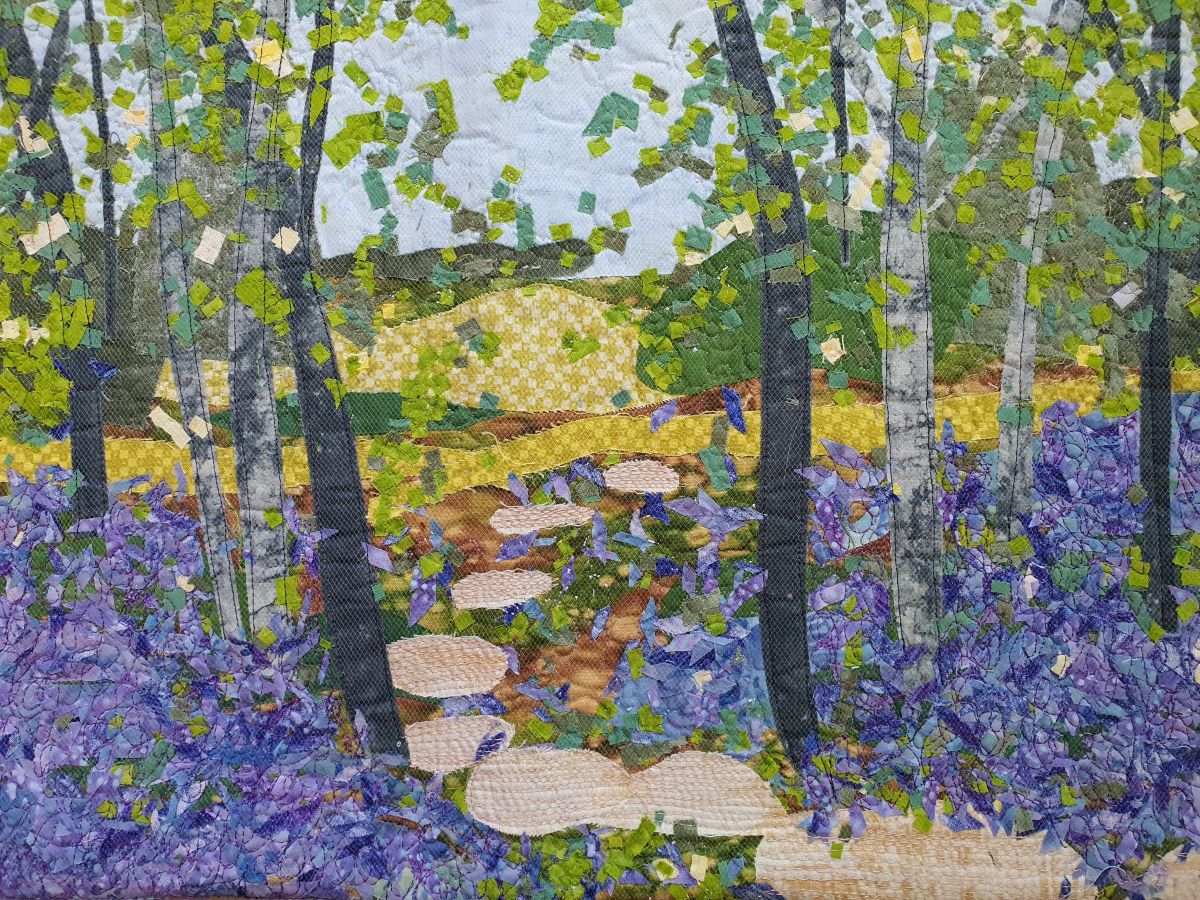
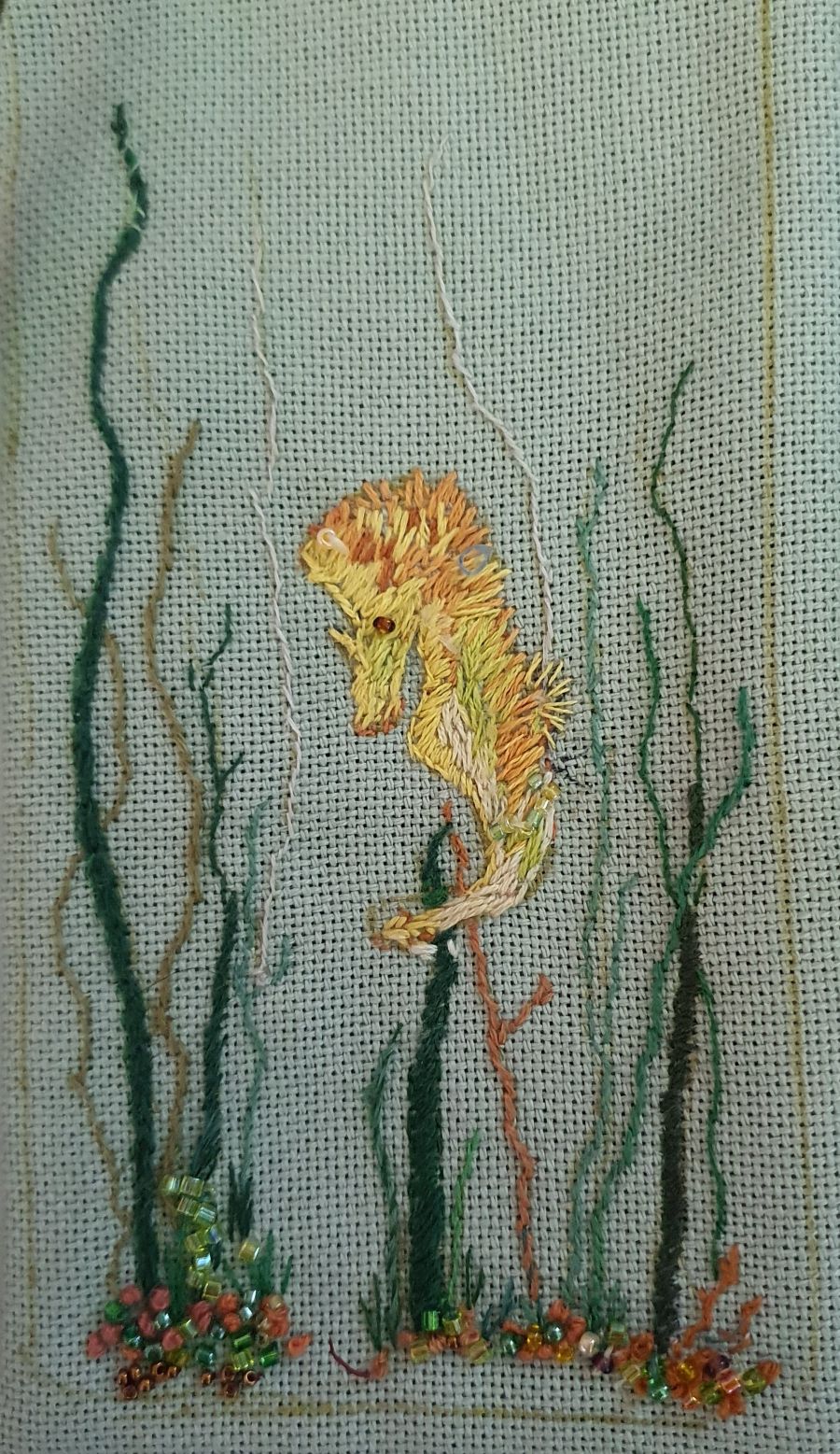
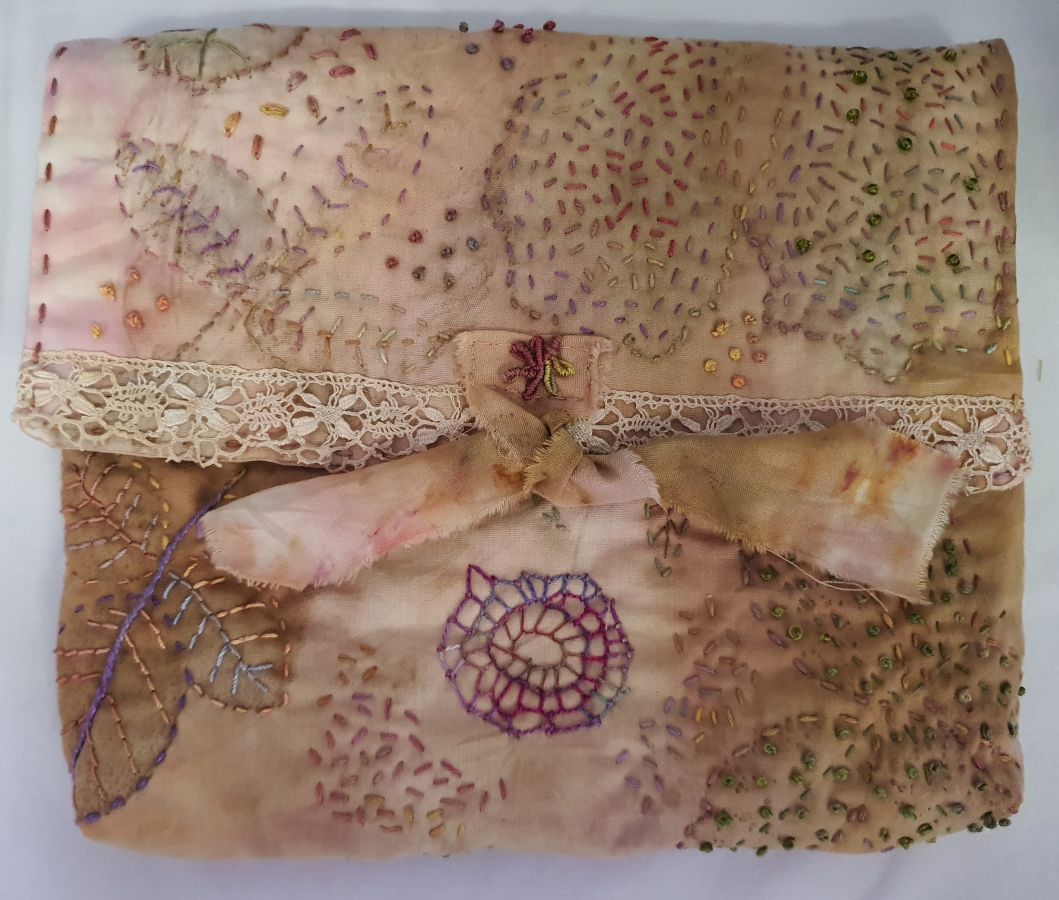
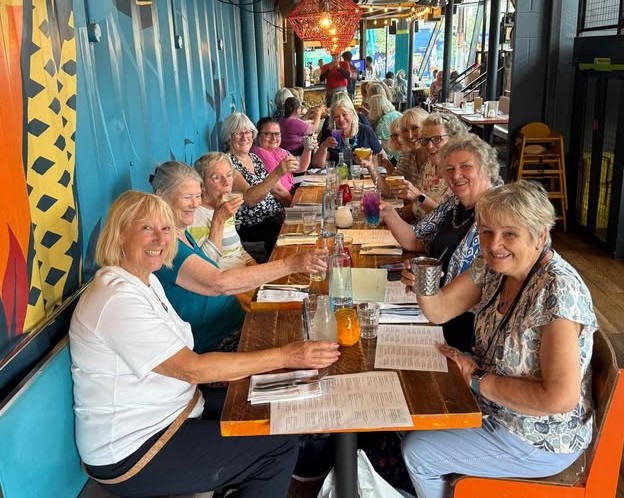
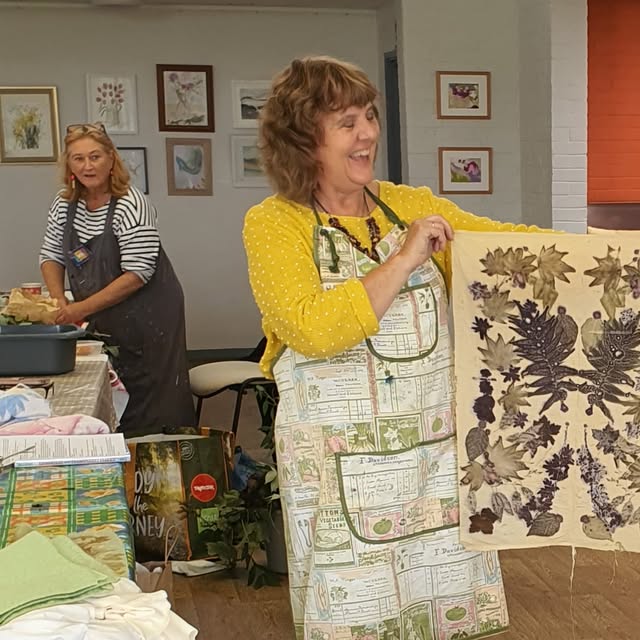
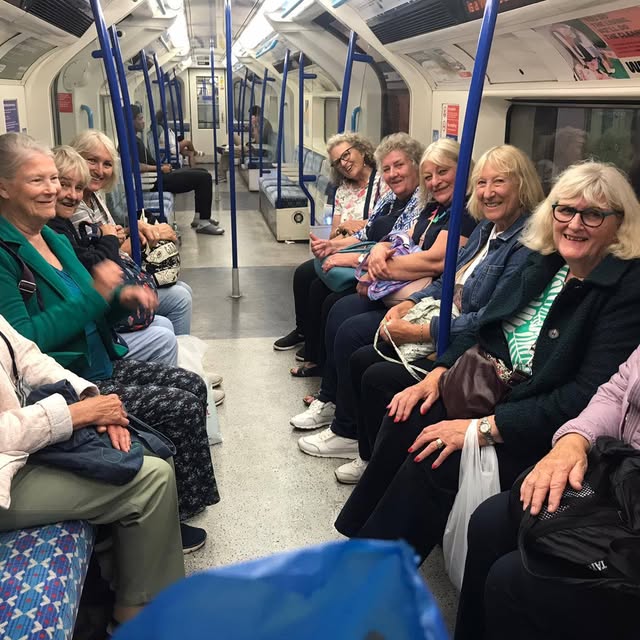
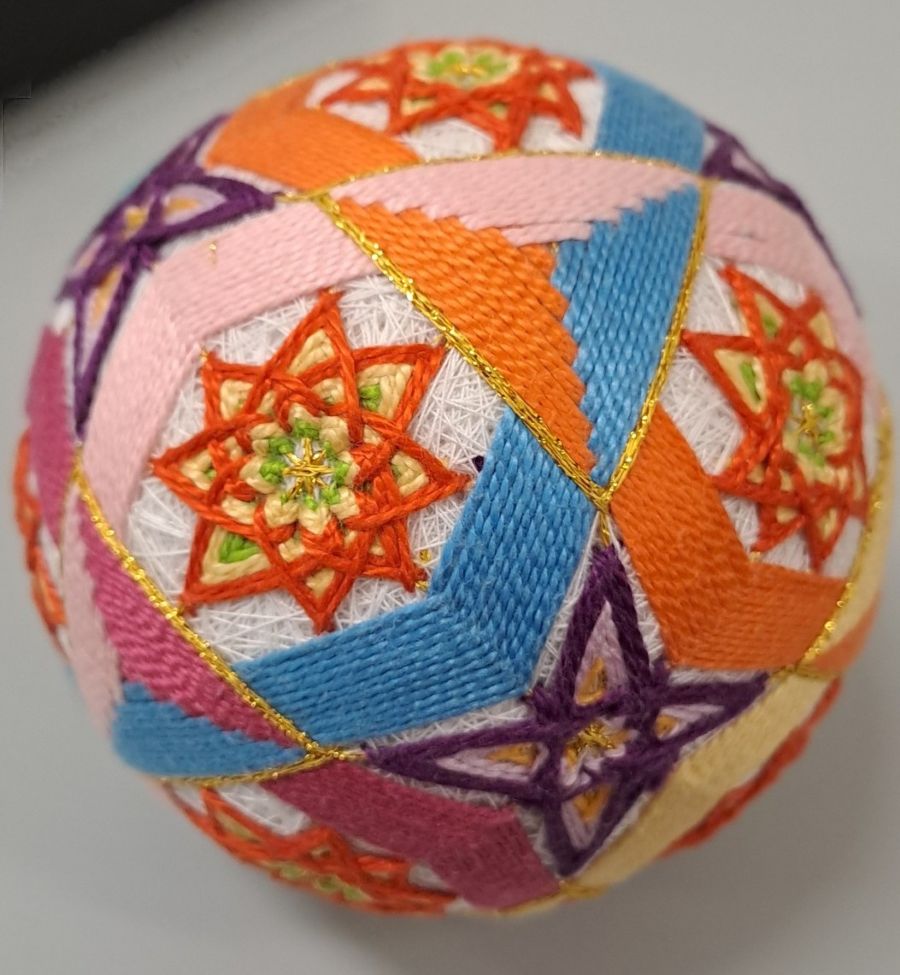
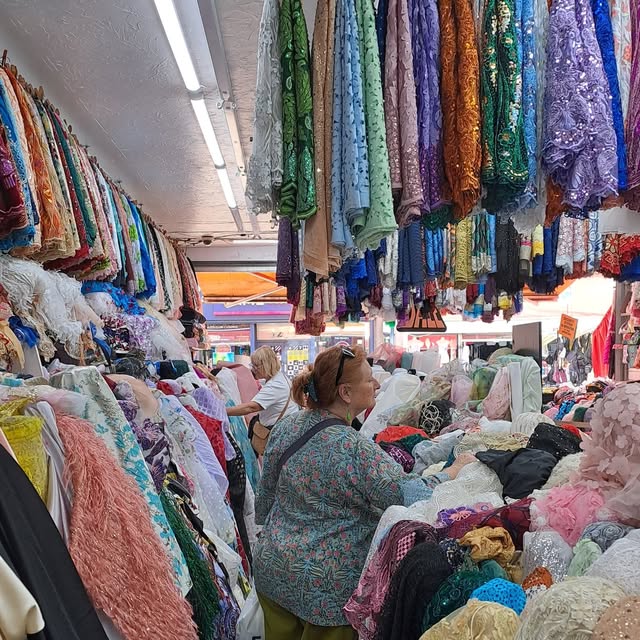
Here are some recollections of 2025 in a rather random collection of photos. Lots of camaraderie, and happy stitching. If your work is featured and you’d like me to add your name, let me know. Happy New Year.
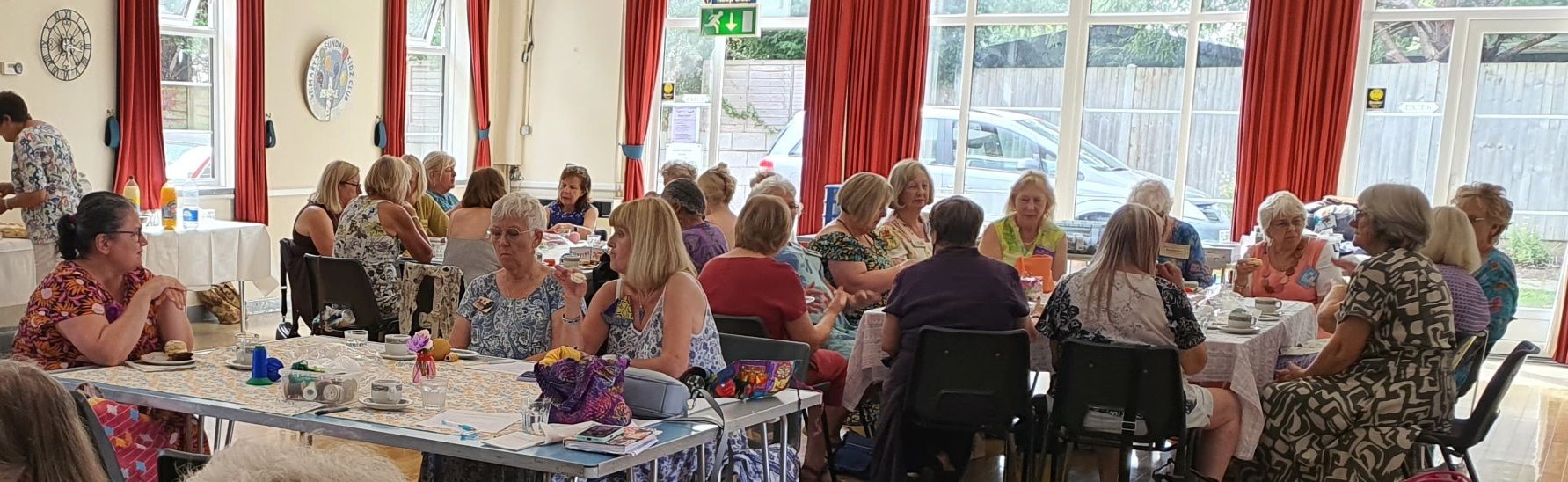
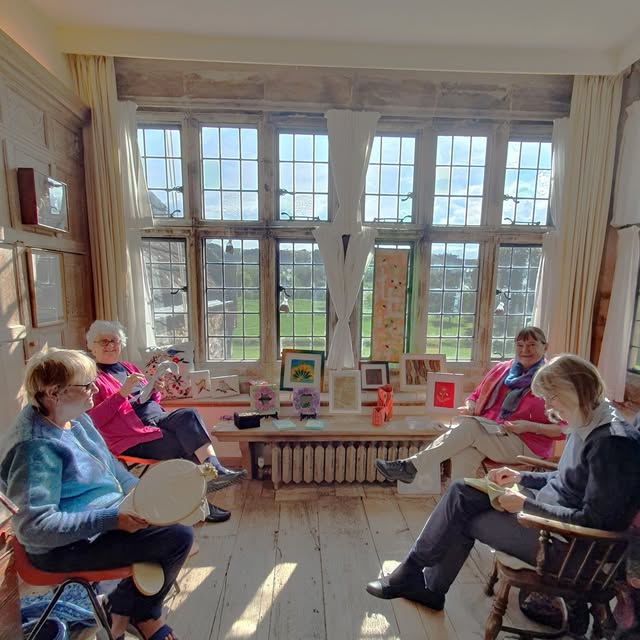
Formerly Worthing Tuesday Embroiderers Guild
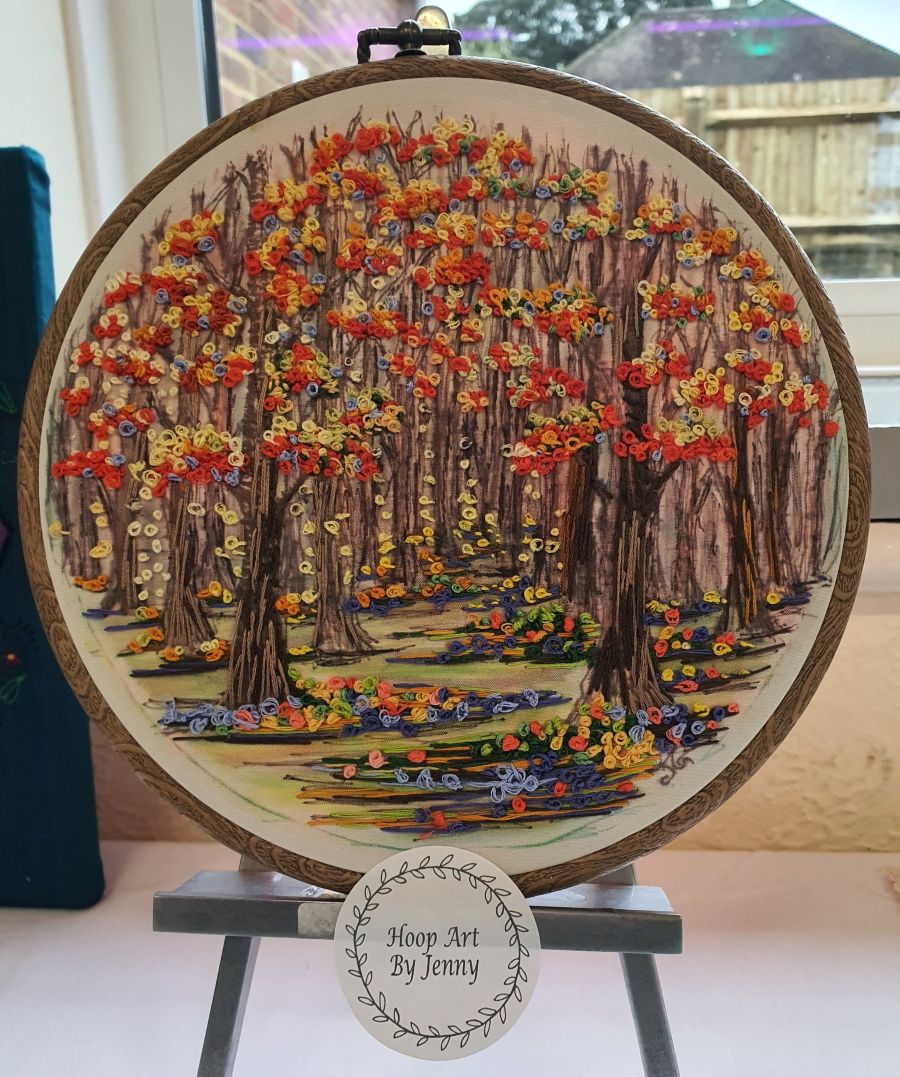
Here are some recollections of 2025 in a rather random collection of photos. Lots of camaraderie, and happy stitching. If your work is featured and you’d like me to add your name, let me know. Happy New Year.
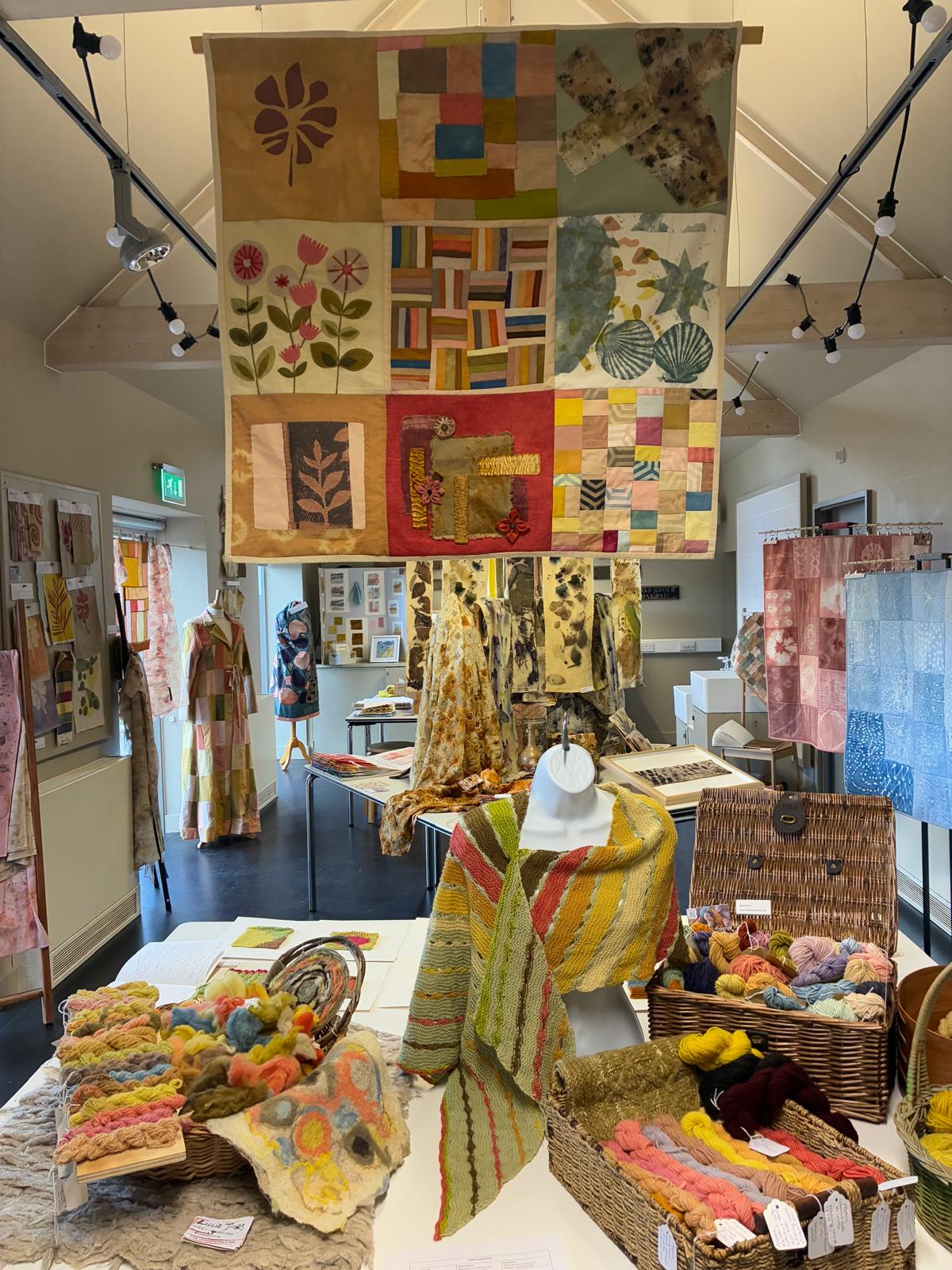 You can still catch this great exhibition on natural dyeing at Ditching Museum. SCS member Michelle is taking part – it’s showcasing the work done by the students during a 6 month course on natural dyeing. It’s a lovely mixture of carefully labelled samples, dyed threads, dyed fabrics, and lots of interesting things that the students have then made with the results. The museum also has tea and cake!
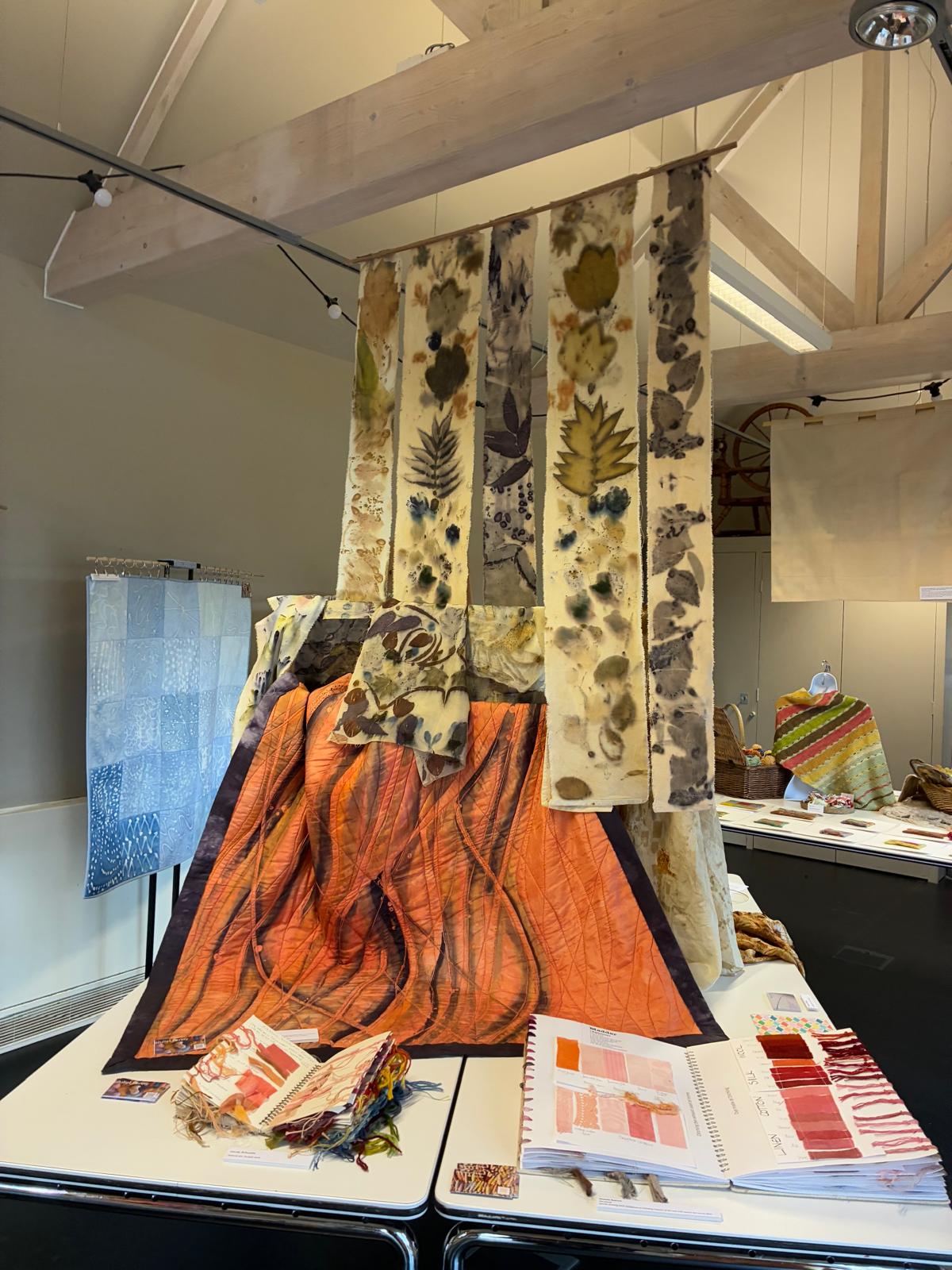
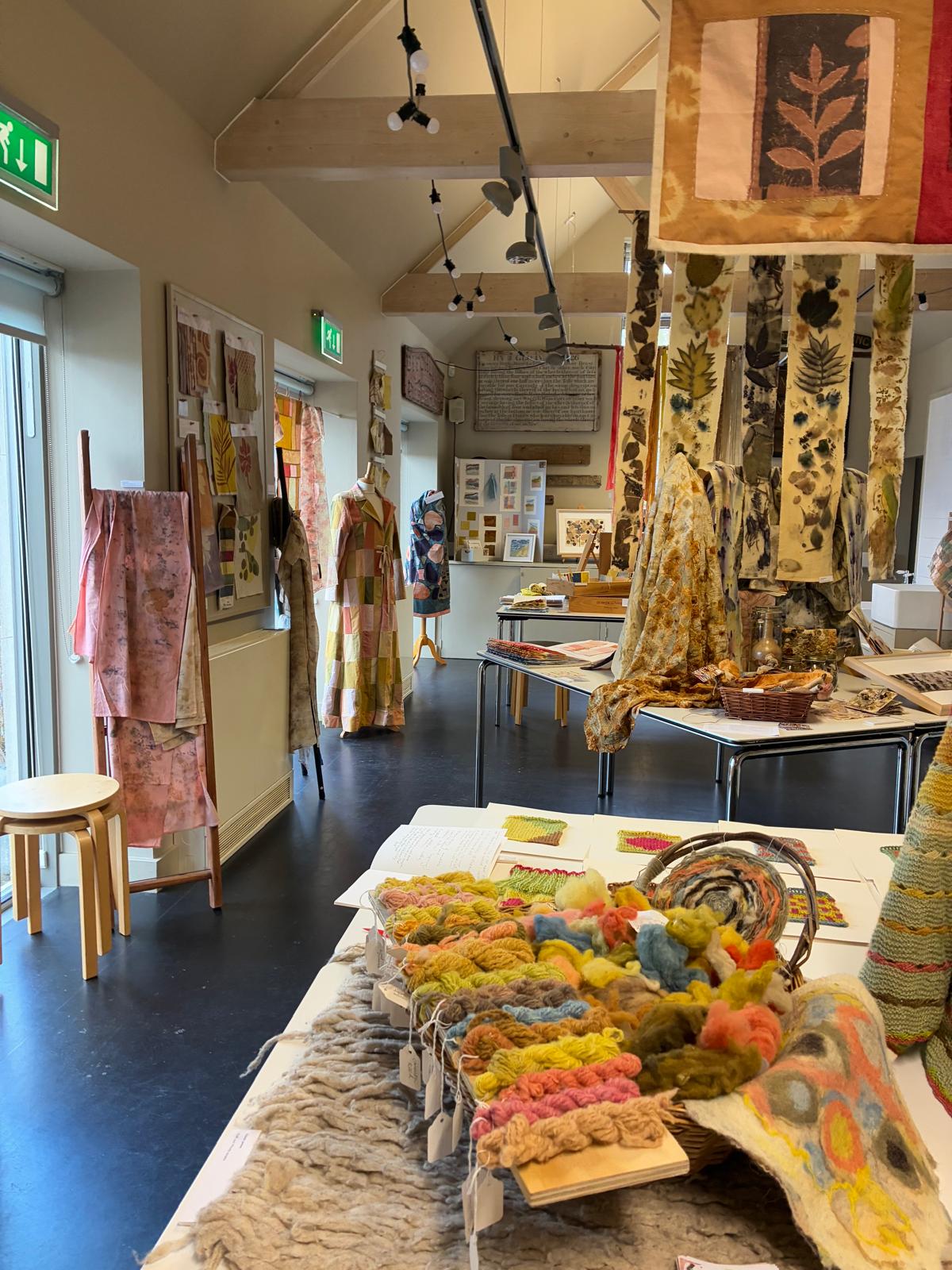
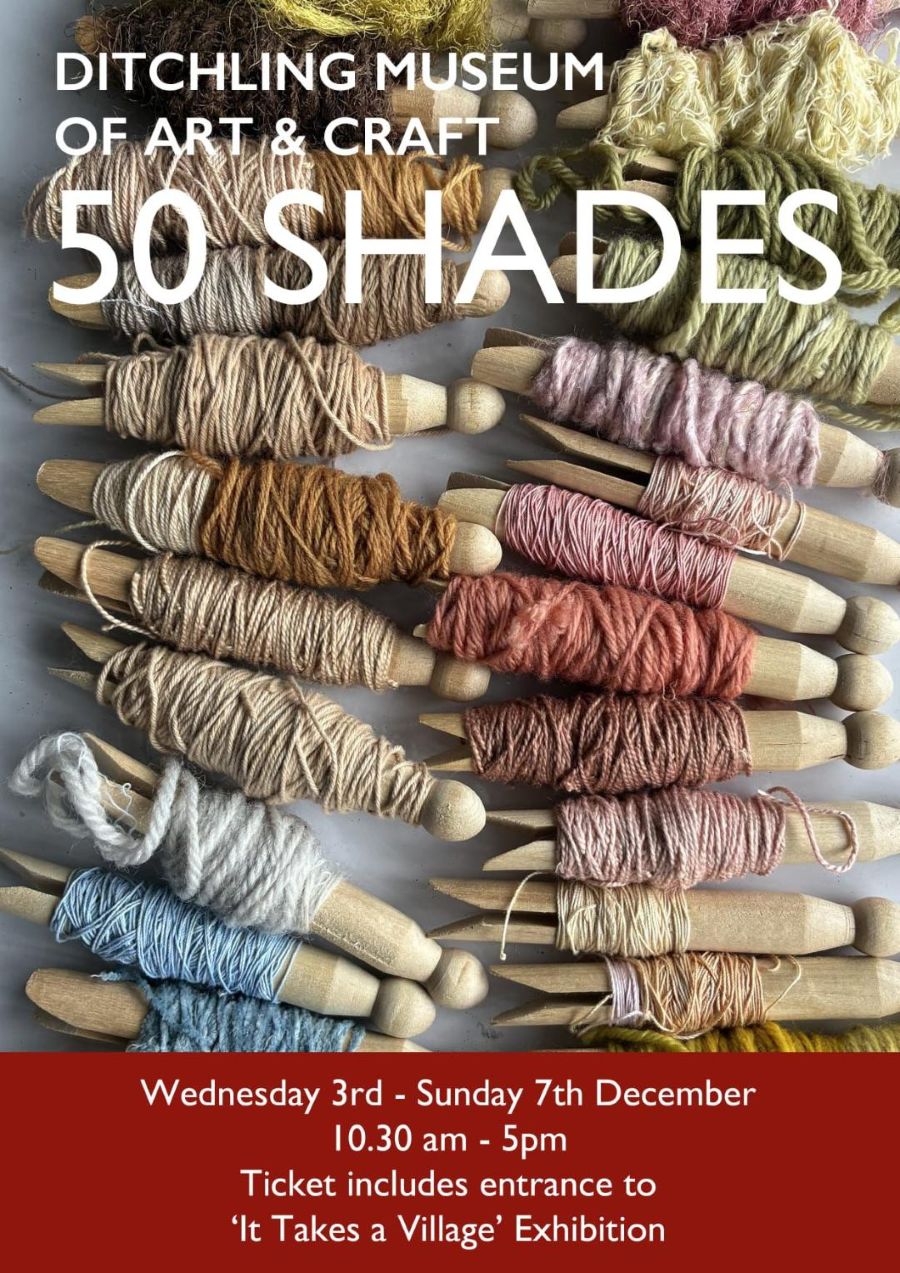 For anyone interested in natural dyeing, there is an exhibition coming up soon in Ditchling, called ’50 Shades’ (well done to whoever thought of the title!) It’s an exhibition to showcase the 6-month Natural Dyeing course at Ditchling Museum. SCS member Michelle is taking part. I had a sneak preview of some of her samples, and it looks fascinating.
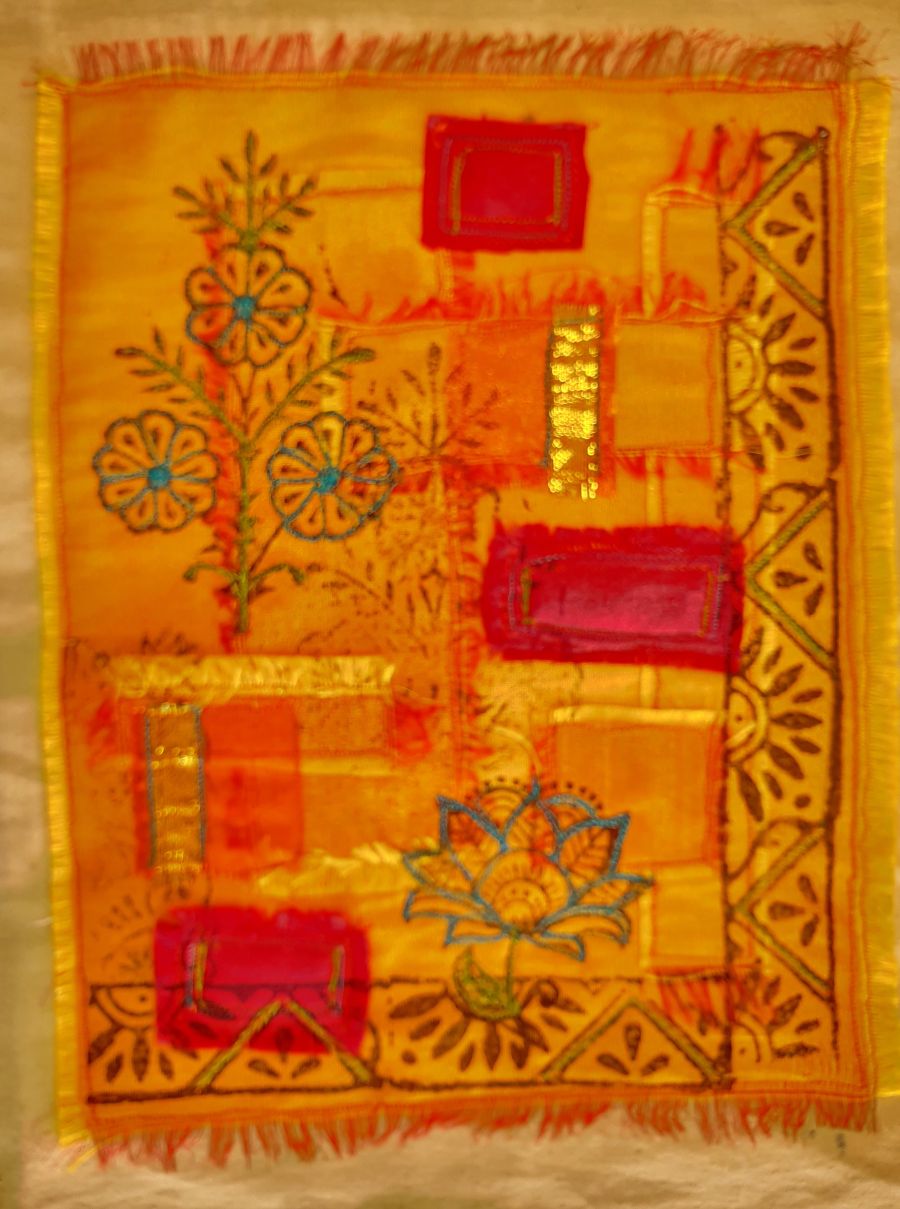
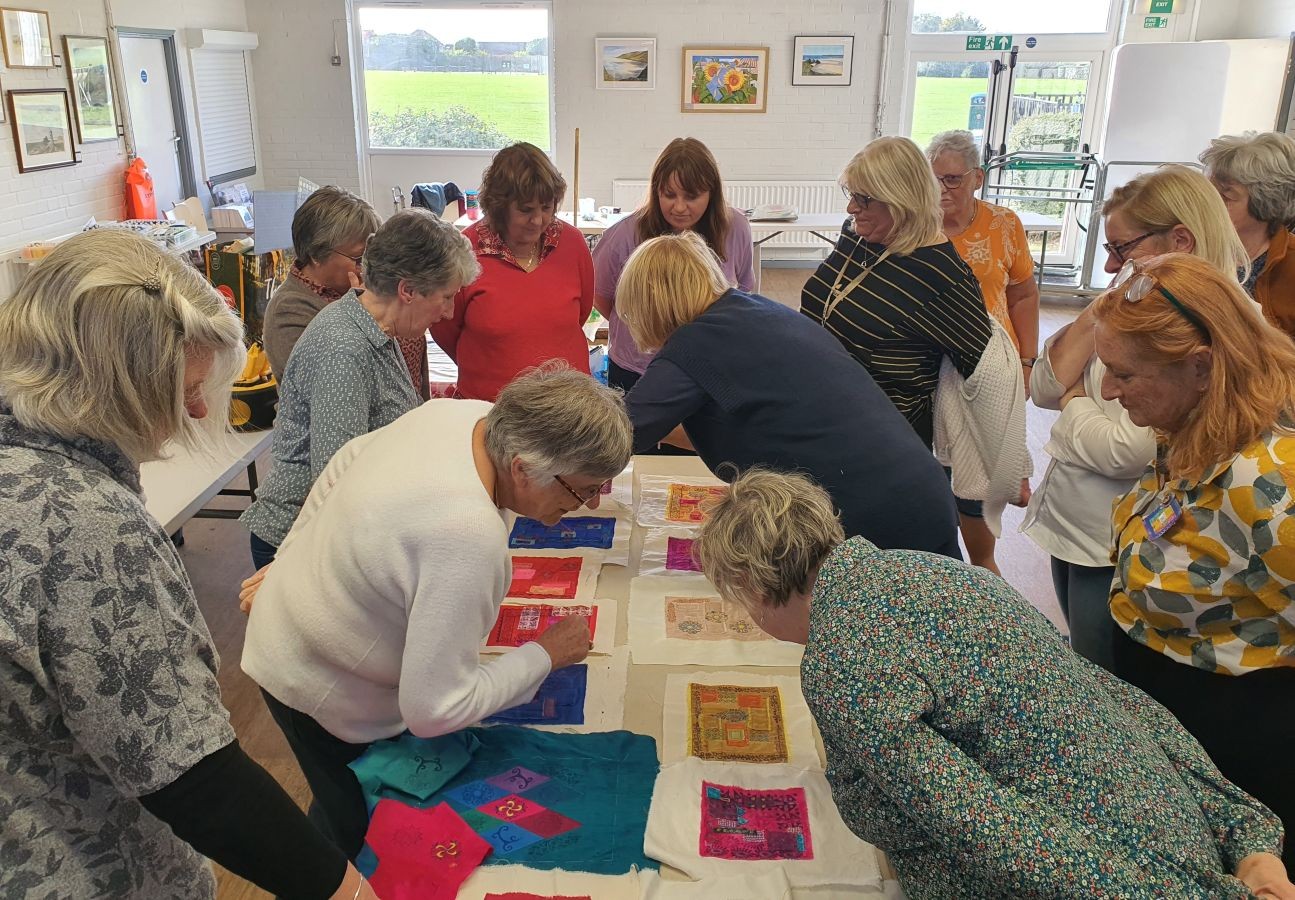
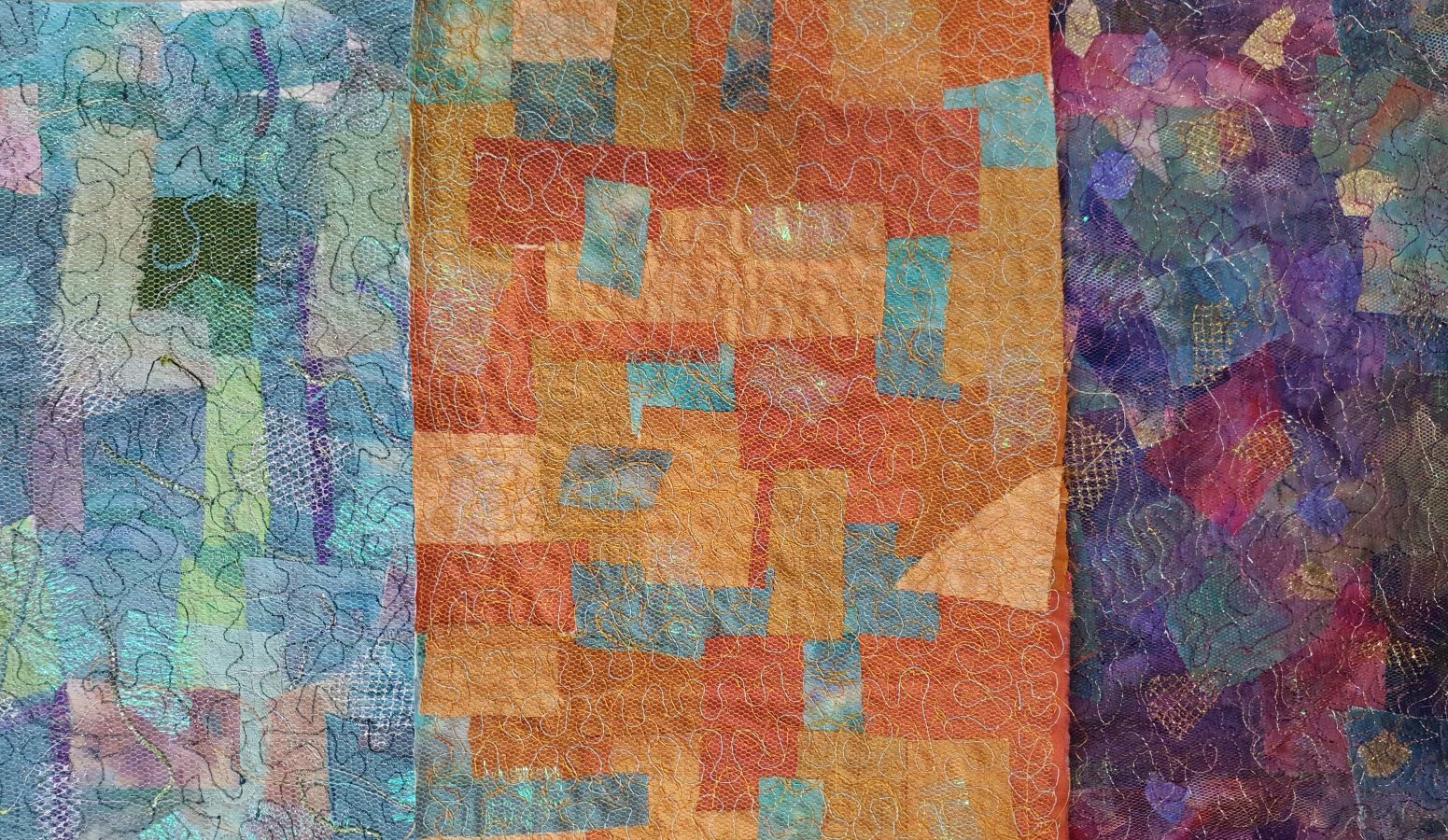
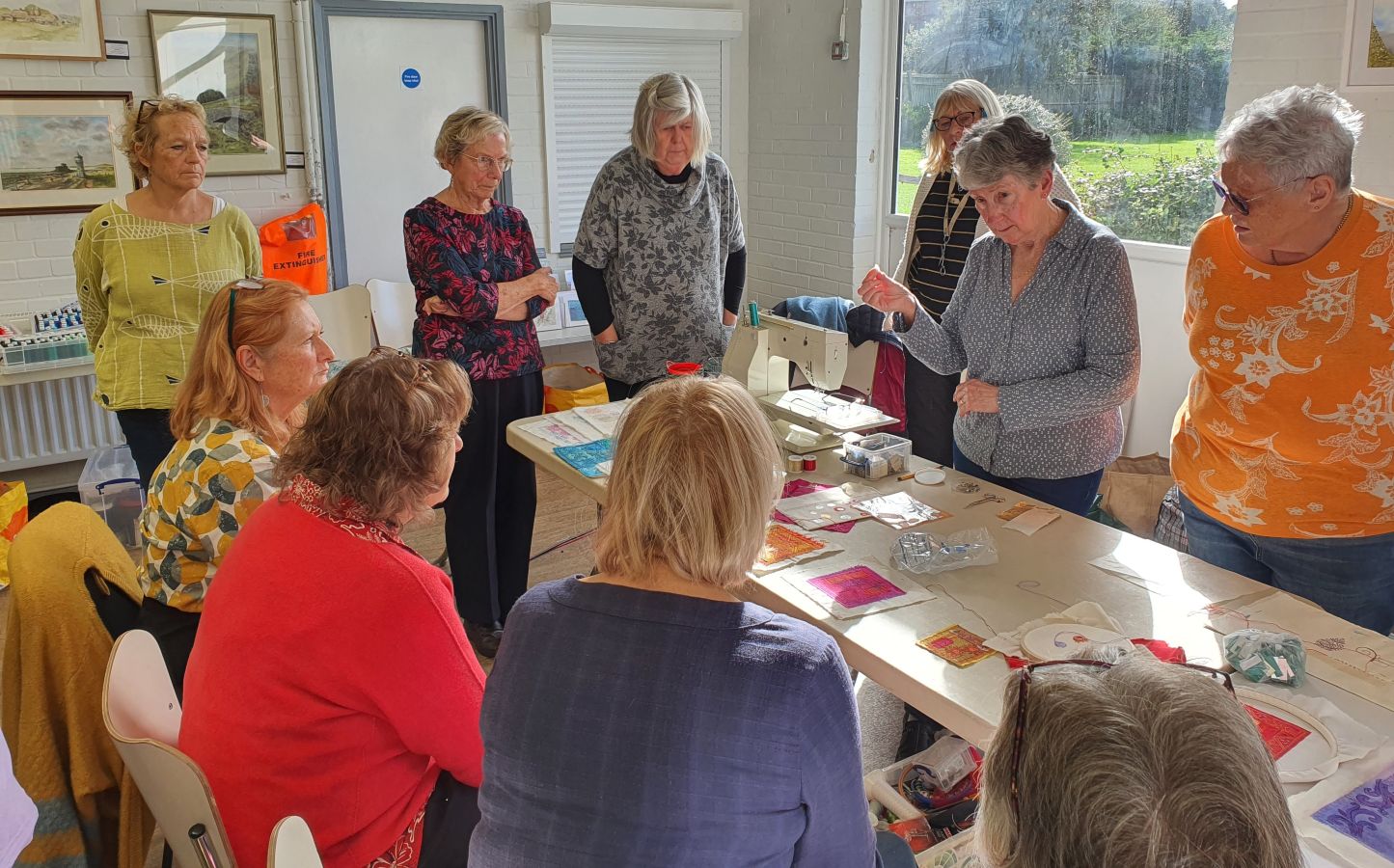
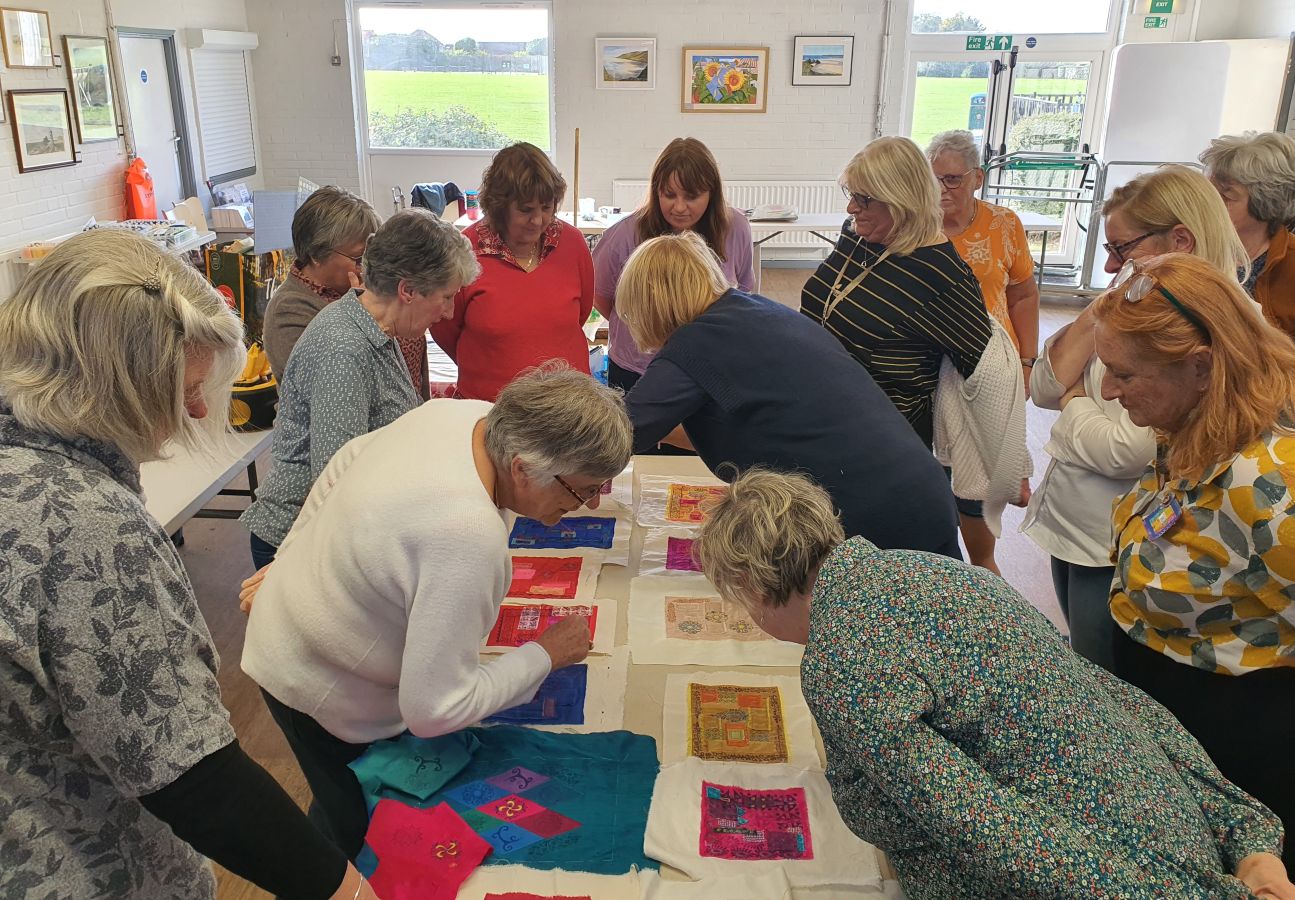
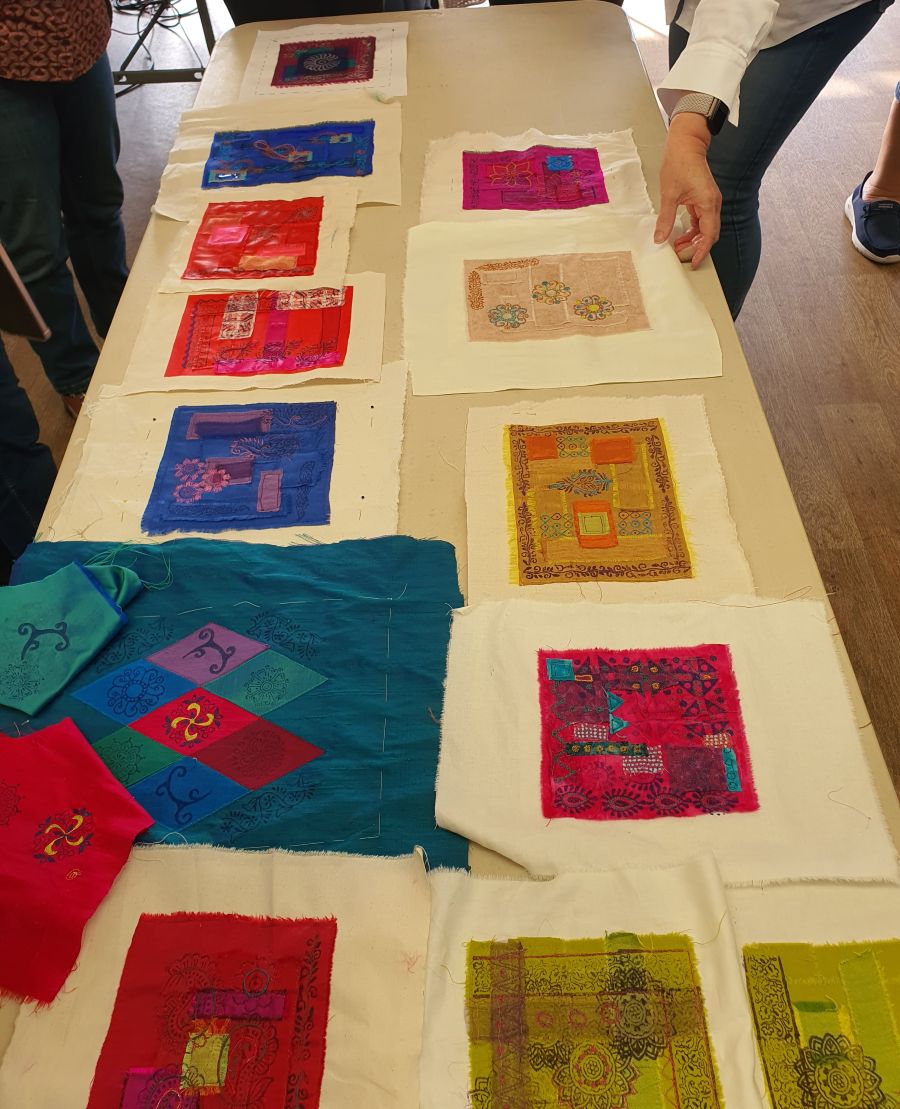
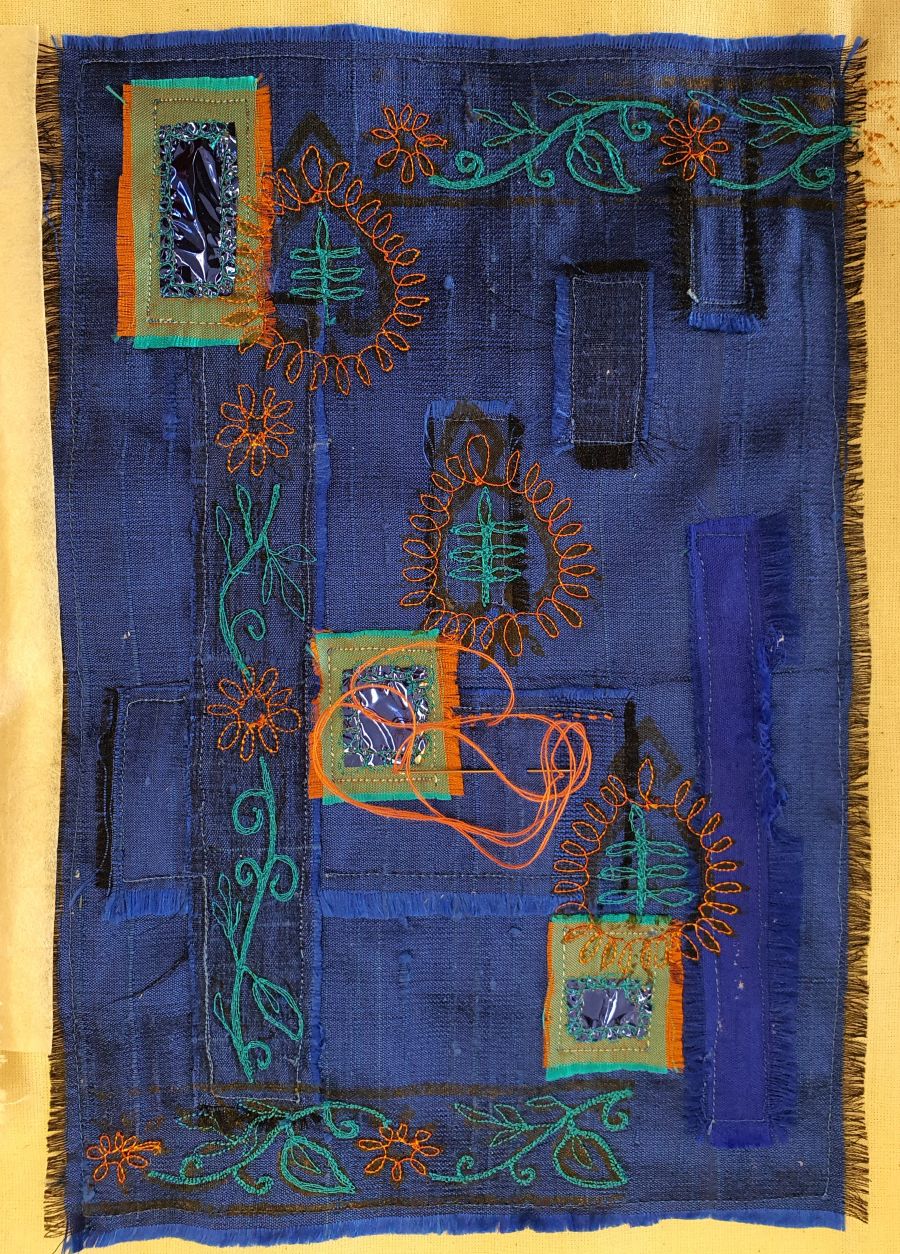
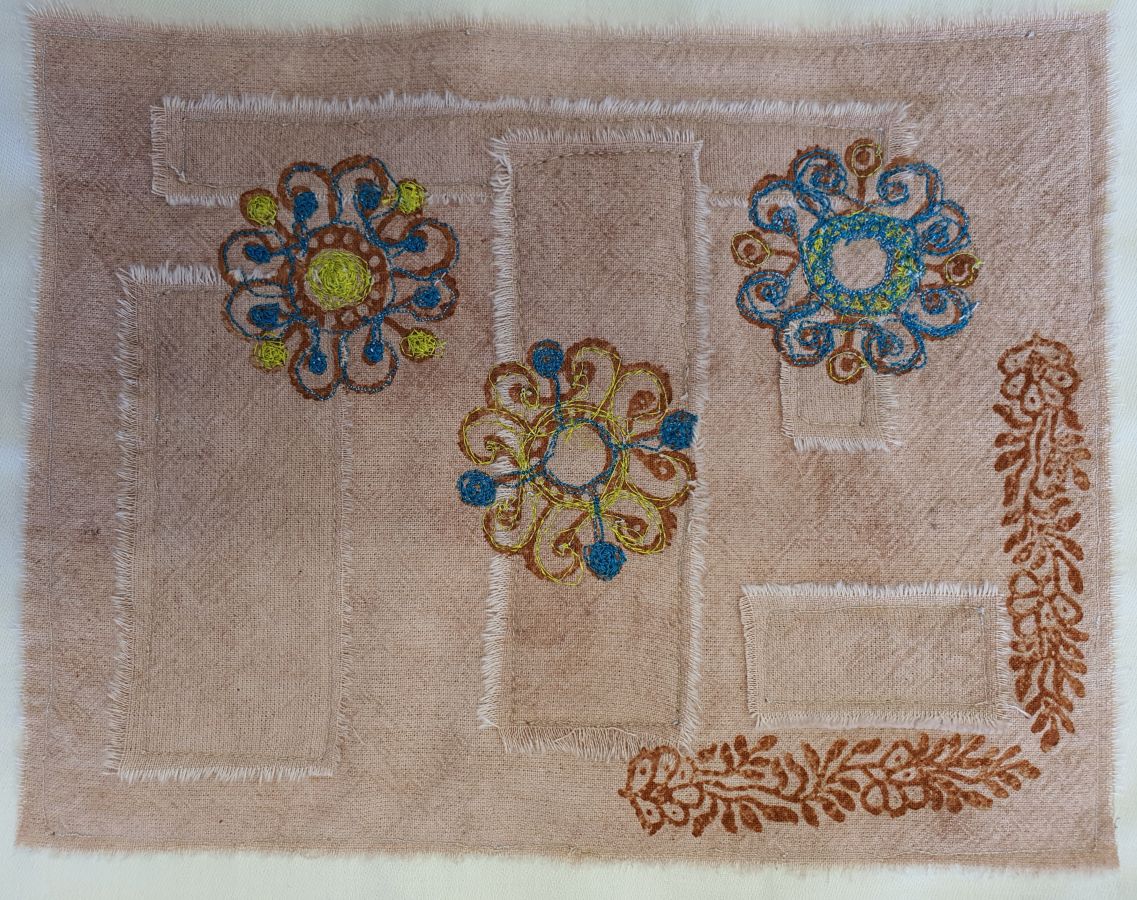
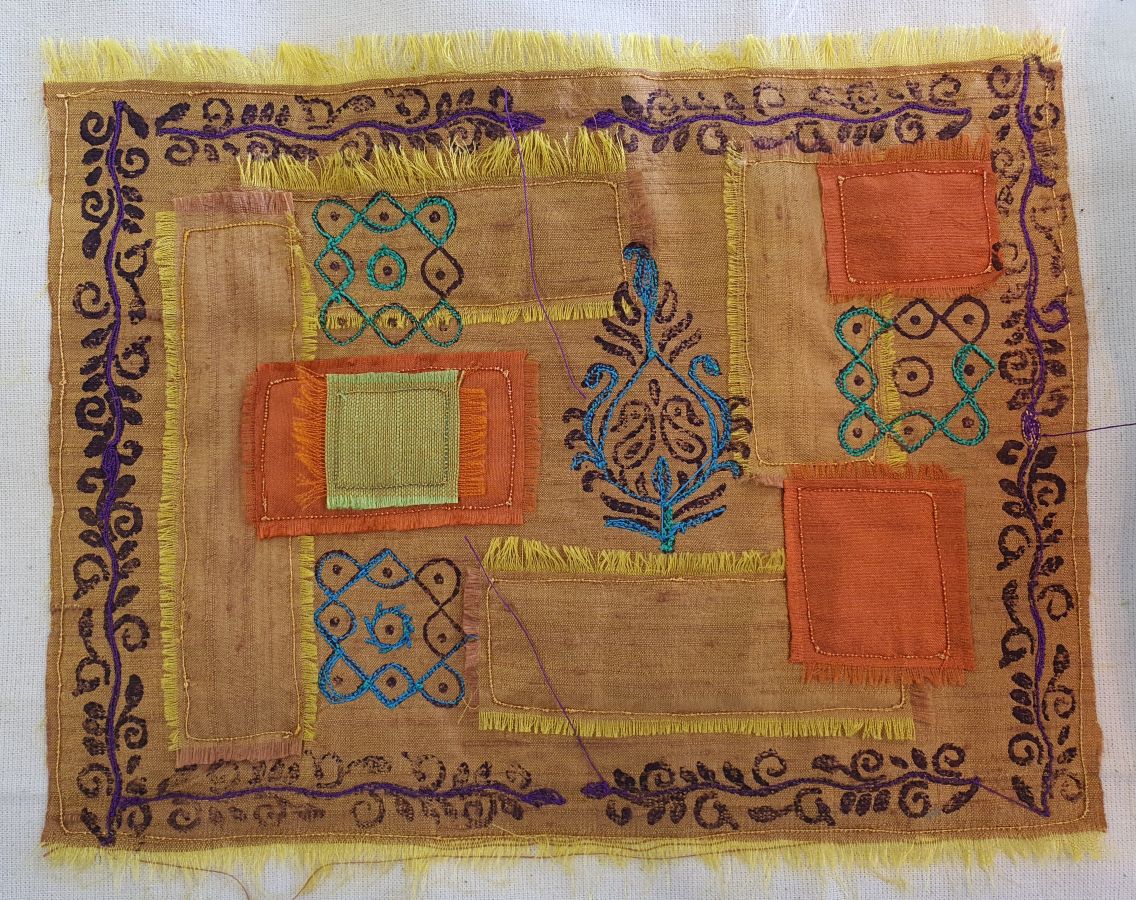
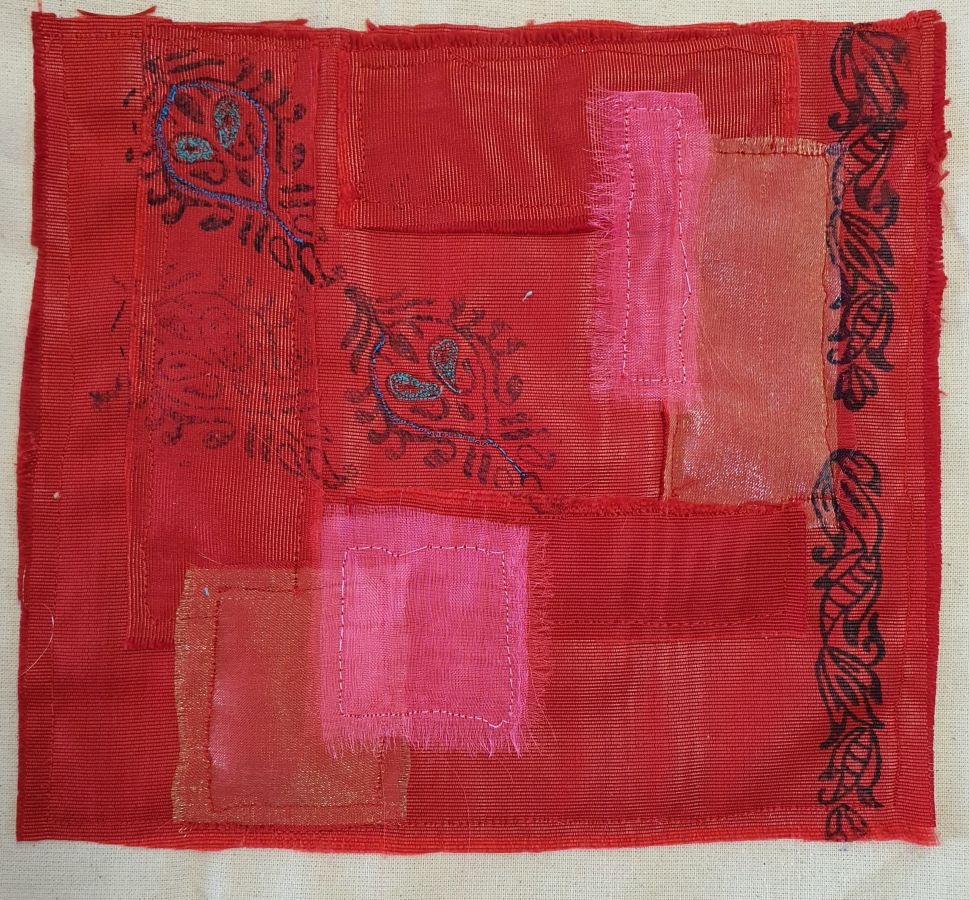
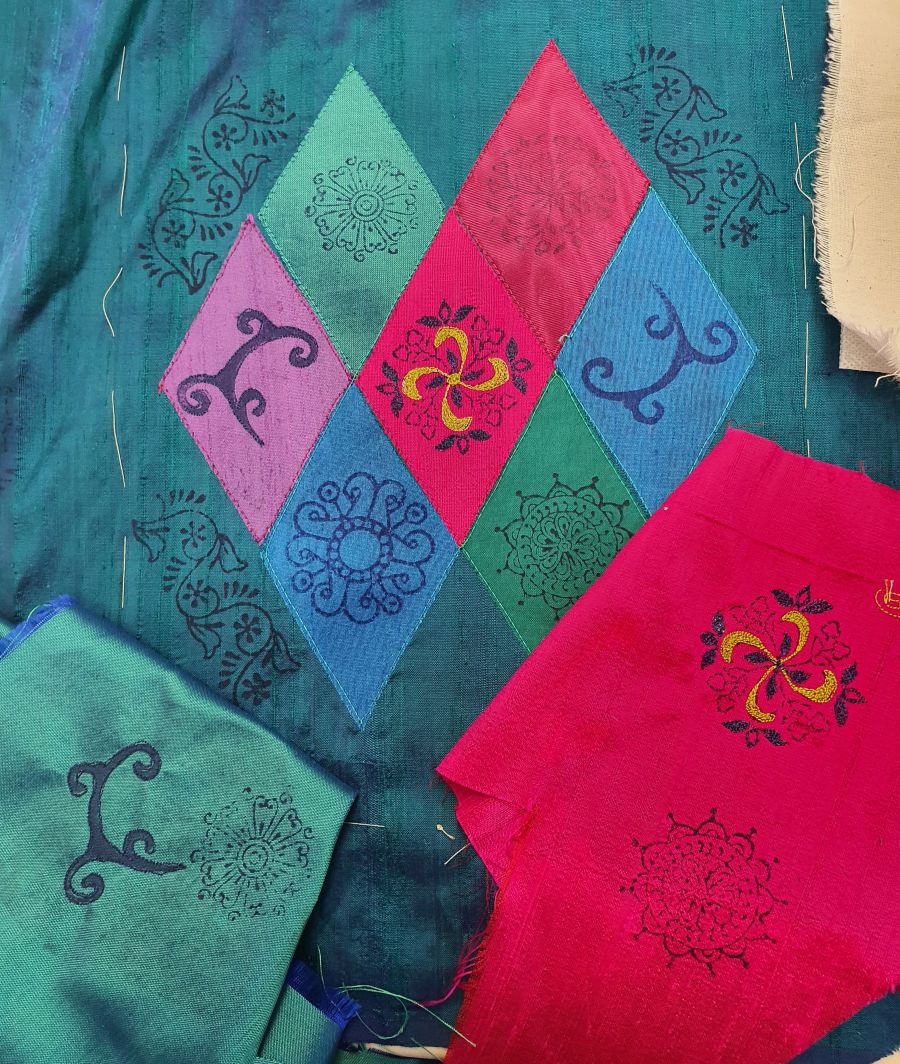
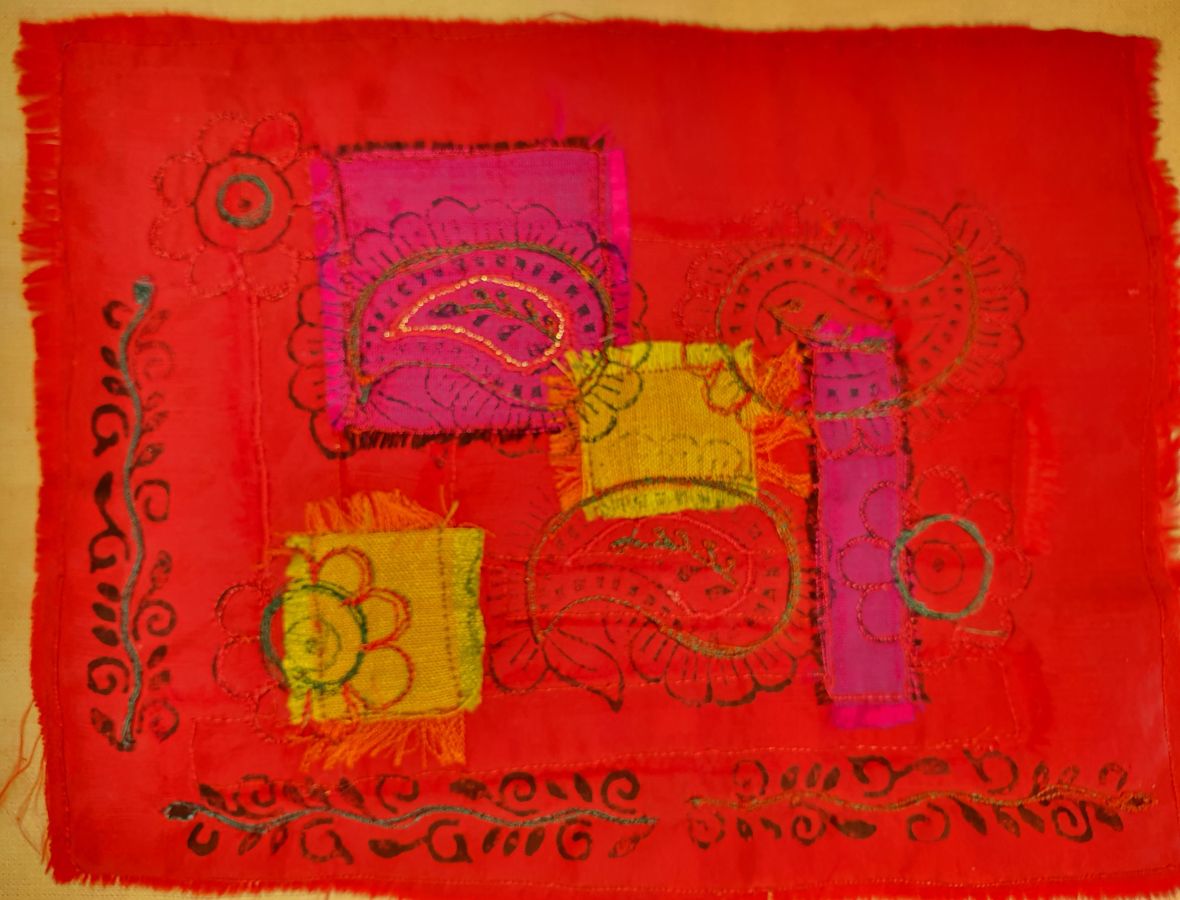
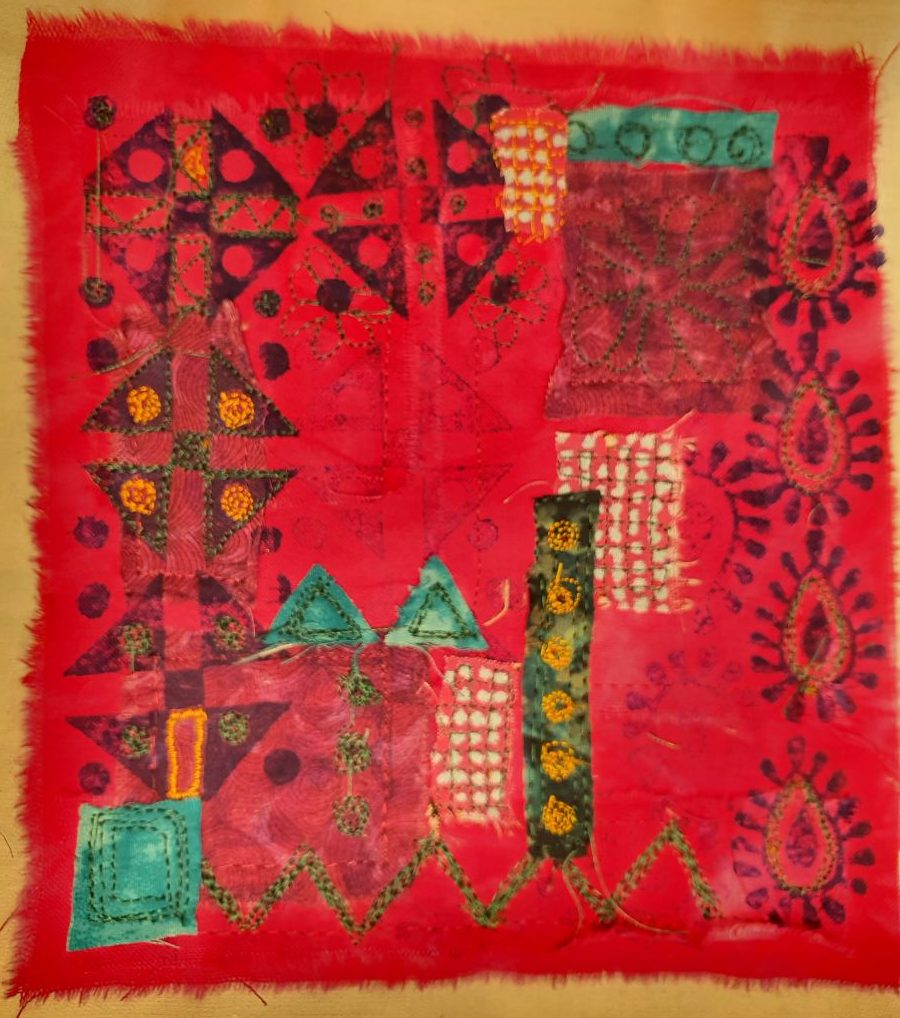
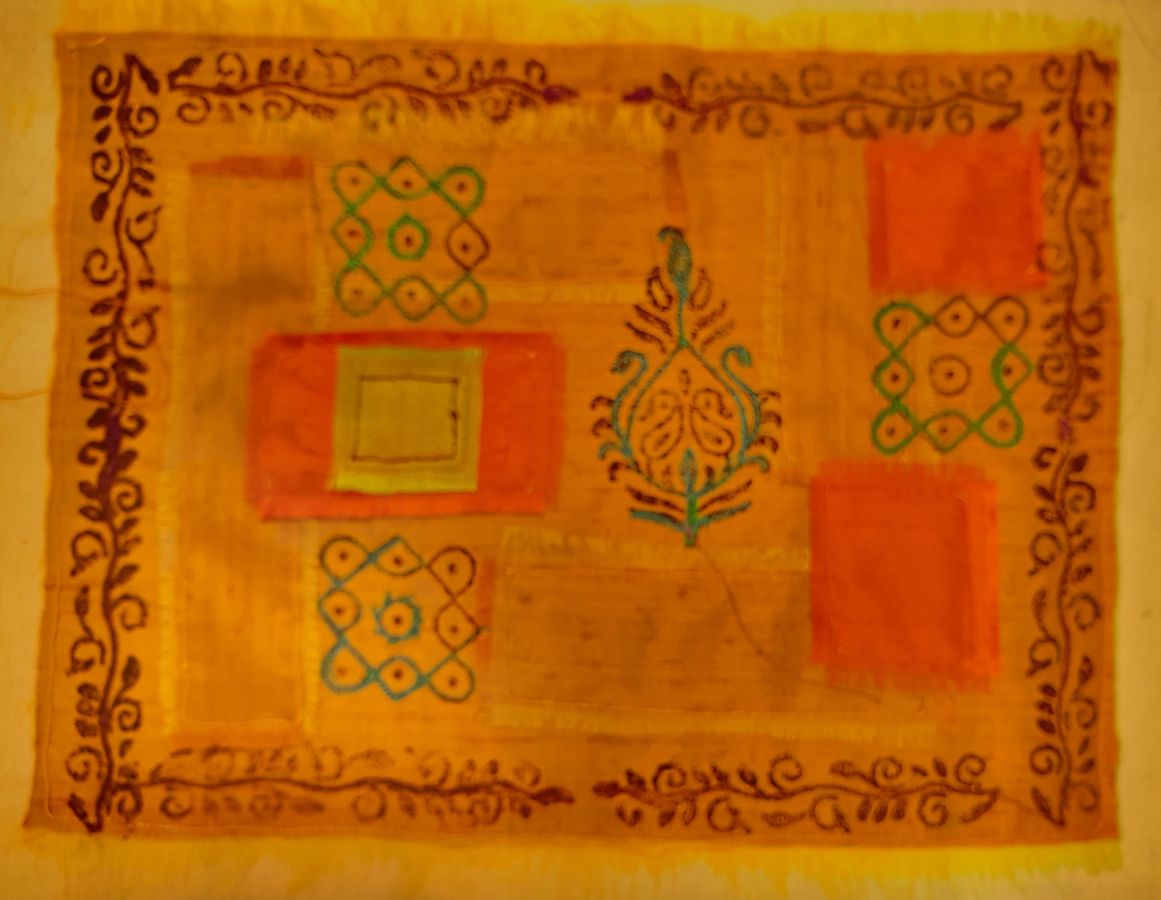
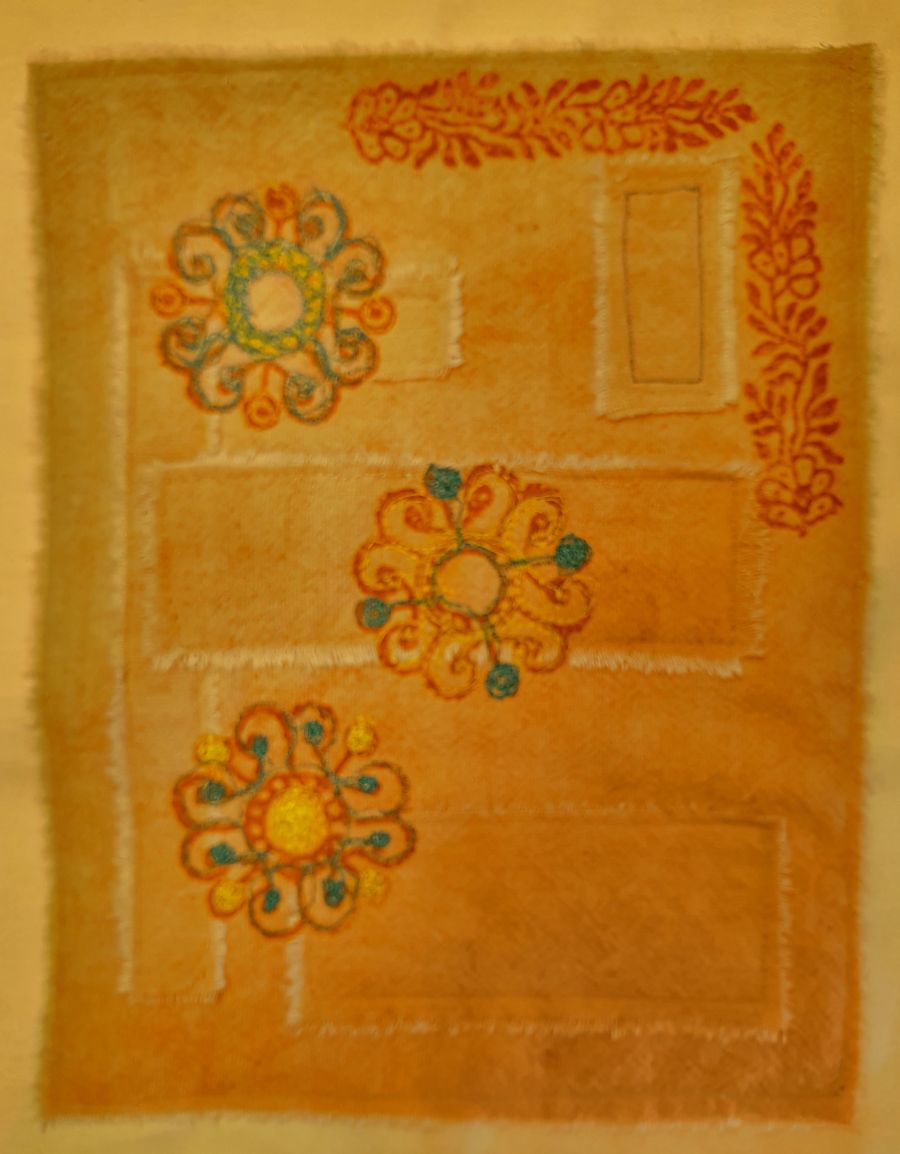
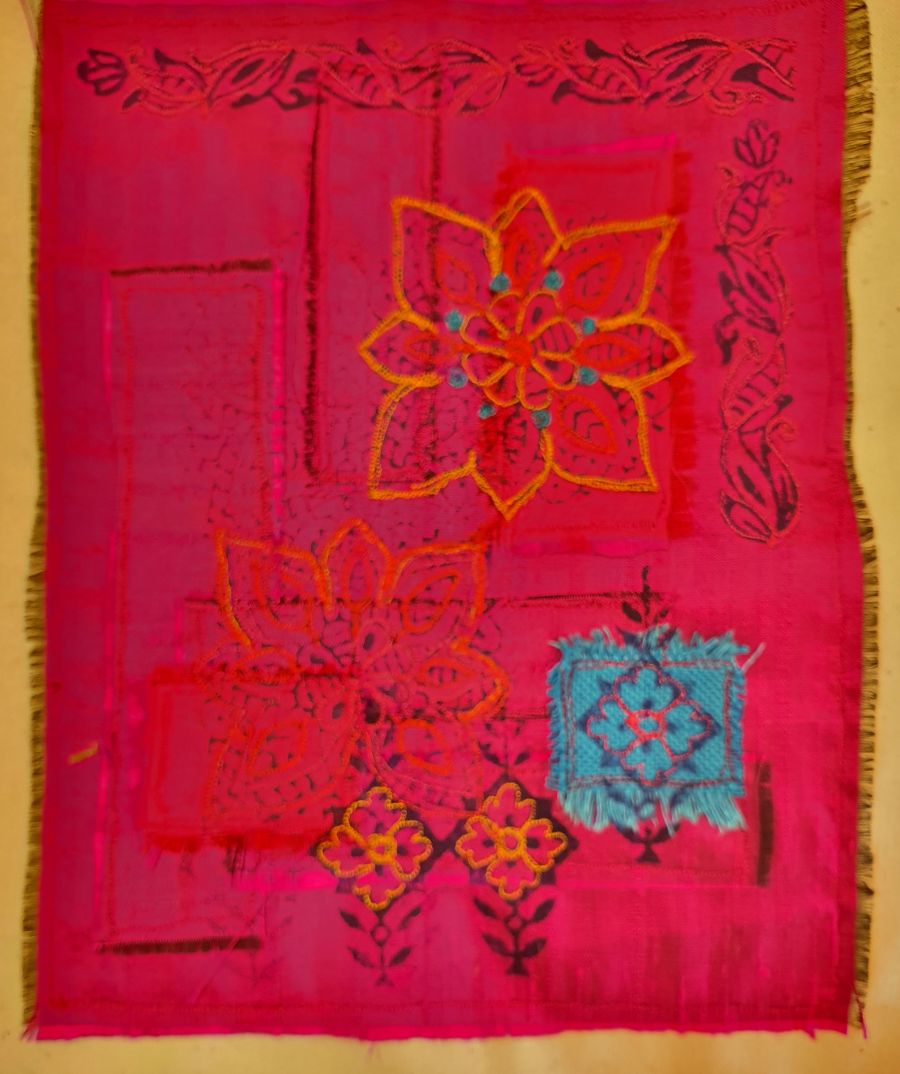
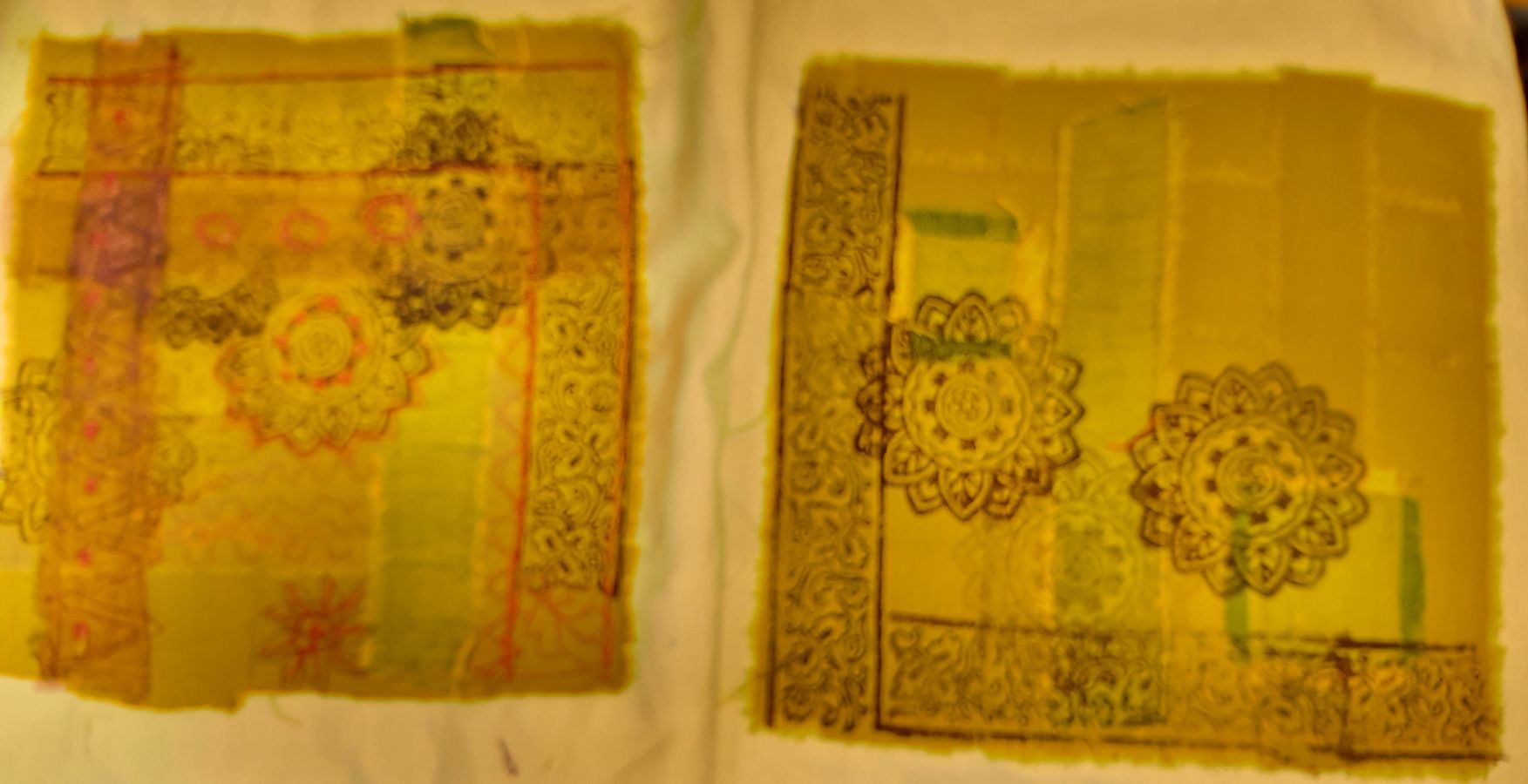
Local artist Wendy Dolan led this workshop for our group this month. Inspired by her travels in India, she demonstrated how to make a collage of brightly coloured fabrics, add decoration with Indian print-blocks, and then embellish with machine and hand-stitching. The final touches will be beads, shisha mirrors, braids etc. Scroll down to see the pieces that were started during the day. They will have lots more added to them over time, so it would be good to see some finished ones later on.
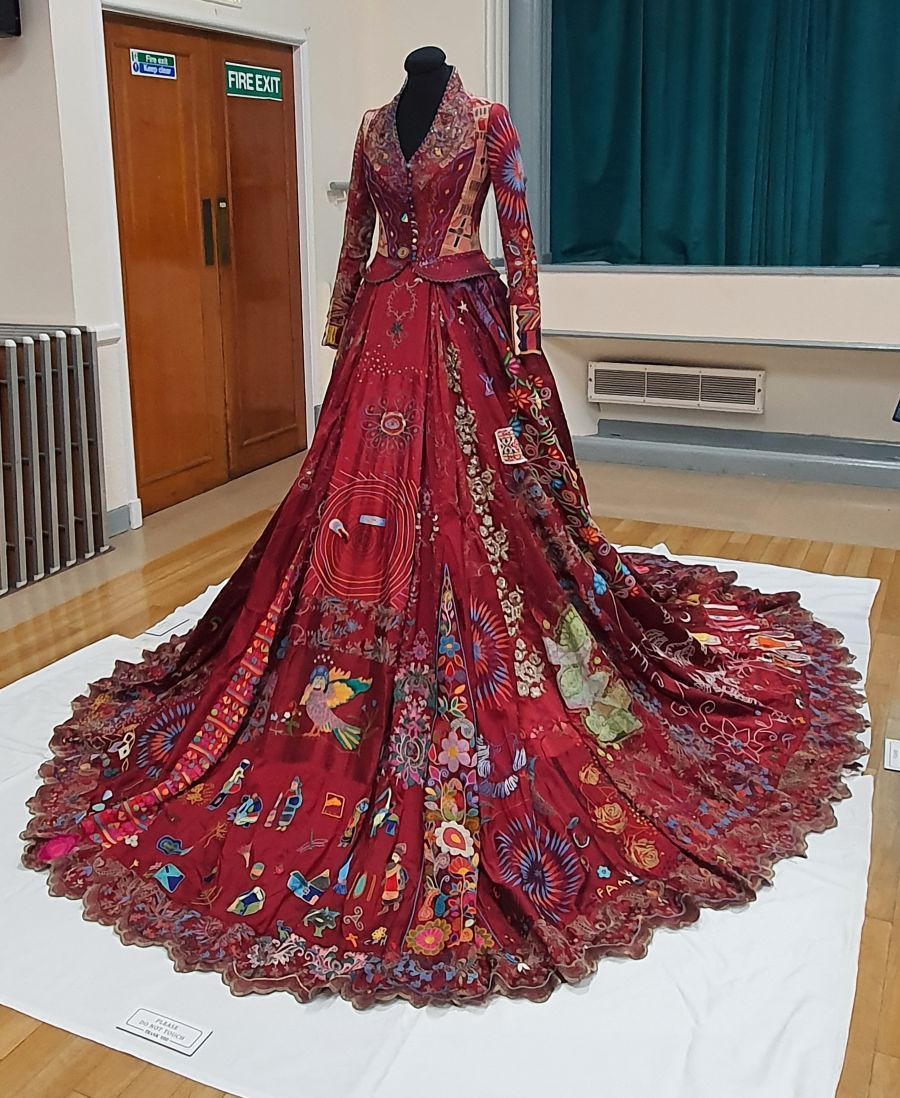
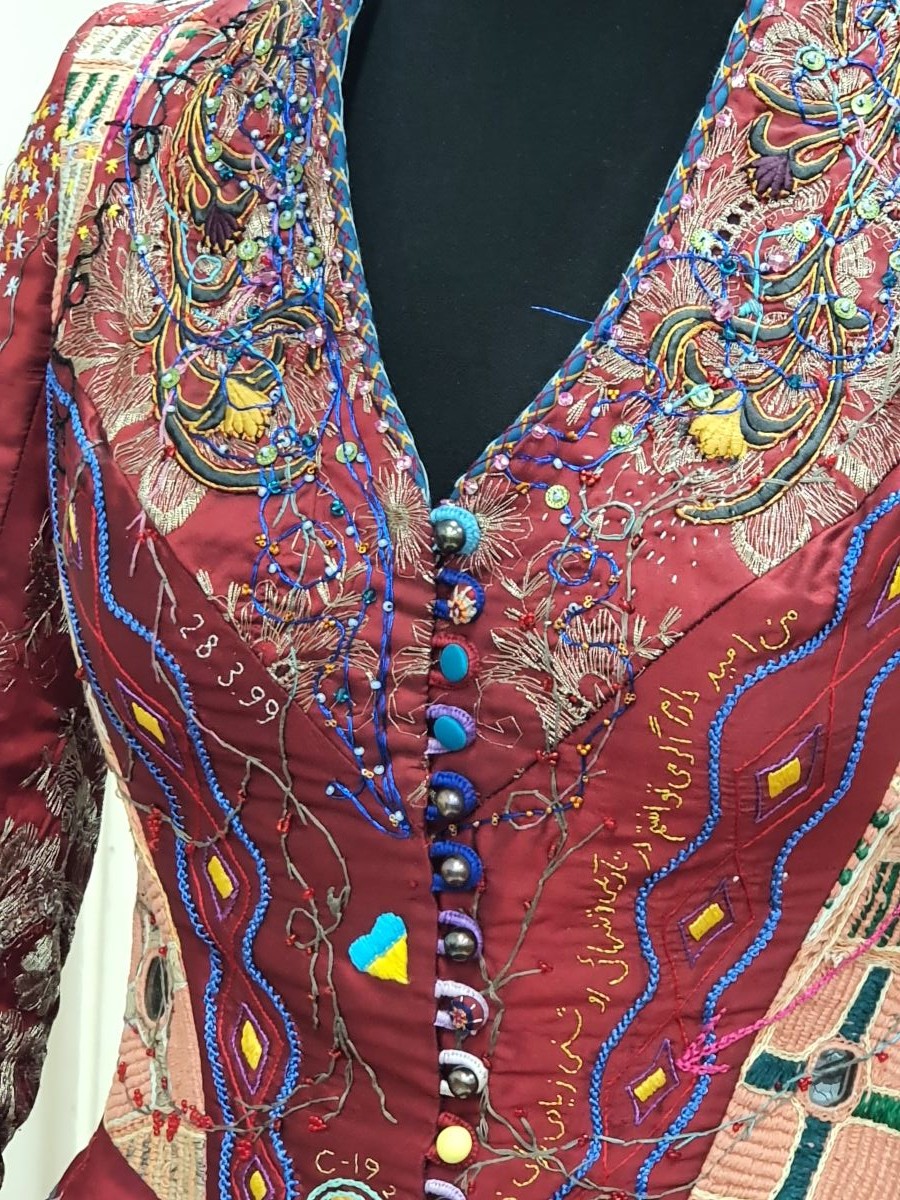
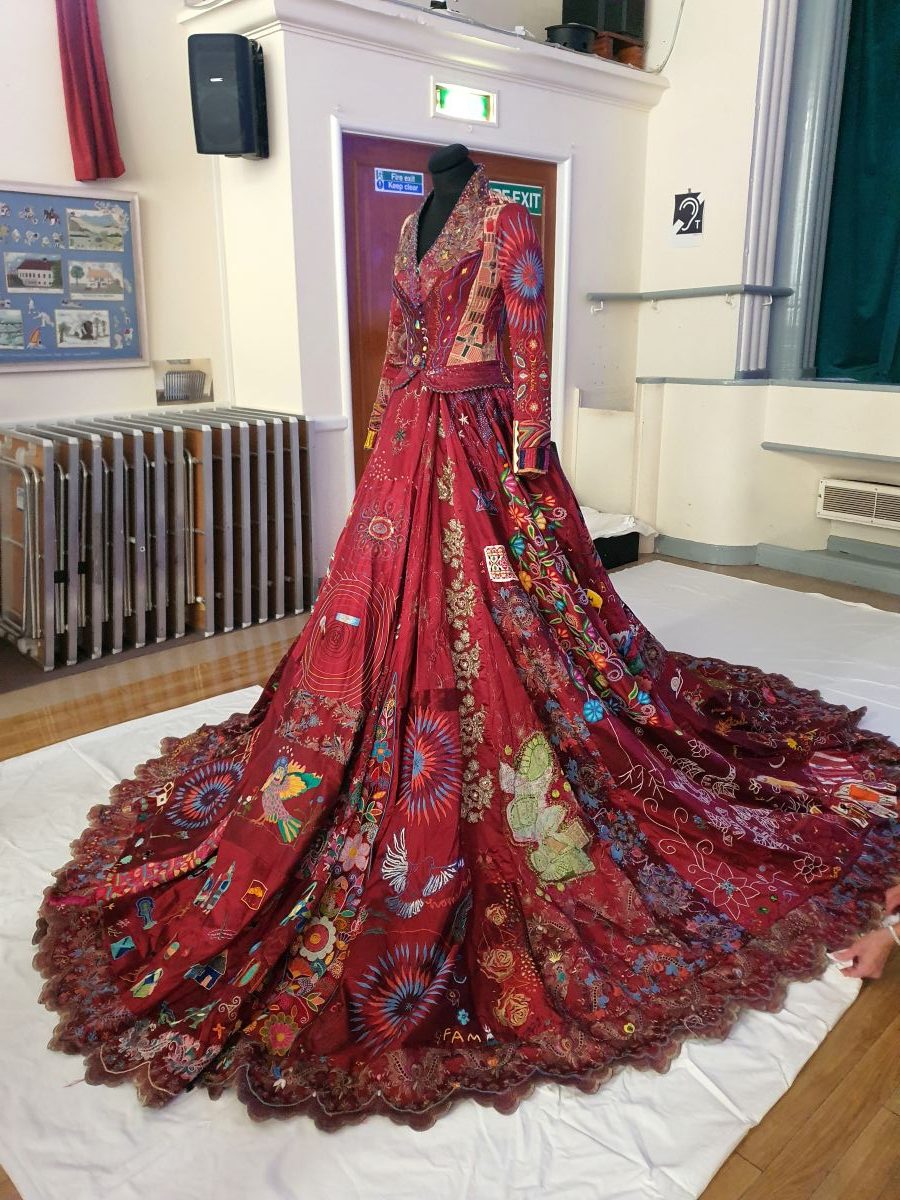
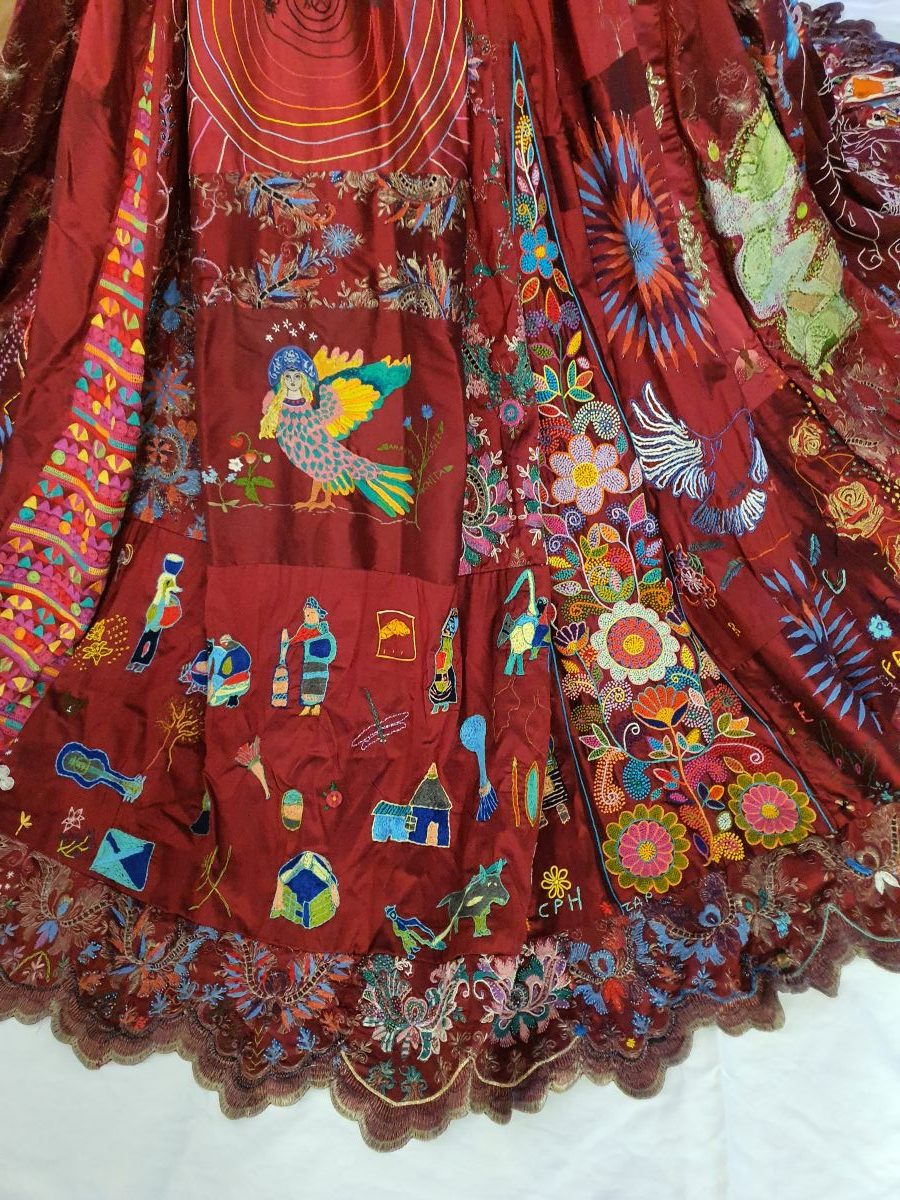
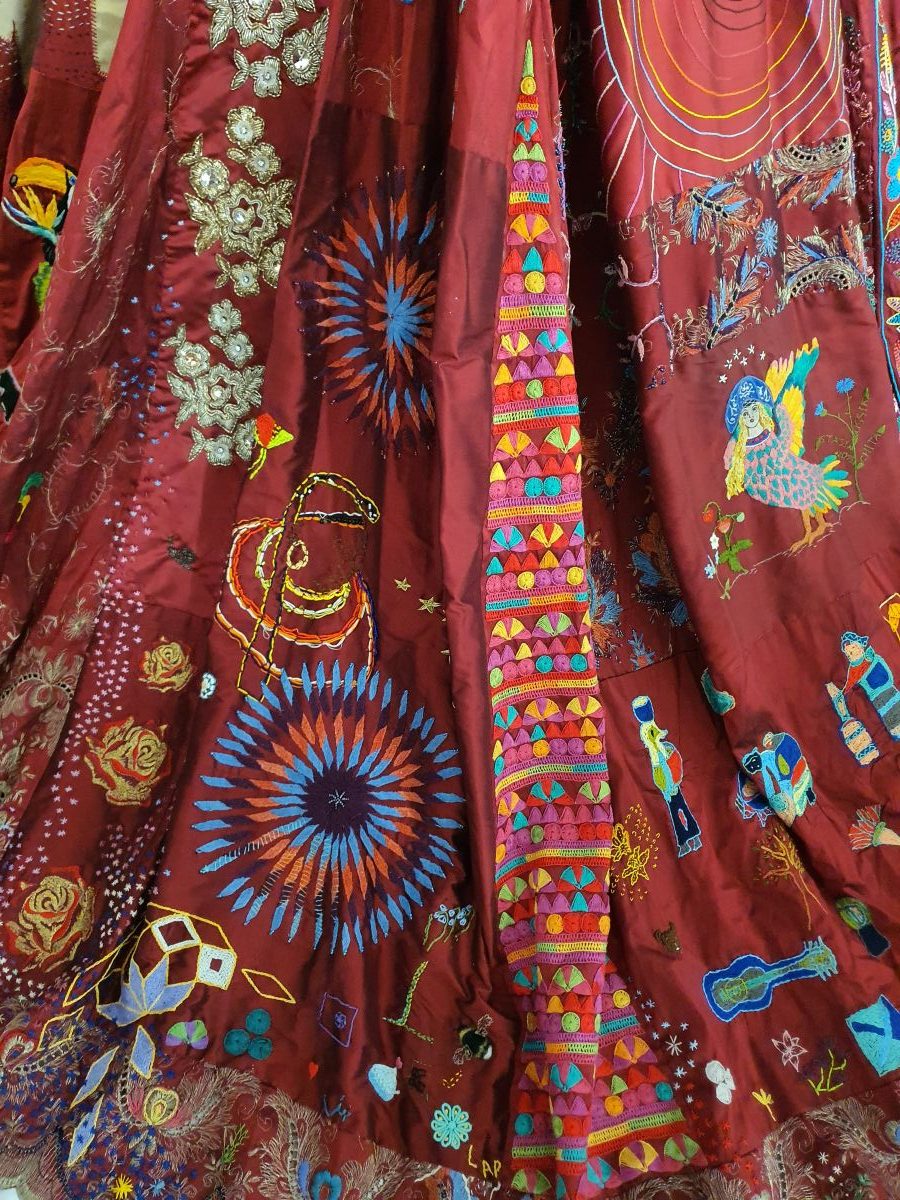
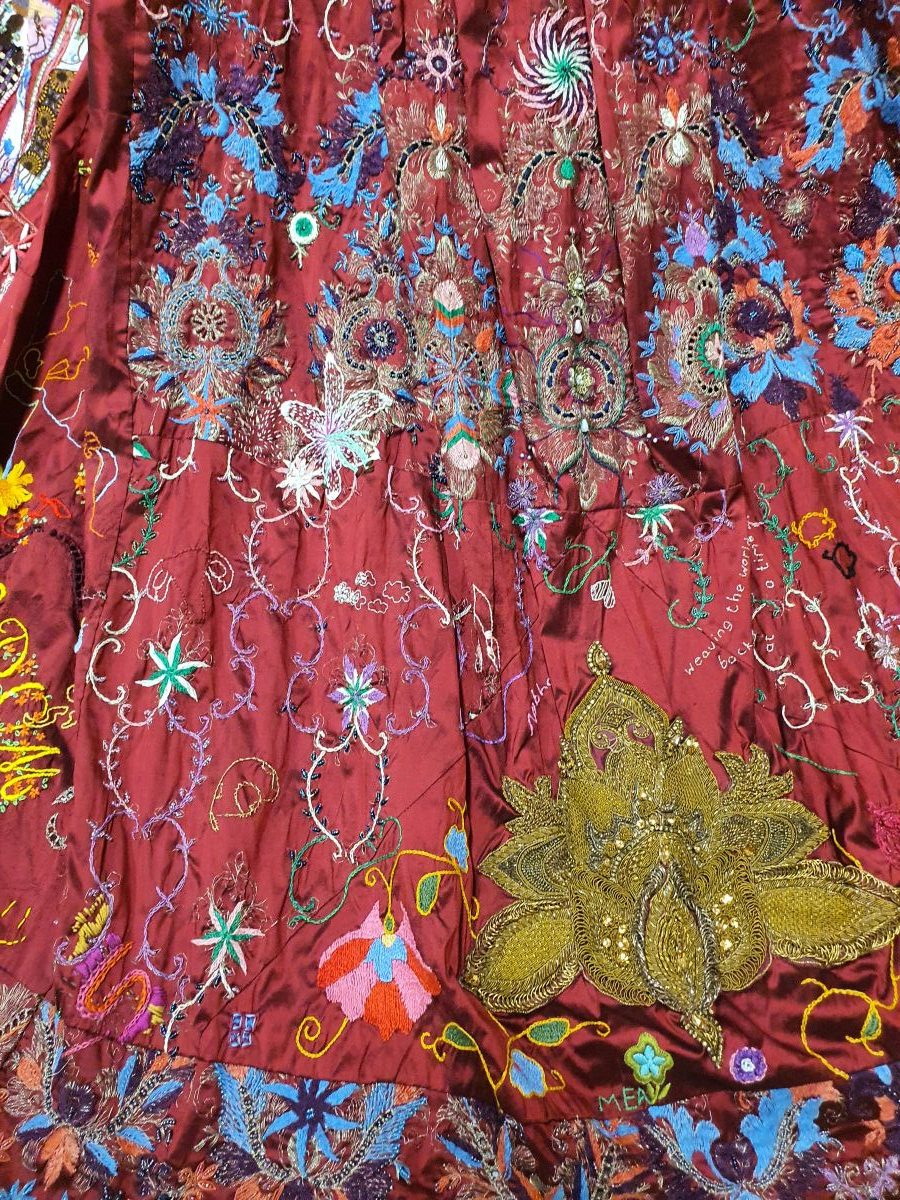
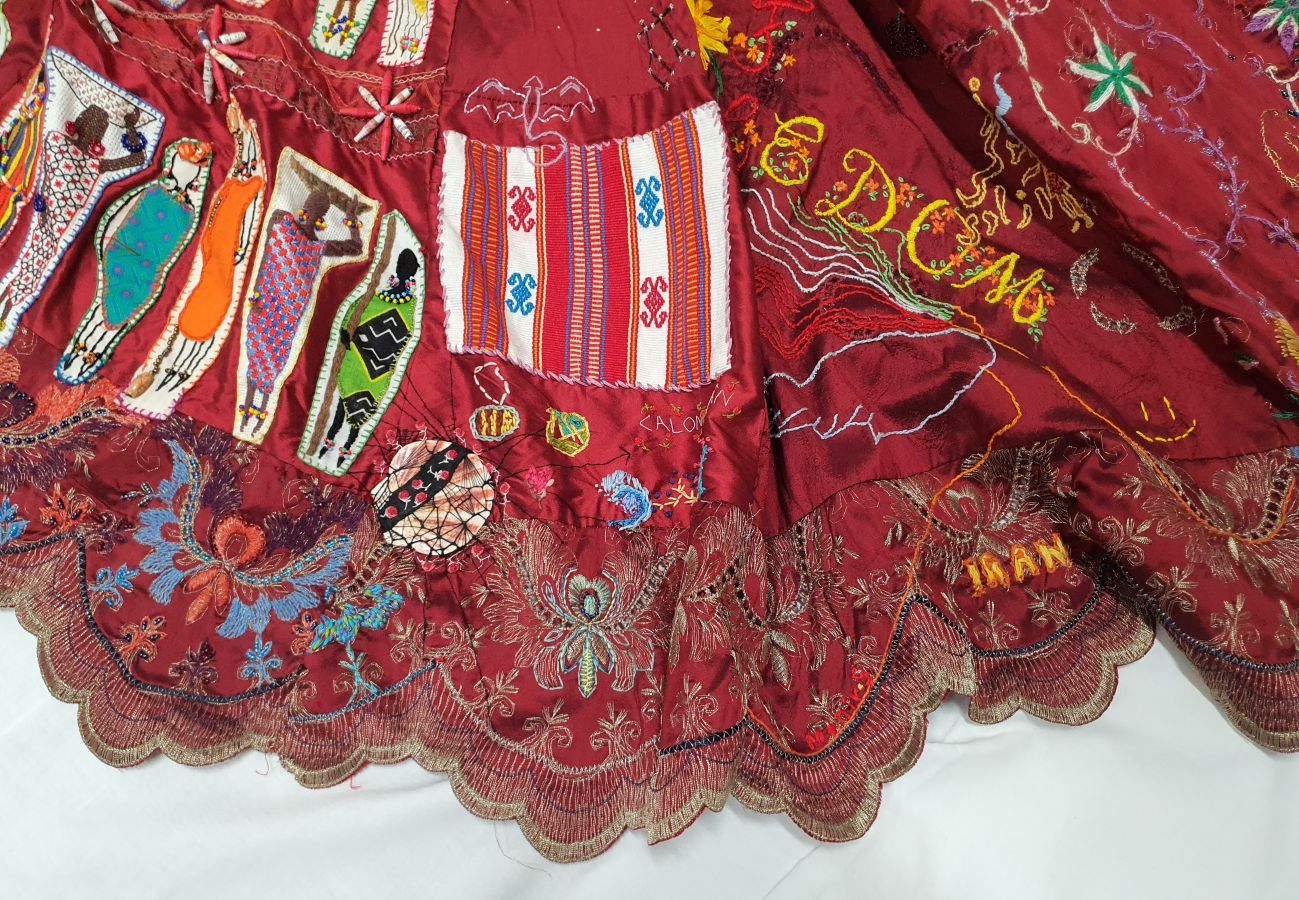
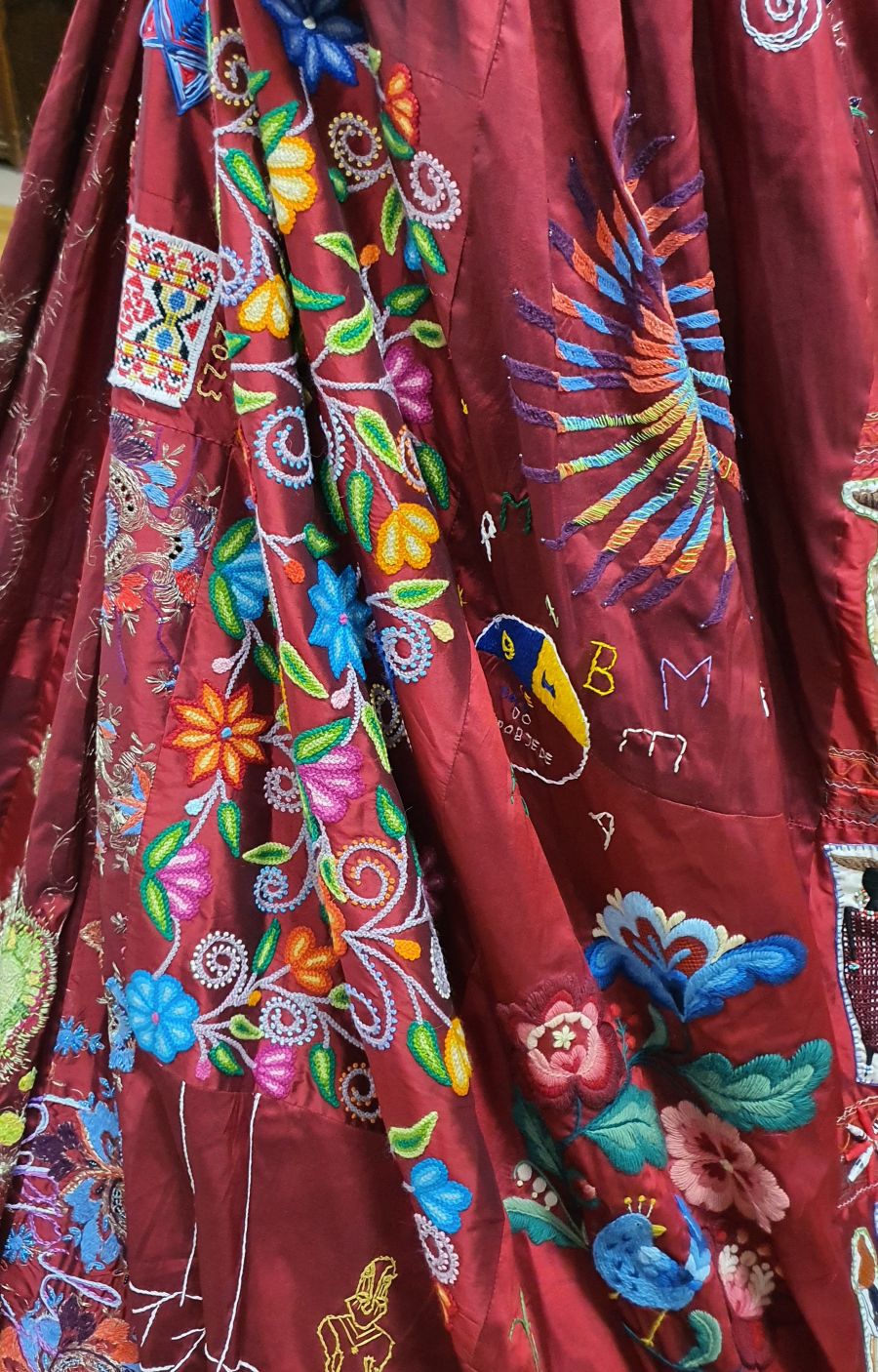
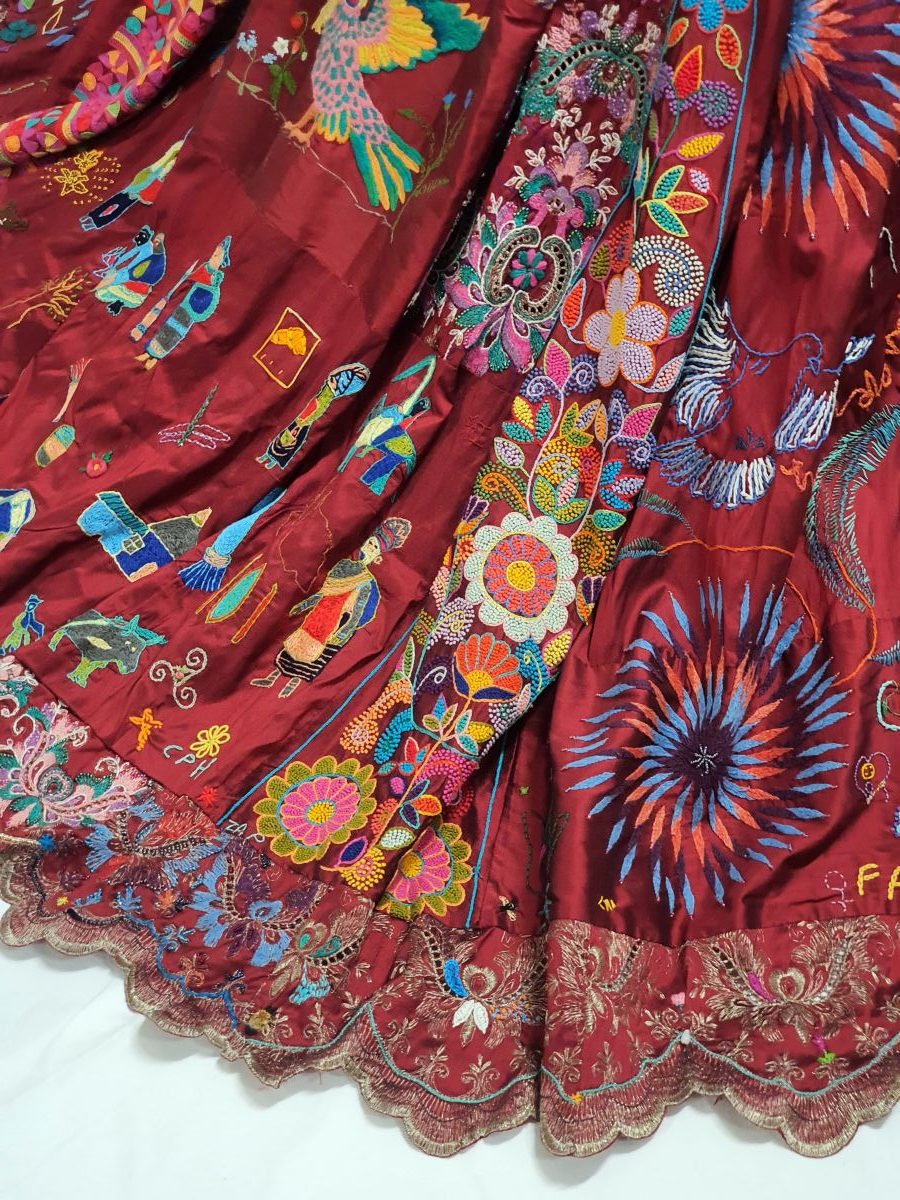
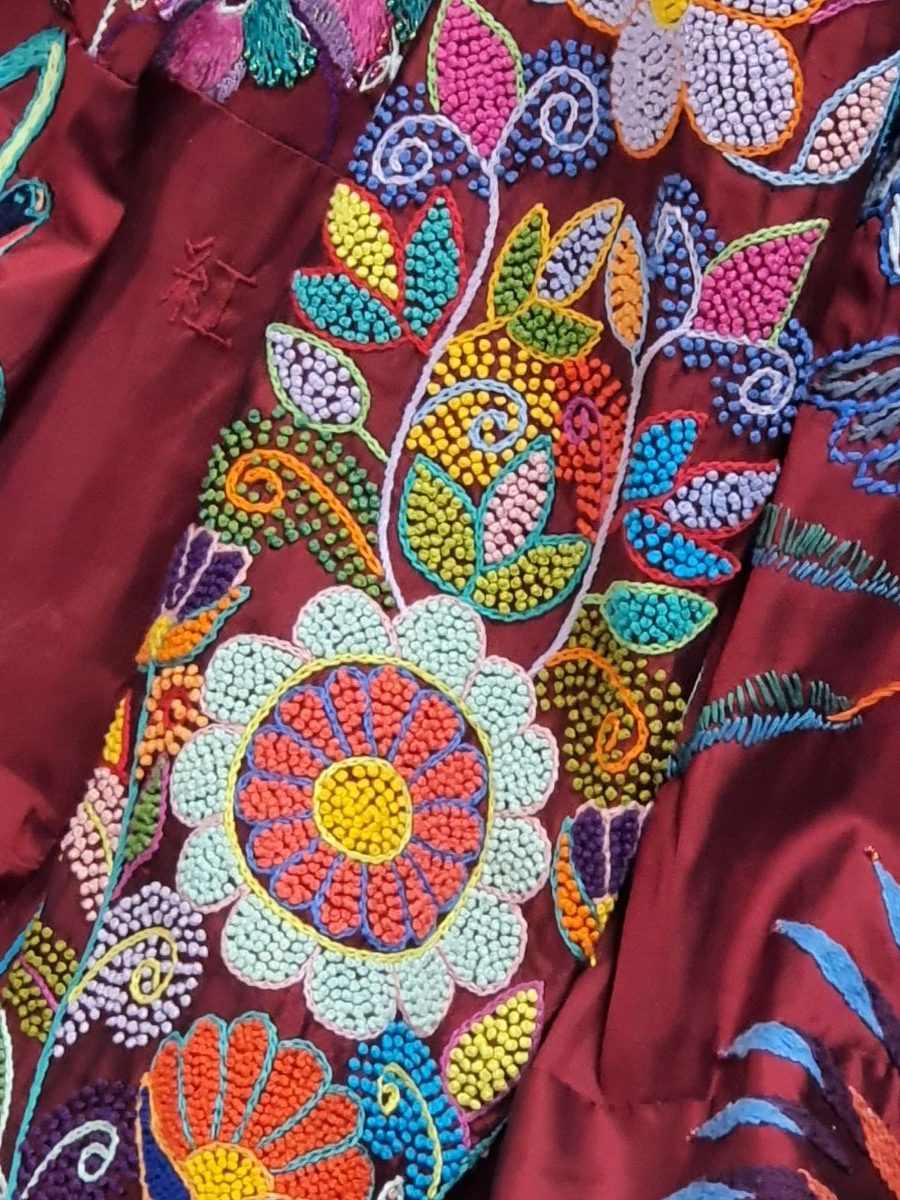
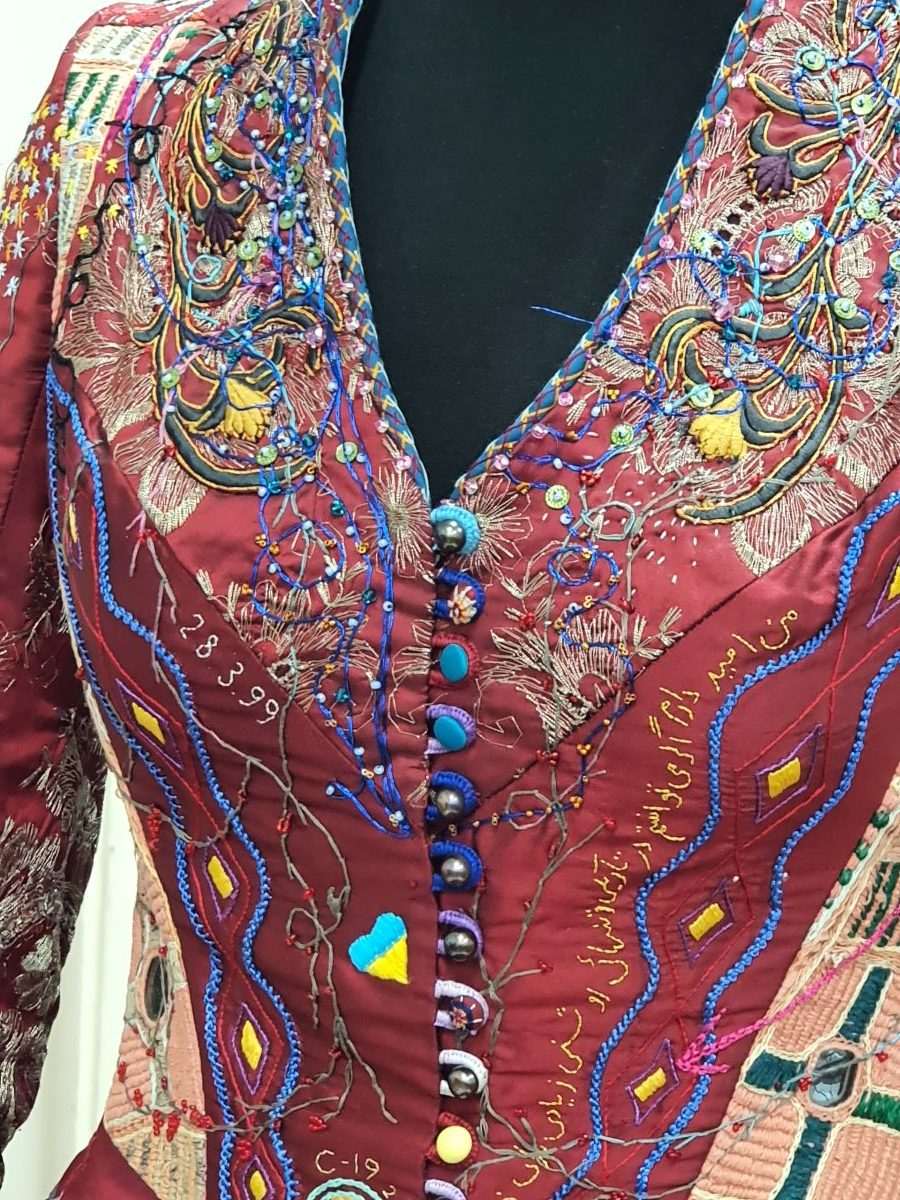
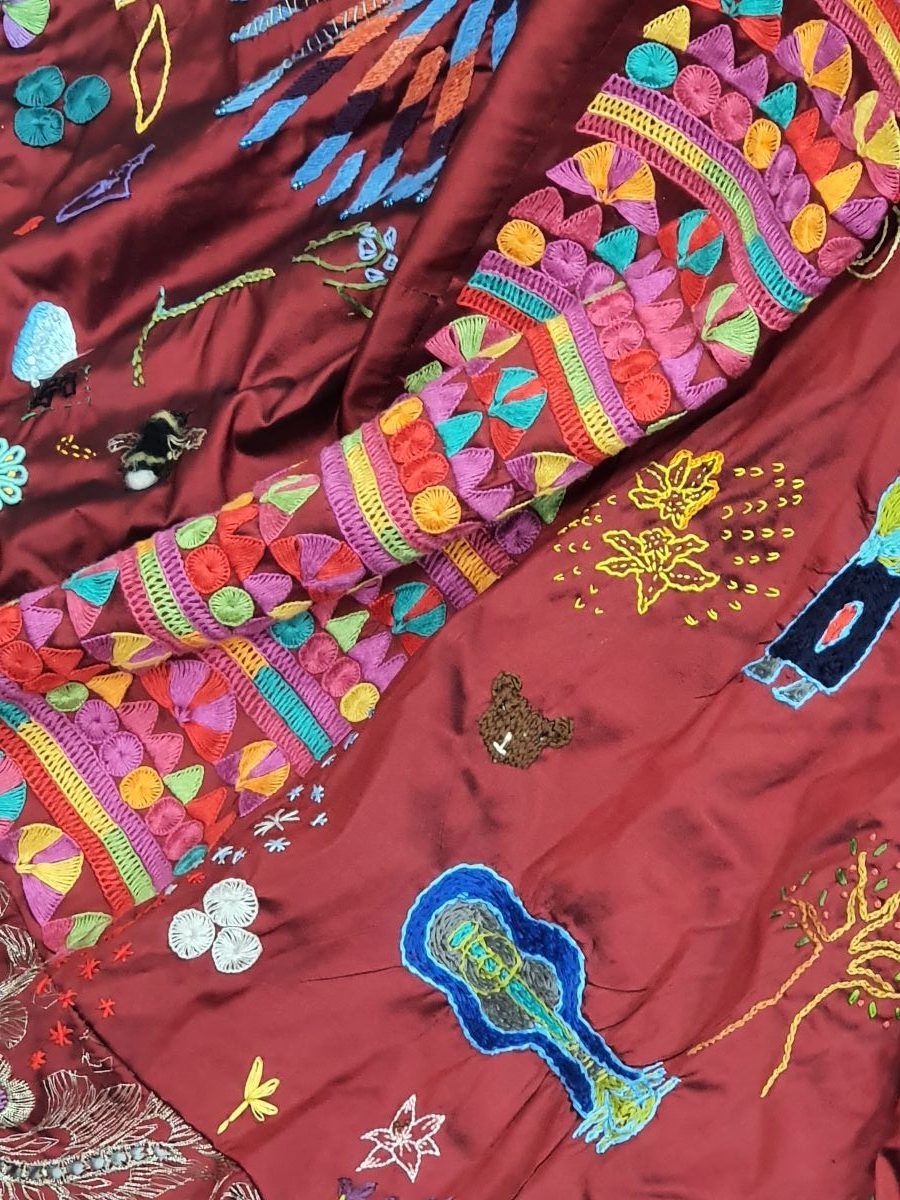
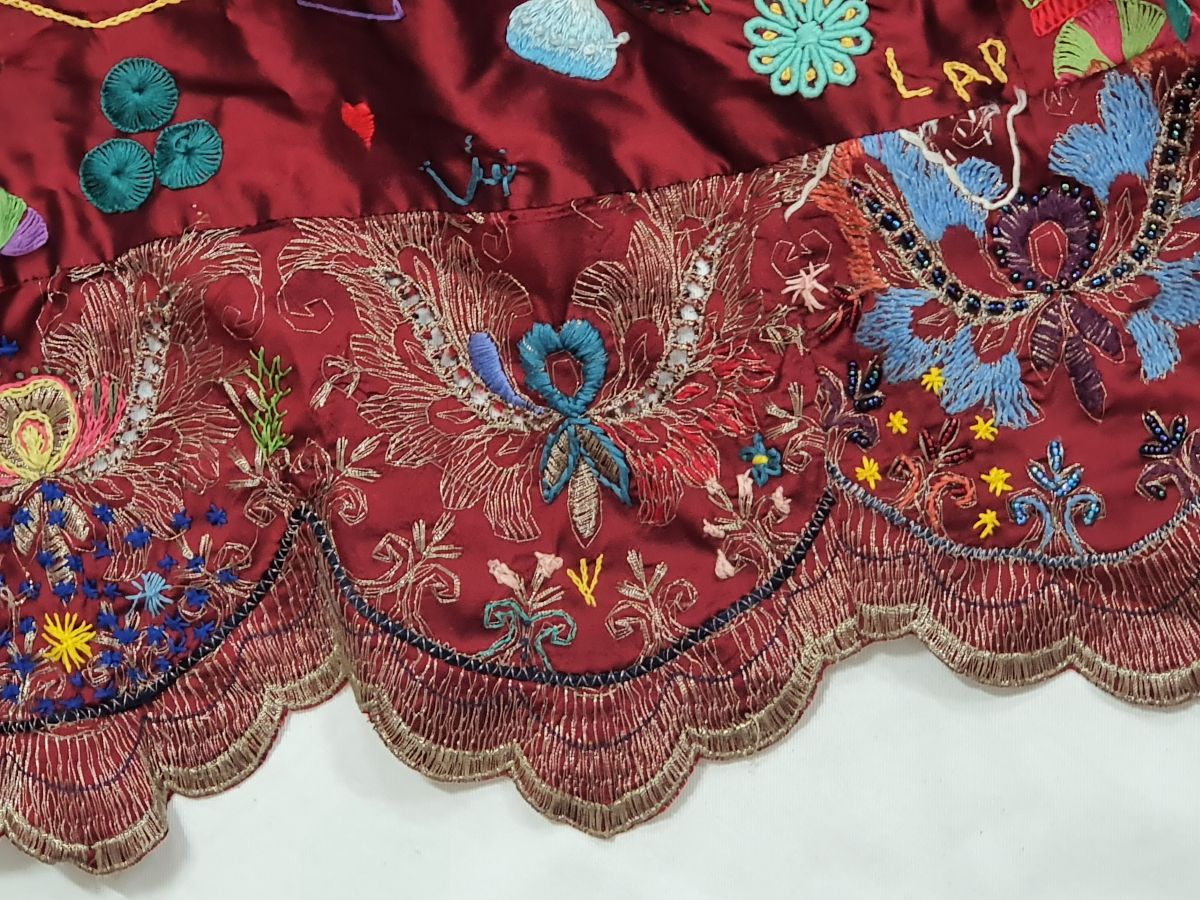
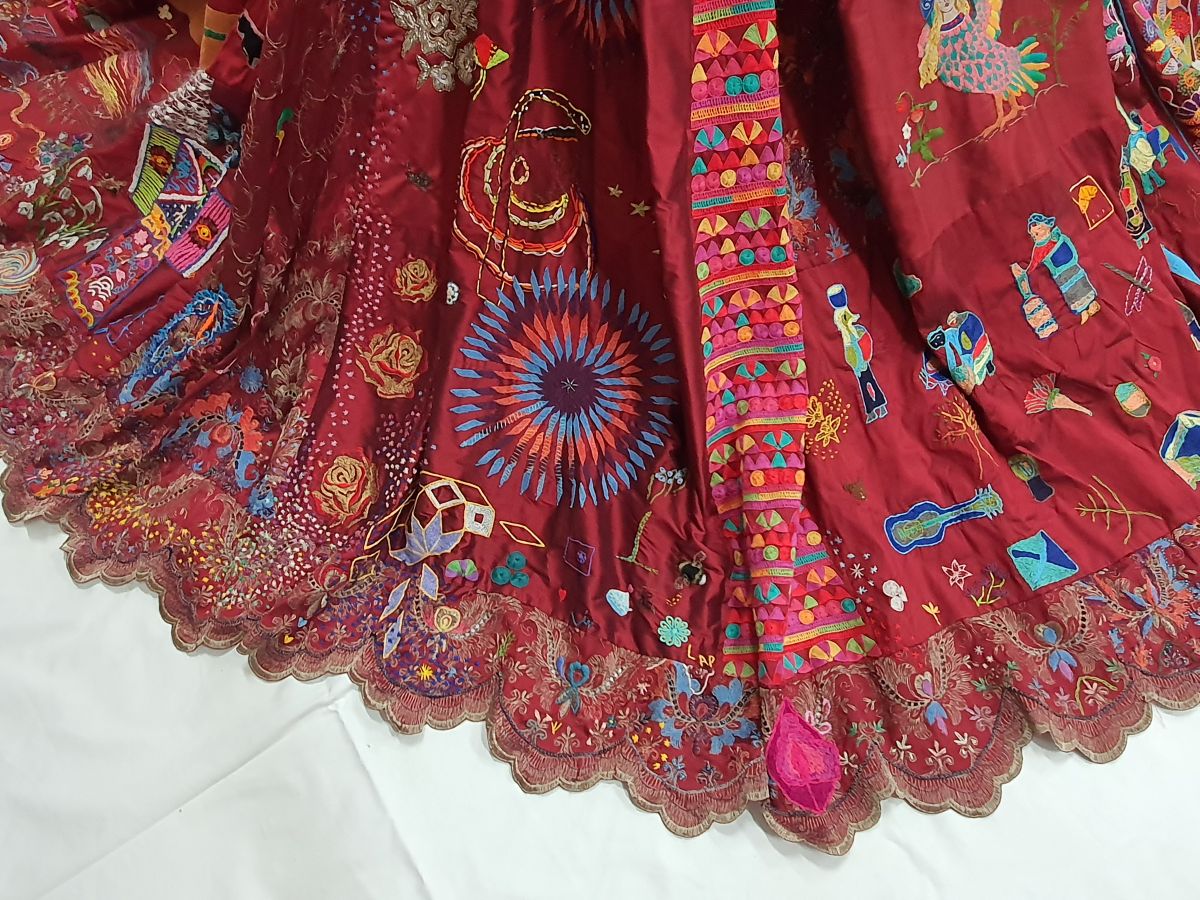
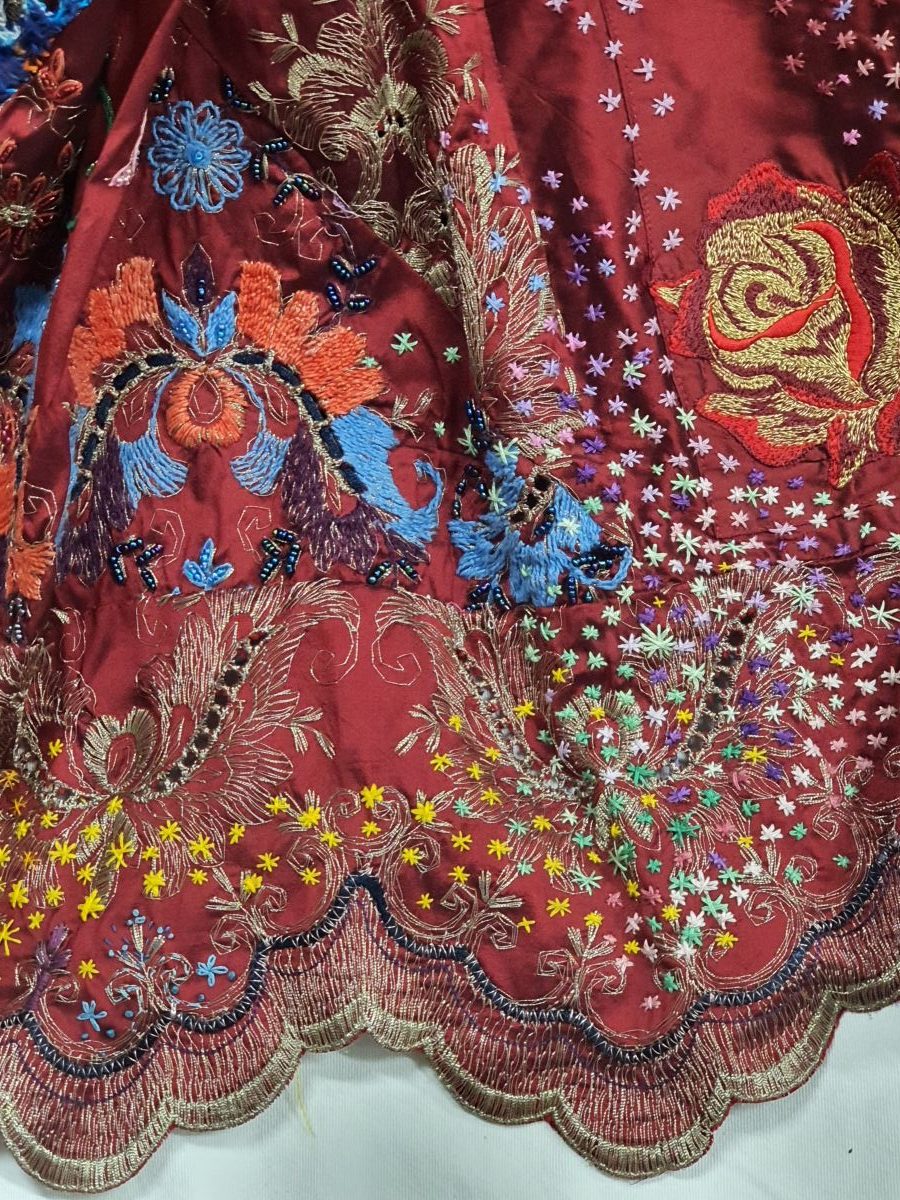
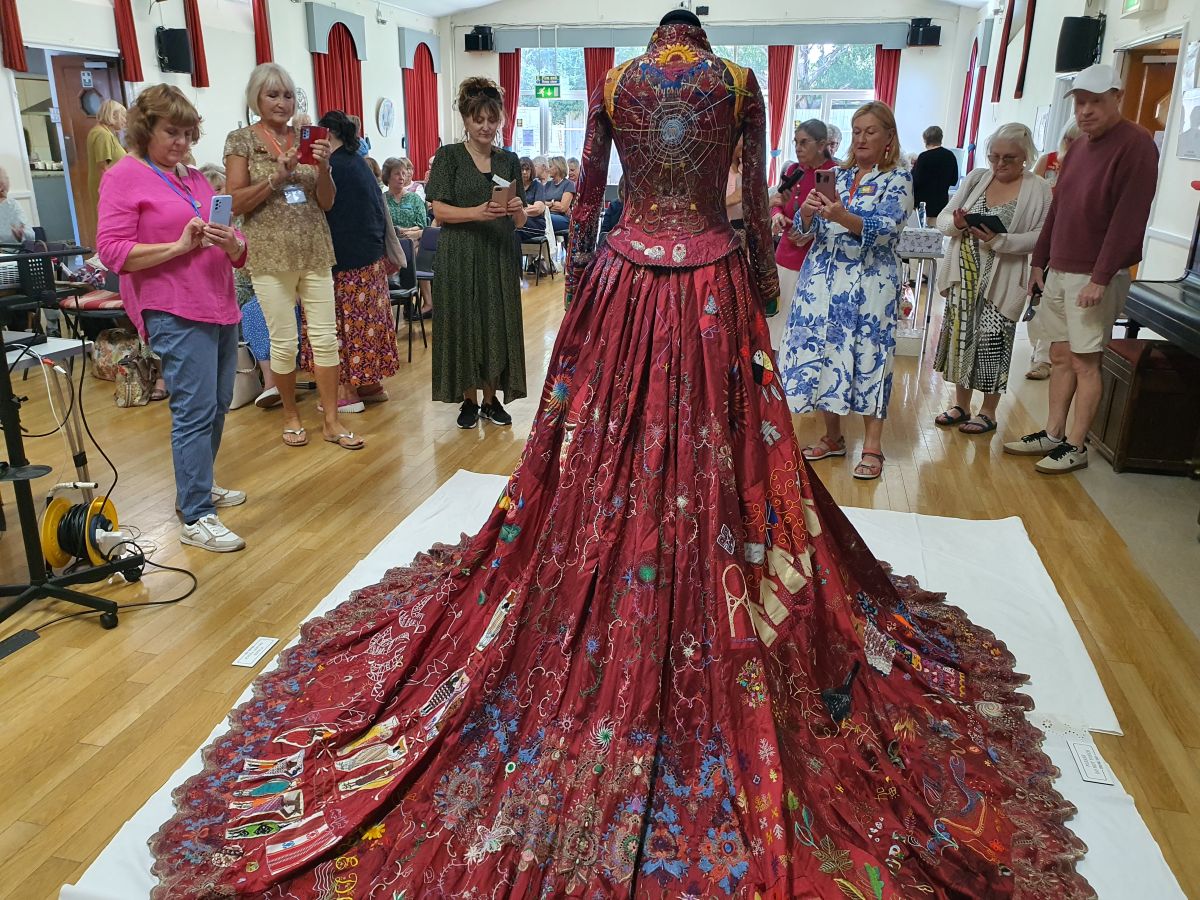
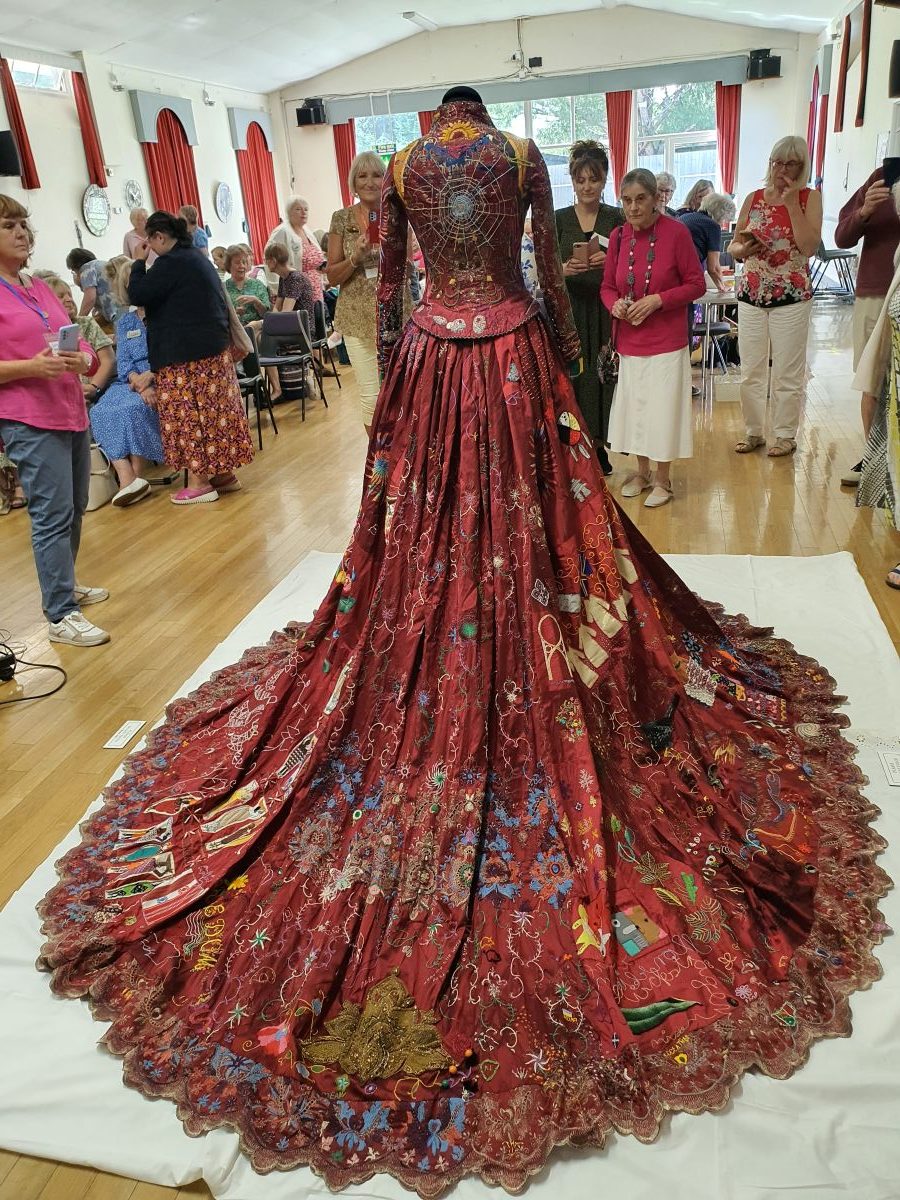
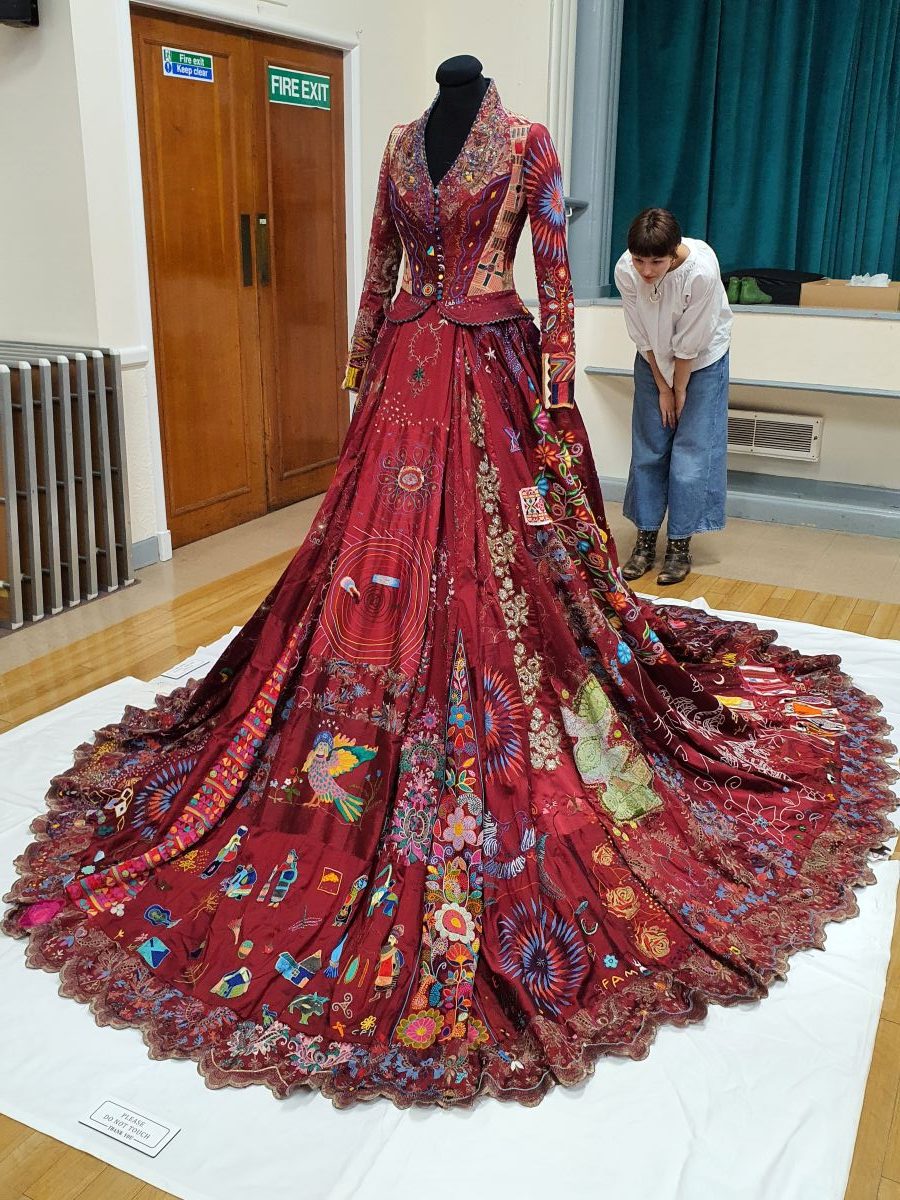
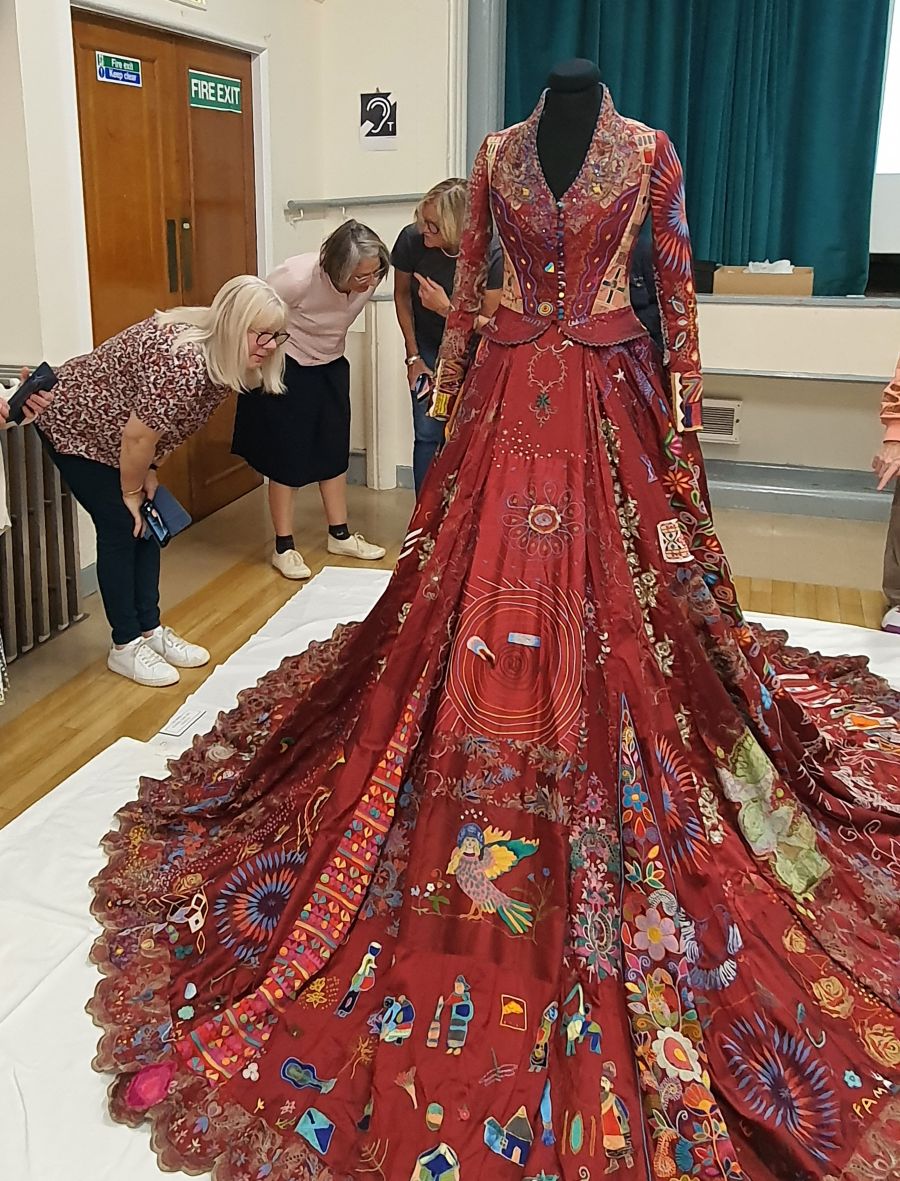
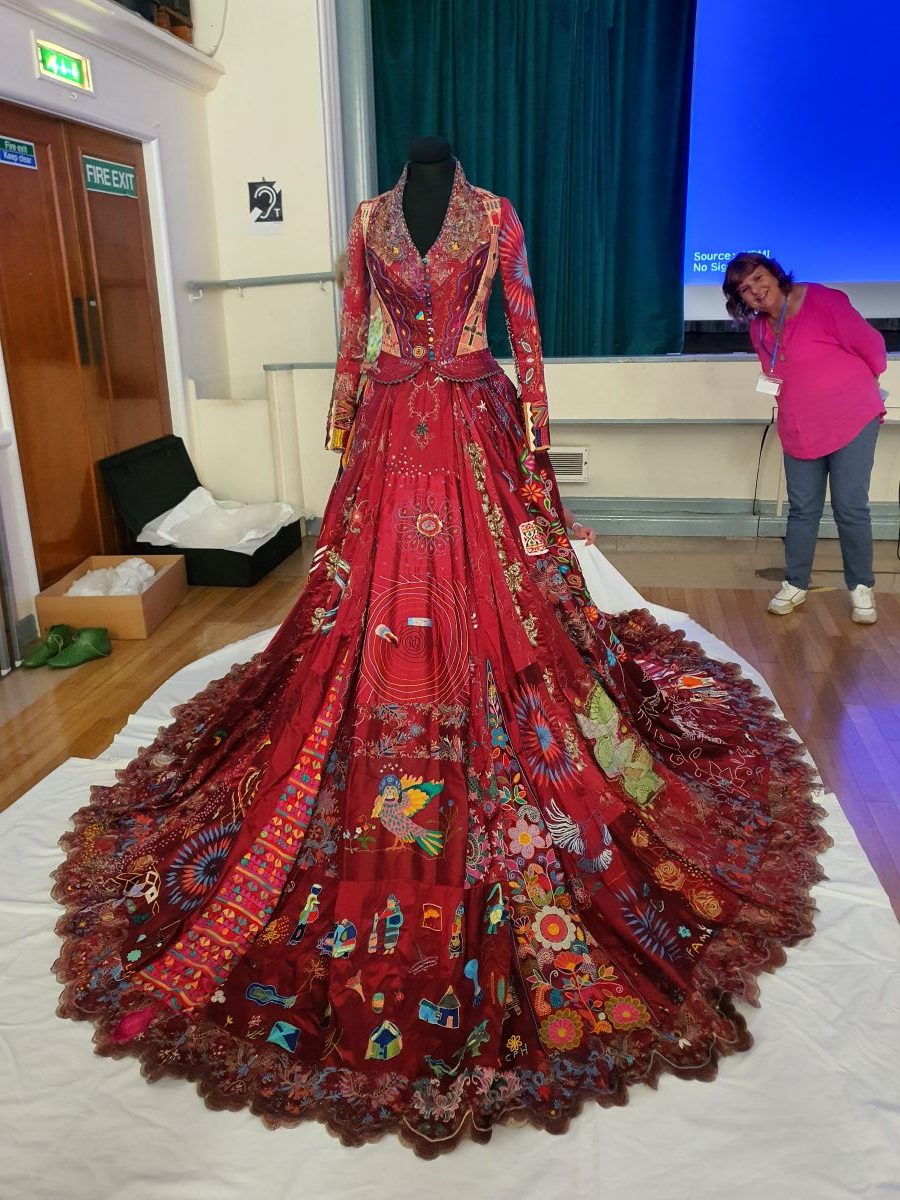
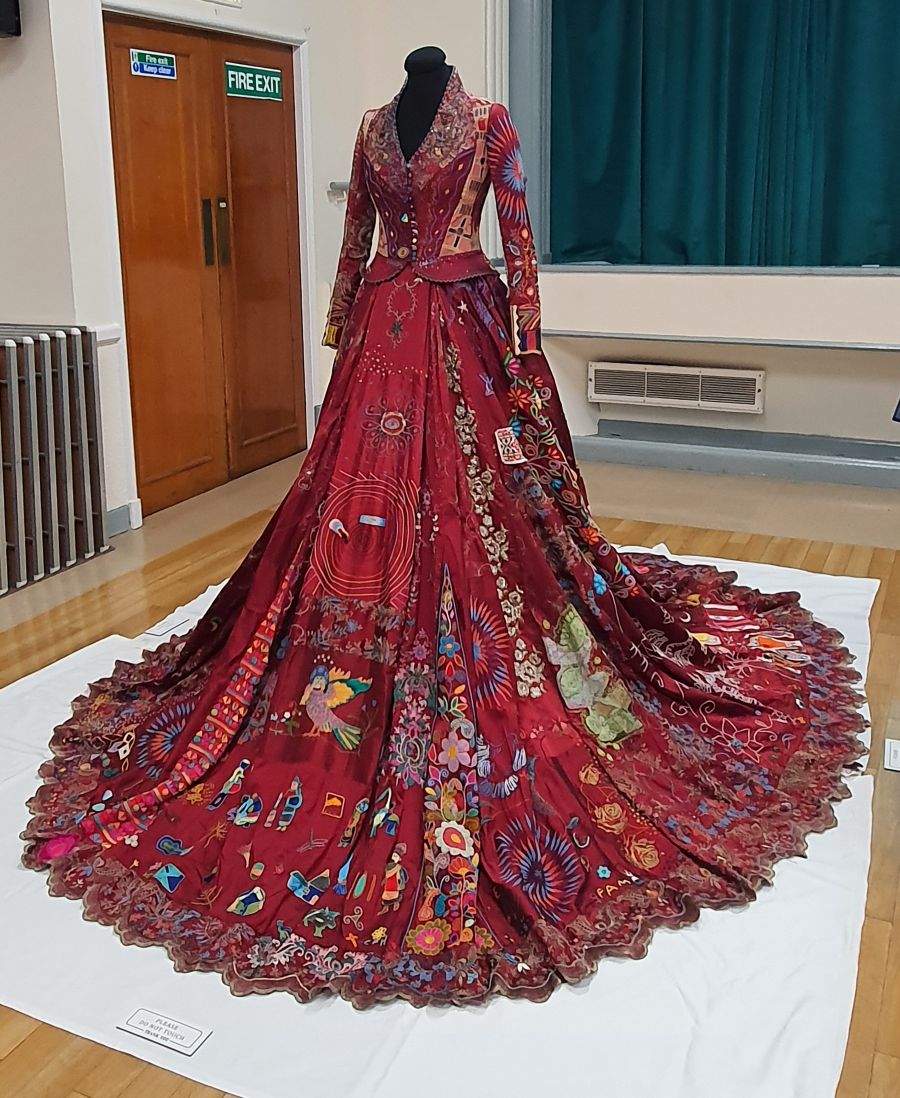 What an absolute pleasure to have The Red Dress on show at our monthly meeting, together with a fascinating talk by Kirstie Mcleod. Kirstie talks about ‘The Red Dress and I’, and it is clear that ‘she’ (The Red Dress) has become an entity in herself. Hearing Kirstie describe the stories behind the incredible embroidery, it is easy to see why the dress has a life of her own. Kirstie’s background is in textile installation, and the red dress grew out of a project that started relatively small and then snowballed to world-wide proportions. Just recently it was given recognition in The Guiness book of Records as the largest collaborative embroidery project in the world. There are estimated to be between 1 and 1.5 billion stitches in the dress, which were stitched by 367 women/girls, 11 men/boys and two non-binary artists from 51 countries. The aim behind the dress was to create a work of embroidered art that would bring marginalised people across the world together in a shared project, helping to give a voice to people who were often powerless, disenfranchised and traumatised. For many, it was part of a healing process, and it has certainly raised awareness across the world when people have been drawn in both by the life stories behind it, and the beauty of the embroidery. I particularly liked the fact that the only people to have worn the dress are people who have worked on it, and people whose life stories and positive contributions to making the world a better place deserve to be shared with the world. No amount of money would allow it to be hired for weddings etc (it was even requested for a coronation). It was wonderful to hear how firmly Kirstie keeps the project grounded in respect for the contributors. It’s impossible to do justice to how impressive it is, so I’ll just put a link here to the website, and urge you to visit the dress if you can, and/or hear a talk by Kirstie: https://reddressembroidery.com/
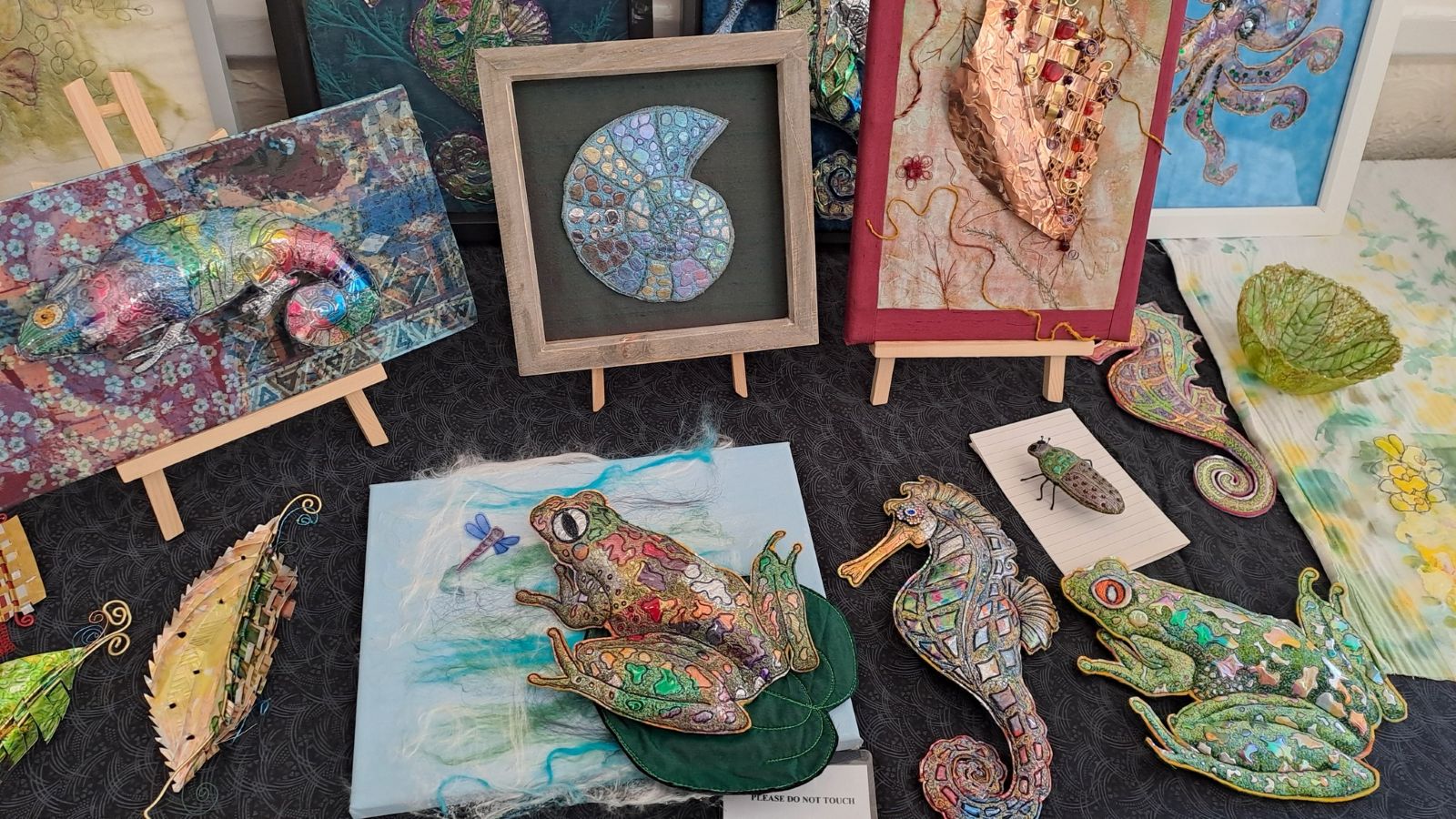
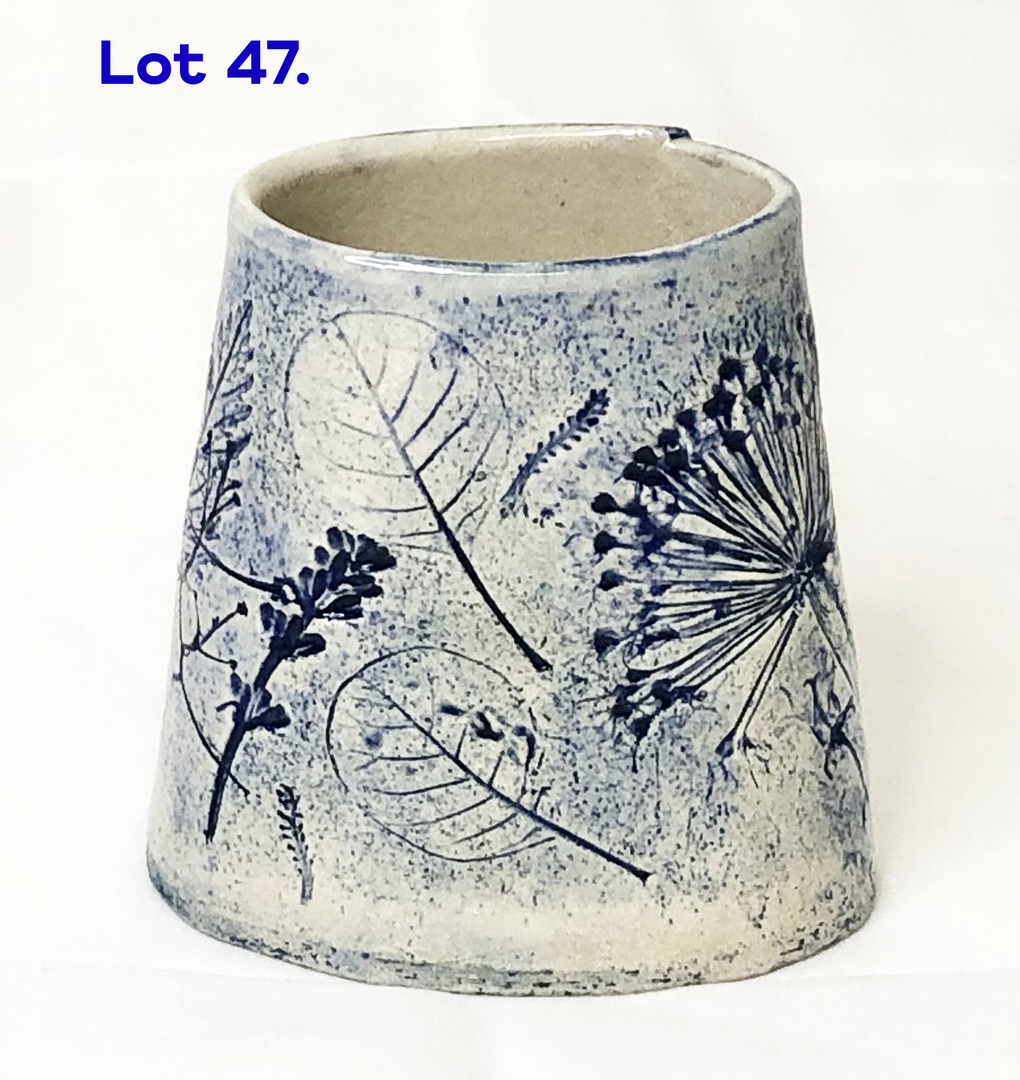 10 SCS members have donated art /embroidery for a charity art auction for West Sussex MIND. The auction is online until 22nd August. There’s a link below; do have a look, and maybe see if there’s something you’d like to bid on.
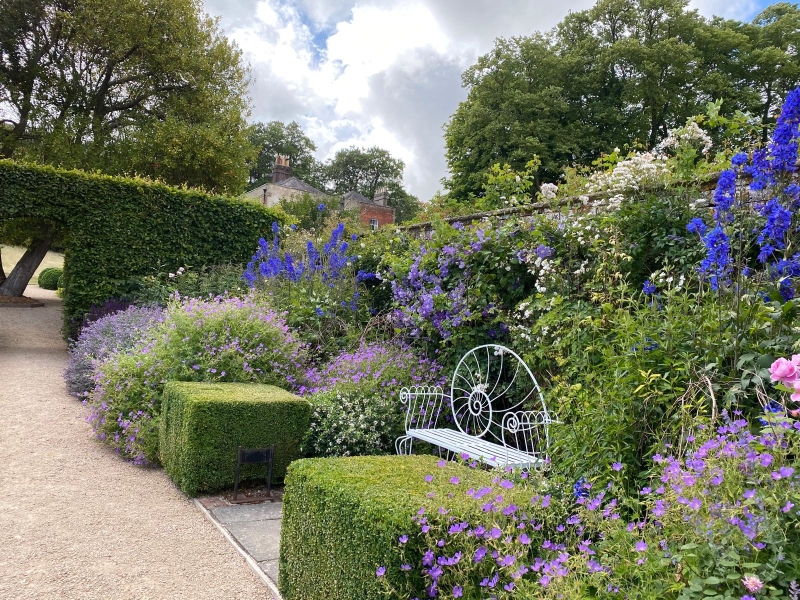 A few SCS members are taking part in a pop-up exhibition at Findon Place this Sunday (17th) during their charity open-afternoon for the National Gardens Scheme. The entry fee to the garden (£7.00) goes to the charities that are supported by the NGS, which include Macmillan’s and Hospice UK amongst others. It will be a good day out – there are lovely gardens to see, and cream teas, and the weather forecast it good. If you’d like to come, you need to pre-book via a link on the NGS website – see below. It’s open from 2pm to 5pm. There are directions on the NGS website (it’s on the west side of the A24, the other side of the road from the village, near the Church).
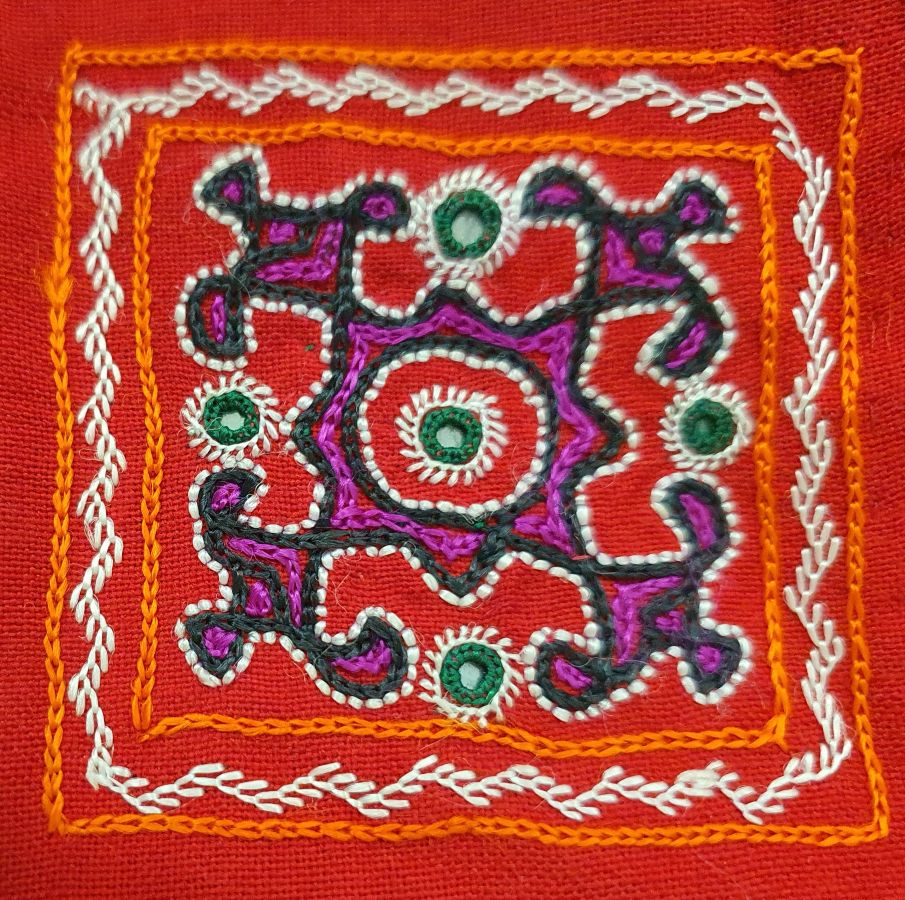
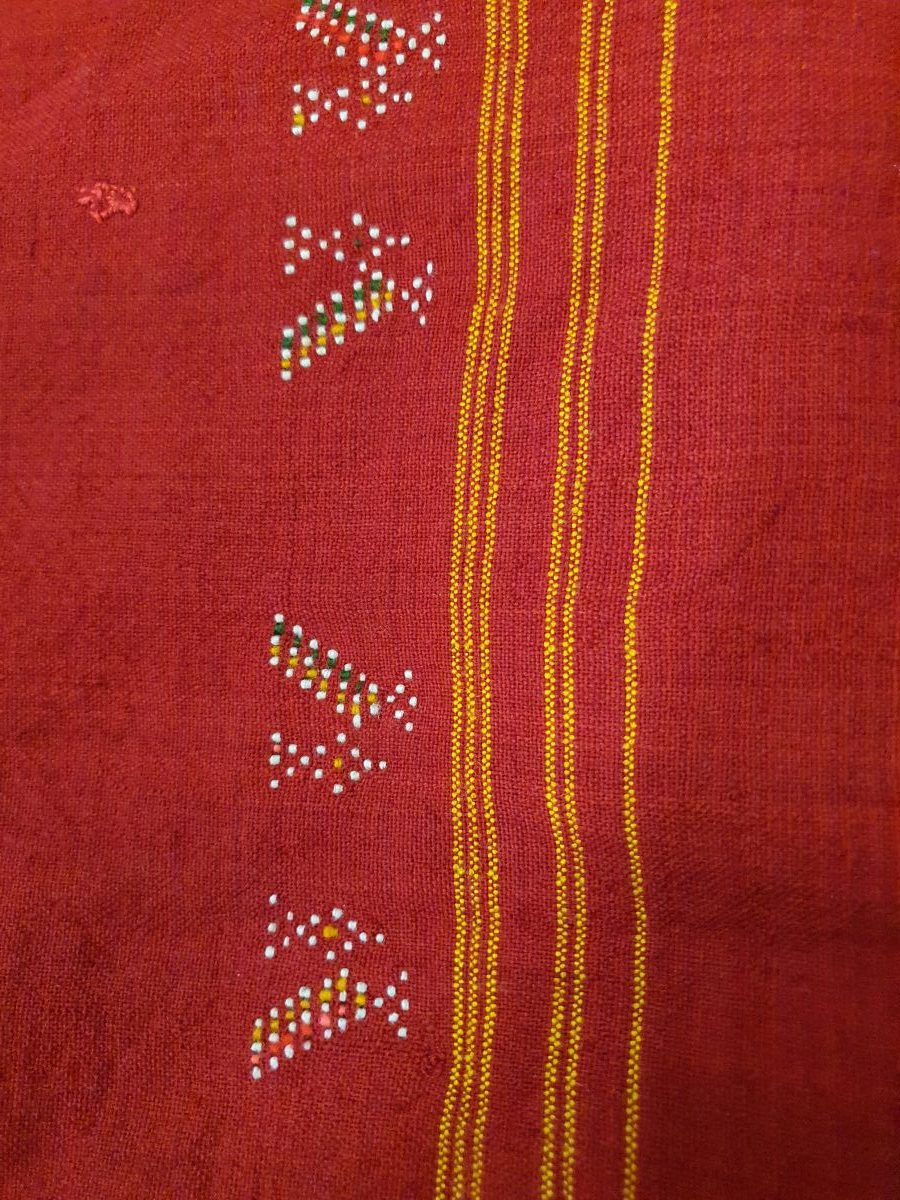
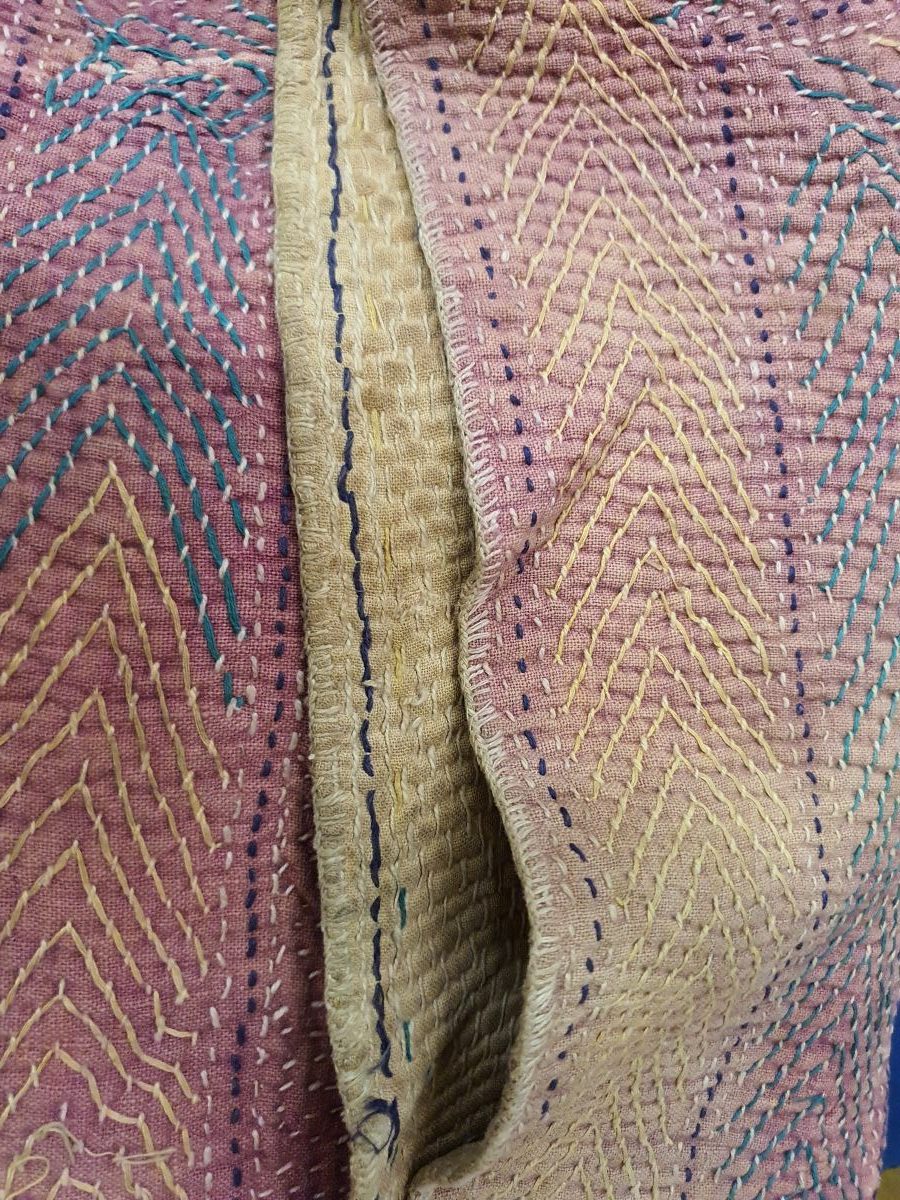
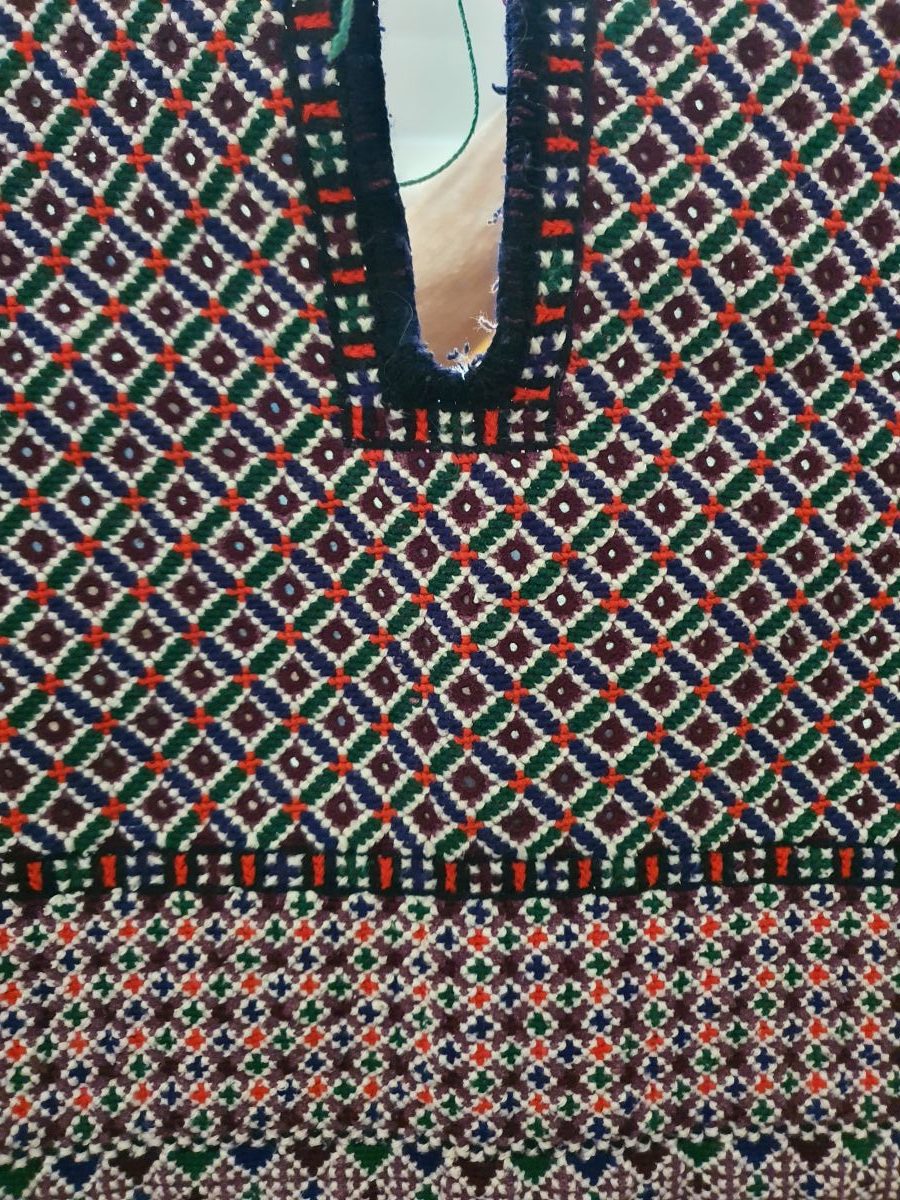
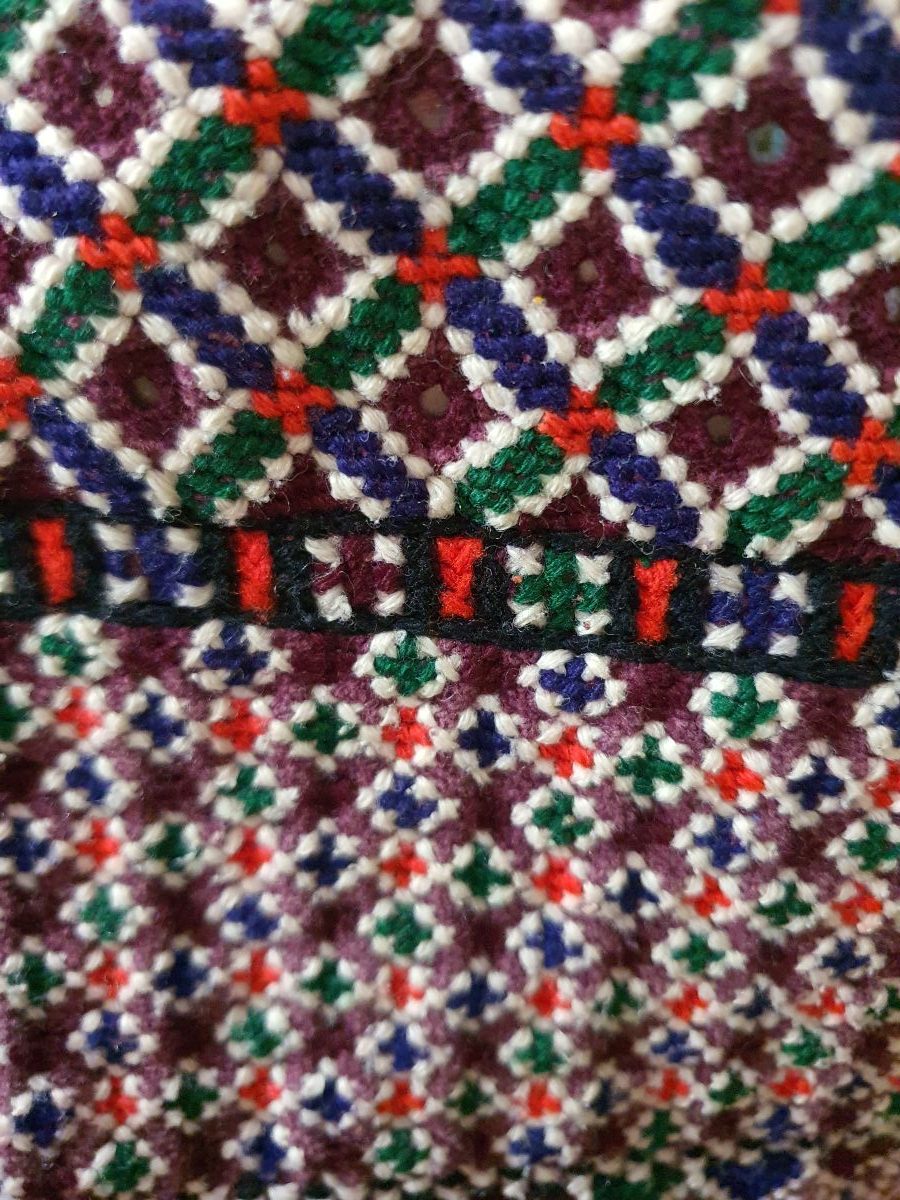
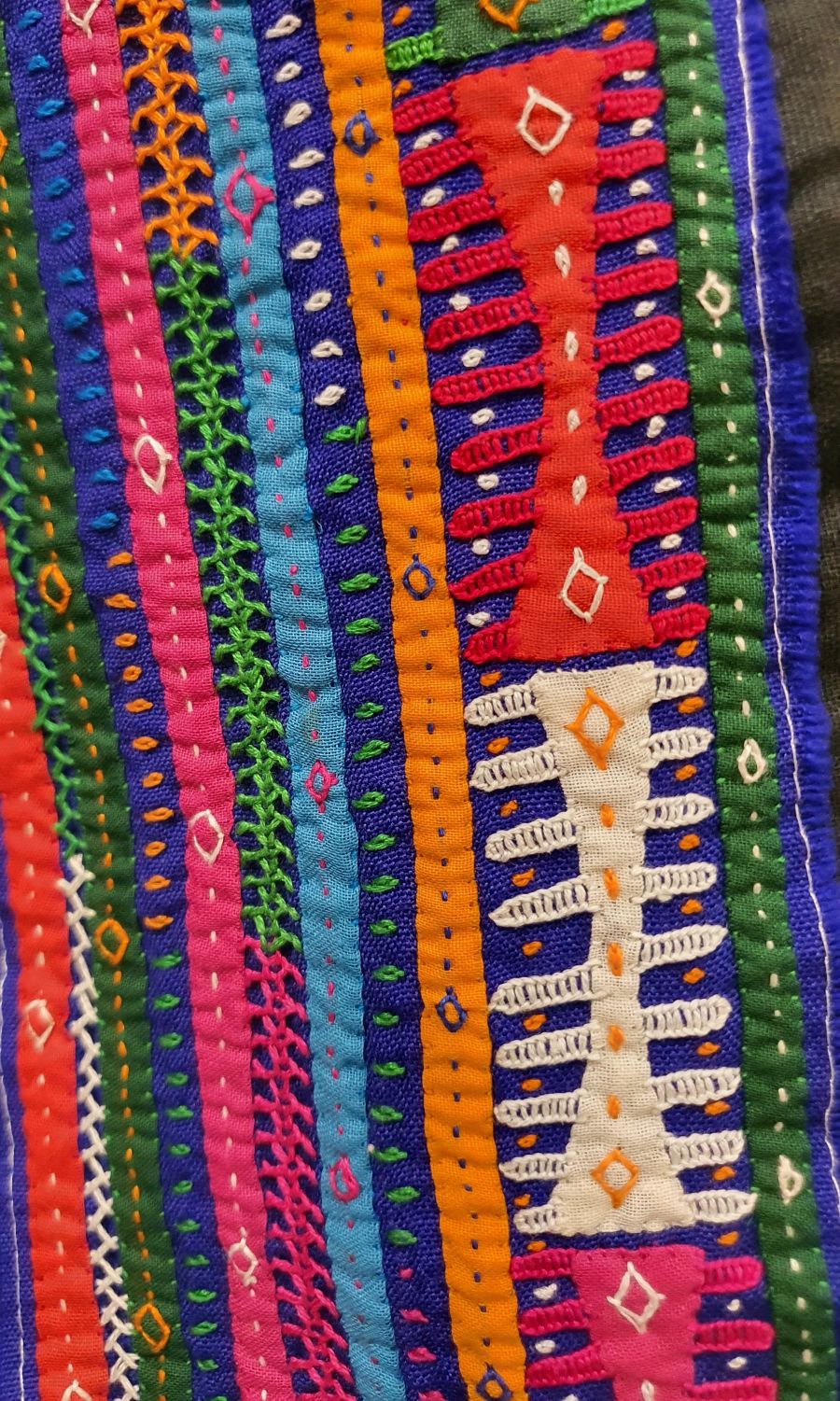
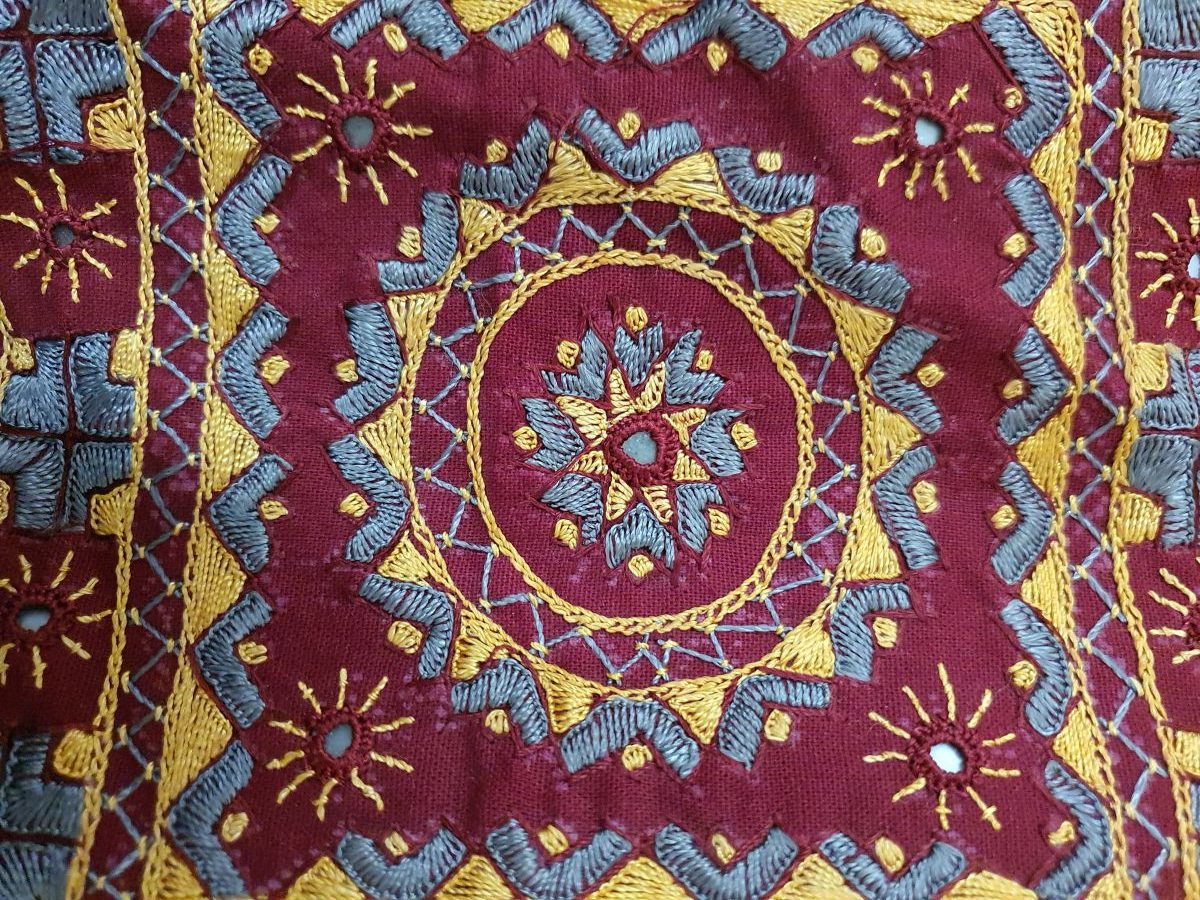
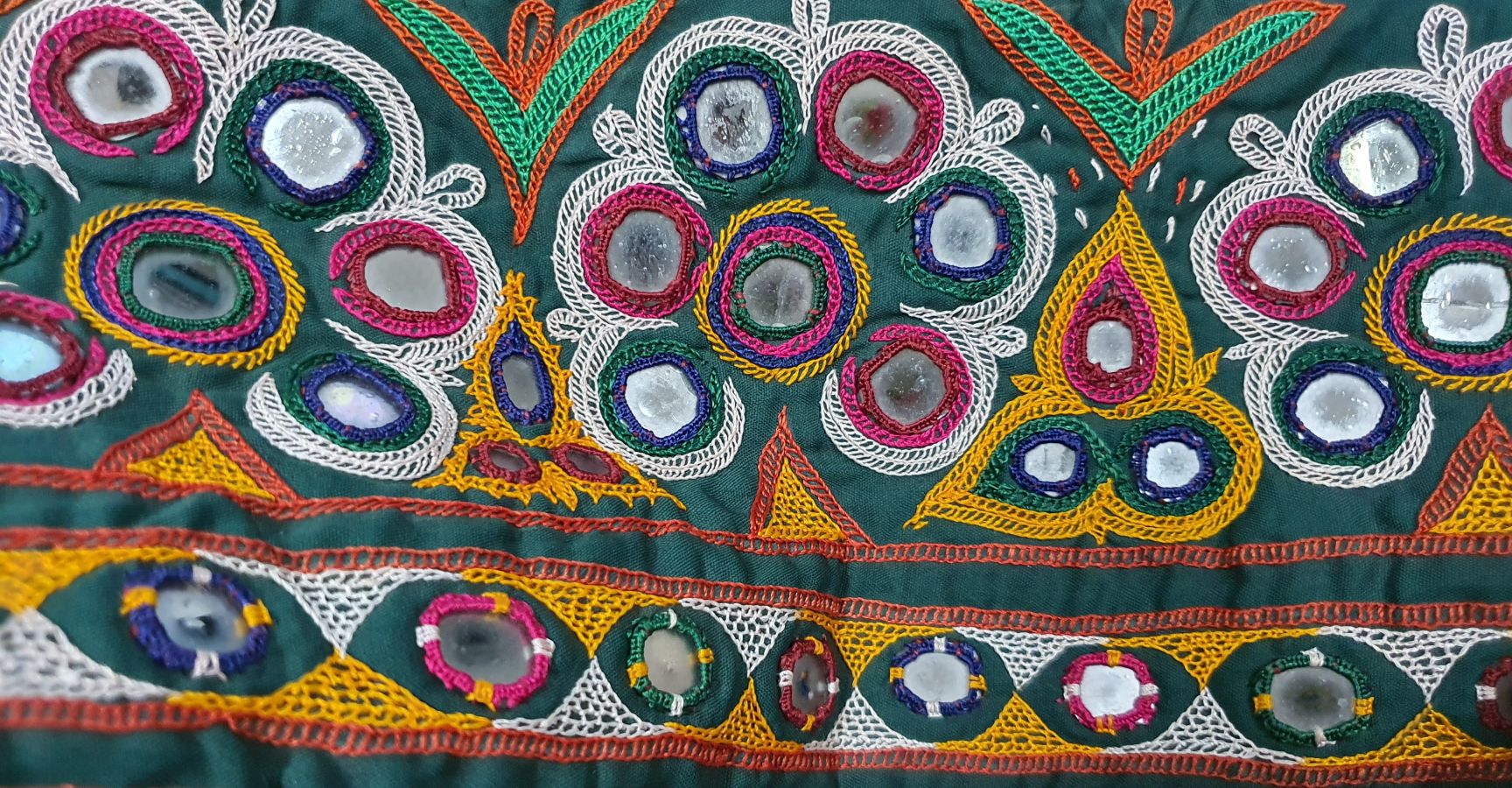
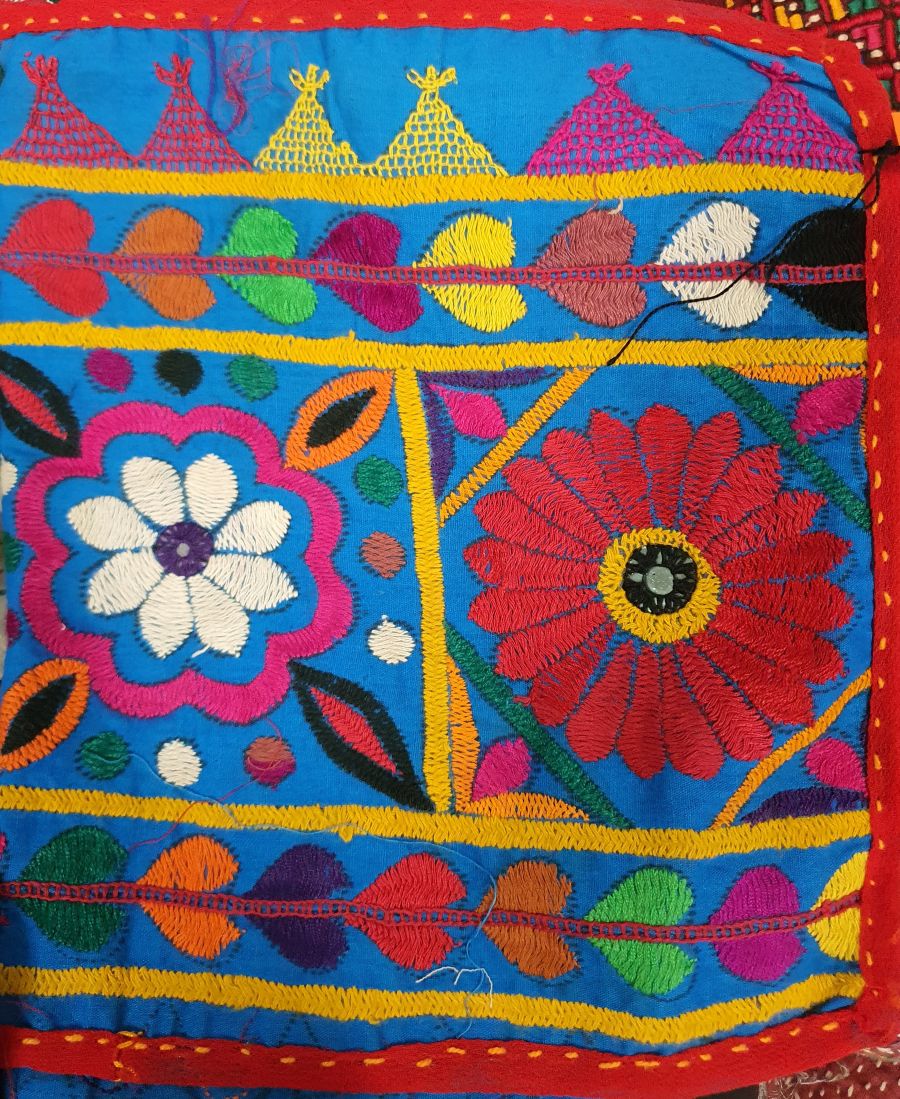 In our July meeting we had a fascinating talk by Helen Sill about the embroidery and weaving of Gujarat. Helen has been leading specialist embroidery tours to many parts of the world, including many different areas of India. She touched on some of her other travels, for example to Uzbekistan, and then focussed on Gujarat. Before that, she mentioned some of her own work. There are a few examples of her sketches below, followed by photos of some of the very extensive collection of embroideries and weavings from Gujarat that she brought with her.